
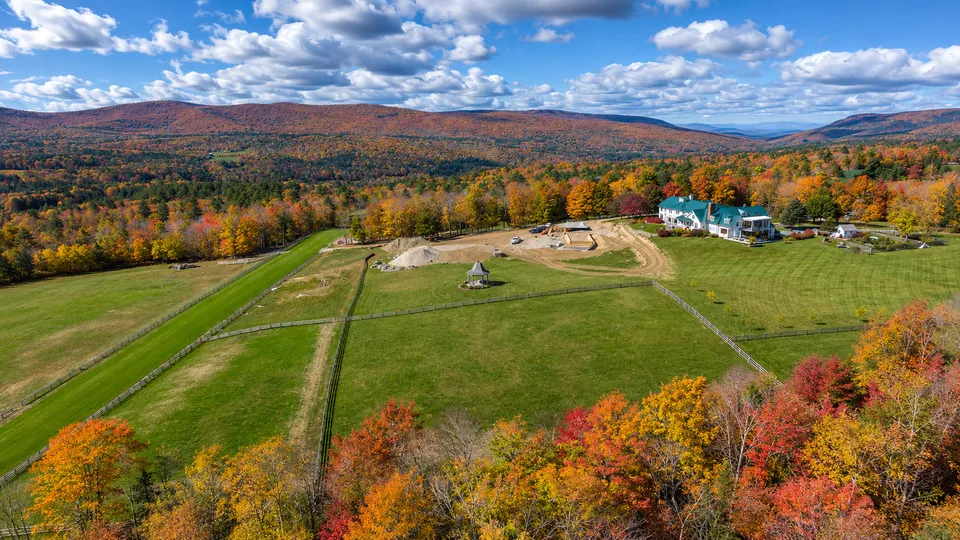
A group of neighbors was walking near the airstrip property in Lincoln, Vermont, when two men followed them down the road and announced that surveillance cameras had caught them on the land. The men wouldn’t identify themselves, but they didn’t need to: everyone knew them as caretakers for the owners, Kyle Clark — chief executive of Beta Technologies, the electric airplane maker that is one of Vermont’s great startup successes — and his wife, Katie. As the Boston Globe recounts, one of the men, wearing a backward camo hat with the Beta logo, hurried past the neighbors saying, “We’re going to get photos of the cars that are here.” “See what we’re dealing with?” said Marilyn Ganahl, 72, the Clarks’ chief antagonist, who lives next door. “Bullying and intimidation.”
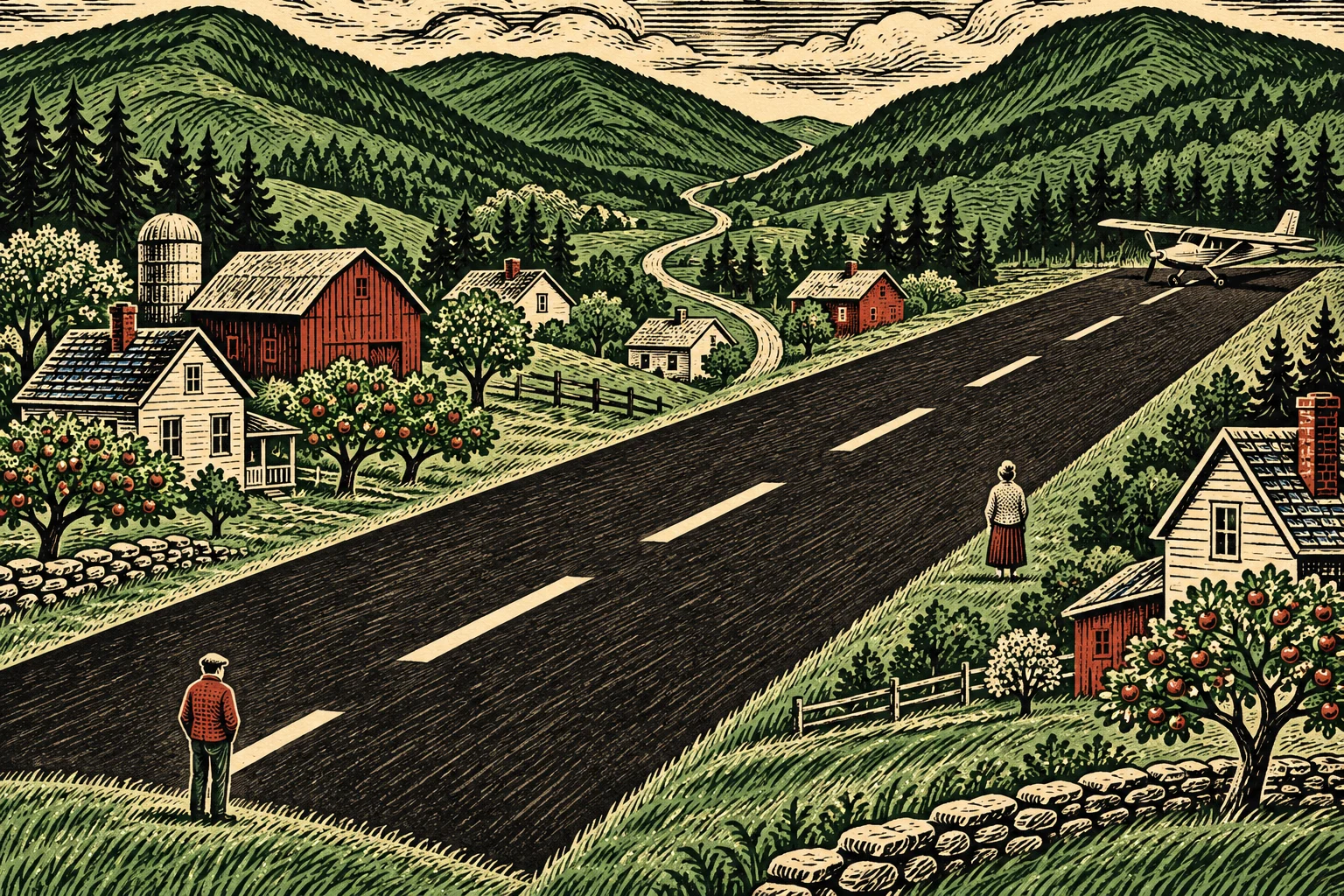
This is what a property-rights dispute looks like after nearly five years and a lot of money. Lincoln is a quirky mountain town of about 1,300 people perched on a raised western slope of the Green Mountains, a place that, as the novelist Chris Bohjalian wrote in a 1993 Globe Magazine cover story, has an unusual relationship with geography: “People do not stumble upon the town by accident.” For half the year, when the road over Mount Abraham closes, there is a single paved way out, along the New Haven River. It is, in other words, a town where you cannot avoid your neighbors, which makes it an awkward place to spend five years suing them.
The neighbors in question are a study in financial asymmetry. Clark is a 6-foot-7 former professional hockey player who founded Beta in 2017 and built it into one of the country’s leading electric aviation companies — roughly 1,500 employees, a $4.5 billion public market value, and a race to build electric aircraft that take off and land like helicopters. The company has turned the Burlington area into an unlikely tech hub and made Clark a favorite of state leaders and Trump administration transportation officials. He would like to fly small planes from an airstrip at his $3.5 million Lincoln home, which sits a 45-minute drive from Beta’s headquarters at Burlington International Airport. He acknowledges the quest has cost him “an irrational amount of money” in legal fees. And in January, while the Lincoln fight ground on, he paid $14 million for a separate property on Lake Champlain in Charlotte that came with a permitted airstrip; for now, when he wants to fly to work, he drives 45 minutes from Lincoln to Charlotte and takes off from there. The backup runway alone cost about forty-six times the roughly $300,000 Ganahl estimates she has spent largely bankrolling the opposition, defending what she calls her 105-acre horse farm and nature preserve from “a nightmare from hell.”

And yet the fight doesn’t sort neatly by class. Ganahl’s coalition includes a mechanic, a waitress, a teacher and a radiology tech, and locals of all stripes seem glad about the jobs Beta has brought to the region. State Senator Ruth Hardy, the Democrat who represents the town, told the Globe that “the role of money in this has been challenging and unfortunate… especially when we have so many big issues in Vermont where people are struggling financially.” Trish Waugh, Lincoln’s town administrator, puts it more simply: “I have never seen anything like it before.”
The procedural scoreboard tells its own story. The airstrip’s opponents won the early rounds at the local level. Clark has since won just about everywhere else: in state court, before the Federal Aviation Administration, and in October before Vermont’s Transportation Board. The airstrip is already built, and he is now only a few administrative steps from being allowed to use it. The opponents, who consider it unsafe and intrusive, are not conceding: they have taken the FAA’s ruling to federal court and, on Oct. 19, appealed the state board’s decision to the Vermont Supreme Court. “I’m shocked at how long this has taken,” Clark said, blaming “a large, coordinated and, unfortunately, untrue approach” by the opposition. His framing is pure property rights: “We have never attempted to tell somebody else what they can do on their land.” Ganahl would presumably note that his land now comes with airplanes.

Everyone is escalating. Each side accuses the other of harassment and intimidation. The neighbors have complained to the Selectboard about the lavish parties the Clarks throw on the property each summer, which clog the dirt roads with hundreds of vehicles. The Clarks’ lawyers, in a September letter, accused town leaders of colluding with opponents and threatened to sue the town for violating their due process rights — a threat Clark later softened in an interview, saying he has “no interest in doing that.” The Clarks, for the record, have embedded themselves in town in their own way: in 2024 they bought the Lincoln General Store, where the airstrip is regular talk.
The saddest part of the Globe’s account is how it started. When the Clarks bought the place in late 2021, a neighbor named Stephanie Atkins arrived with a casserole. Ganahl, hearing they had children, brought over two horses and introduced herself, as Katie Clark recalled, as “our kids’ new riding instructor.” “She was a lot, but she was very friendly.” Then word got out that Kyle Clark had stopped by the town office to ask about an airstrip, and the riding lessons ended. Michael Dennison, a carpenter who lives uphill from both camps and has done work for the Clarks and Beta, declined to pick a side and has noticed the resulting chill. “In a small town, an issue like this is bound to get personal at some point,” he said. “Eventually, one of you will need the other to pull you out of a snowbank.” That is the thing about winning in five successive venues. You still have to live there, 1,200 feet up, with one road out.