
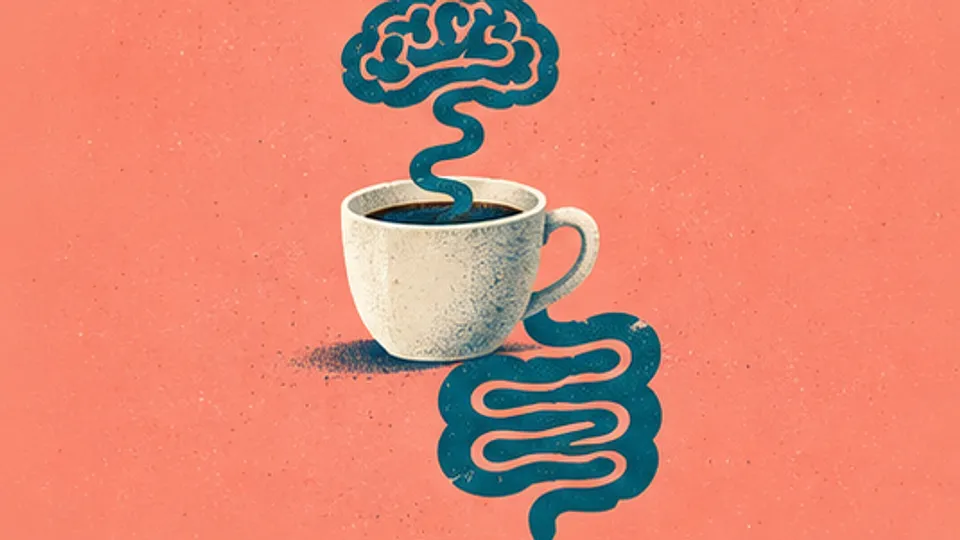
Every morning, across cities and villages and factory floors, the same small ritual is performed: the cup raised, the dark liquid swallowed. It is usually discussed as a transaction — caffeine for alertness, a debt repaid to the morning. But a study out of Ireland suggests the transaction is older and more complicated, and that it runs not only through the blood but through the intestine, and from the intestine, somehow, up into the mind.
Scientists at APC Microbiome Ireland, a research centre at University College Cork, have published their findings in Nature Communications, in a study sponsored by the Institute for Scientific Information on Coffee. Their subject was the microbiota-gut-brain axis — the two-way communication system that links the microorganisms of the digestive tract with the brain, with signals travelling through immune activity, hormones, nerves and the chemical compounds that microbes produce.
The experiment in abstention
The researchers examined 31 regular coffee drinkers and 31 people who did not normally drink it. “Coffee drinkers” were defined as those regularly consuming three to five cups a day — an amount the European Food Safety Authority considers safe and moderate for most people. All participants completed psychological assessments, kept records of caffeine intake and diet, and provided stool and urine samples so that changes in gut microbes, metabolism, mood and perceived stress could be tracked.
Then the regular drinkers were asked to stop. For two weeks, no coffee. During that period they repeatedly completed psychological assessments and gave samples — and the researchers observed substantial shifts in their gut metabolite profiles compared with the non-drinkers. Metabolites are the small molecules produced or altered during metabolism, among them compounds created by gut microbes as they process whatever arrives.
After the fortnight of abstinence, coffee returned — but here the experiment acquired a small theatre of deception, of the kind science practises on its volunteers. Participants did not know whether they were receiving caffeinated or decaffeinated coffee. Half got the decaf, half the real thing.
What the gut reported
Once coffee was back in their diets, both groups reported lower perceived stress, depression and impulsivity scores. Which suggests that some of coffee’s effects on mood may not depend entirely on caffeine — that the ritual object itself carries compounds the caffeine does not account for.
The drinkers’ bacteria told their own story. Species such as Eggertella sp. and Cryptobacterium curtum were more abundant among coffee drinkers than non-drinkers — the former thought to contribute to acid secretion in the stomach and intestines, the latter possibly participating in bile acid production. Both processes could help create an intestinal environment that discourages certain harmful bacteria and infections. Higher levels of Firmicutes bacteria were also observed, a broad group of microbes previously associated with positive emotions in females.
Two coffees, two effects
Perhaps the most intriguing finding was that the caffeinated and the decaffeinated did not work alike. Improved learning and memory appeared only among those drinking decaffeinated coffee — a suggestion that substances other than caffeine do some of coffee’s cognitive work. Coffee contains thousands of chemical compounds, including polyphenols, plant-derived substances that can act as antioxidants and can interact directly with gut microbes.
Caffeine, for its part, has not been dethroned. Caffeinated coffee was associated with reduced feelings of anxiety, improved vigilance and attention, and a reduced risk of inflammation. The division of labour, if the findings hold, is neat in a way that biology rarely permits: each cup doing something, neither doing everything.
The researchers themselves hold the cup carefully. Because the study involved a relatively small number of participants, the findings do not establish that coffee directly causes these changes in mood, cognition or gut health. What they offer is a map of the pathways — clues about the biological routes that might explain associations long reported in earlier coffee research.
‘More than just caffeine’
“Coffee is more than just caffeine — it’s a complex dietary factor that interacts with our gut microbes, our metabolism, and even our emotional well-being.”
Professor John Cryan, principal investigator at APC Microbiome Ireland and the study’s corresponding author, said that public interest in gut health has risen hugely, and that the relationship between digestive and mental health is increasingly better understood, even as the mechanisms behind coffee’s effects on the gut-brain axis have remained unclear. “Our findings reveal the microbiome and neurological responses to coffee, as well as their potential long-term benefits for a healthier microbiome,” he said, adding that coffee “can influence health in distinct but complementary ways” and might one day be harnessed “as a further intervention as part of a healthy balanced diet.”
There is an old consolation in such findings, and one should not overdrink it. The laboratory has not certified the morning habit; it has merely found that the habit leaves signatures — in the populations of invisible residents of the intestine, in the chemistry they secrete, in the temper of the person who rises from the table. The cup, it turns out, is a negotiation with those residents. They are billions, they live within, and they have always been at the table. Only now is someone listening to what they say back.