

The cloud was always a misleading name. It was chosen to make the machinery disappear, and for years it worked. Banks, taxi apps and payroll departments handed their memory to buildings they would never see, in the Emirates, in Bahrain, in a town called Sasovo in Russia’s Ryazan region. In 2026 those buildings showed a property the brochures never mentioned. They had coordinates, and they could burn.
March, the Gulf
Before dawn on March 1, Iranian Shahed drones struck two Amazon Web Services data centers in the United Arab Emirates, CNBC reported. These were the first known military strikes on the infrastructure of an American hyperscaler. At first the company spoke only of “objects” that had caused “sparks and fire.” Then it was more precise: “In the UAE, two of our facilities were directly struck, while in Bahrain, a drone strike in close proximity to one of our facilities caused physical impacts to our infrastructure.”
The damage spread well beyond the buildings themselves. The ride-hailing and delivery platform Careem, the payments firms Hubpay and Alaan, and the banks Emirates NBD, First Abu Dhabi Bank and Abu Dhabi Commercial Bank all reported disruptions. Iran’s Islamic Revolutionary Guard Corps said it had chosen the Bahrain facility because AWS hosts US military workloads there. AWS declined to comment. In April Iran struck an AWS facility in Bahrain again, and the kingdom’s interior ministry confirmed that Civil Defence crews had responded to a fire there, according to India’s public broadcaster.
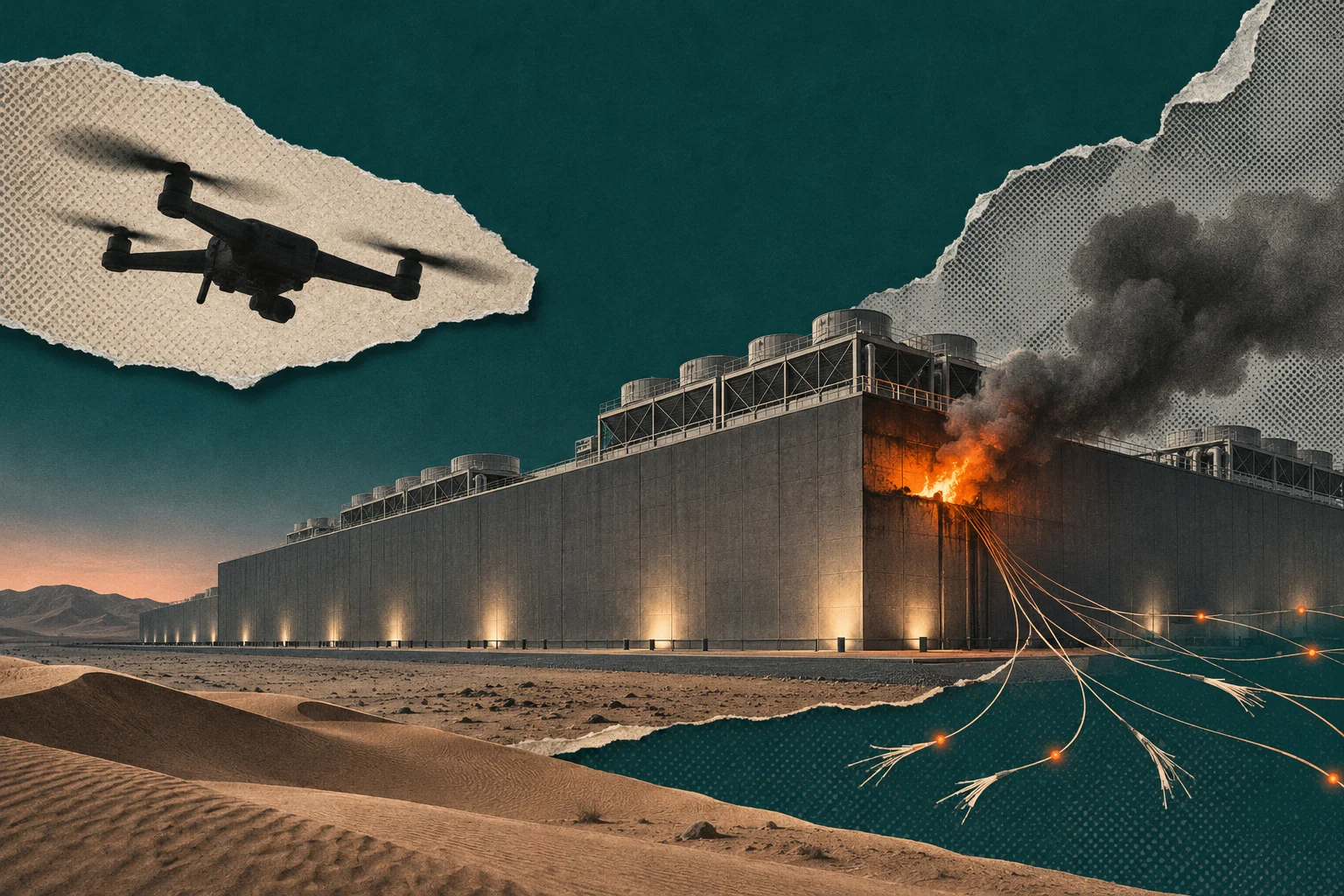
After that the company went quiet for months. On September 15 AWS published its first public update since April, as CNBC reported: it could no longer recover customer data and resources stored in its Bahrain region, me-south-1, or in one availability zone of its UAE region, me-central-1. The damage at several Bahrain sites, the company said, went beyond what its services are designed to withstand. “After a thorough assessment, we have determined that we are unable to restore access to the resources and data hosted exclusively in this region.”
October, the Russian plain
The second front was older and closer to home. Russia had spent the previous month hitting Ukrainian data centers and telecoms infrastructure, including targets in central Kyiv. On the night of October 7–8, Ukrainian drones reached Yandex’s data center at Sasovo. It caught fire and stopped working, CNBC reported, and the site houses two of the three supercomputers the company uses to develop its AI model. On the morning of October 9 the target was Kaluga, where several modules were completely disabled, according to The Moscow Times. On the night of October 11 it was Vladimir. Yandex Cloud told customers the platform was running in emergency mode and that they should switch to their own disaster recovery plans.
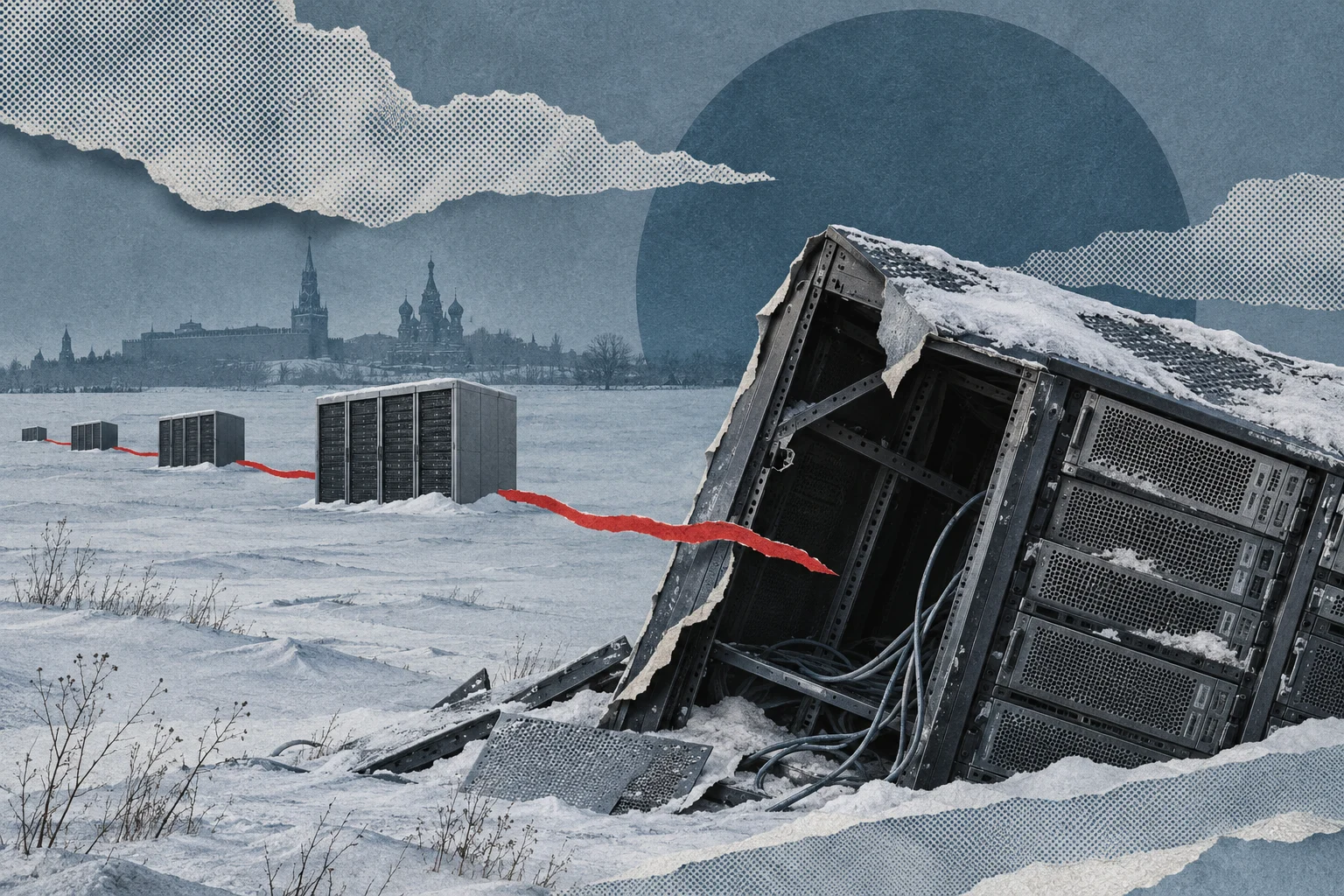
President Volodymyr Zelensky described this as retaliation: “we always respond in mirror-like fashion.” The campaign kept going, and rews counted a fourth Russian data center in a week. In mid-November Yandex said it had recovered 97.16 percent of the affected customer data, TechRadar reported, which leaves roughly 2.84 percent gone for good. Claims that Russian troll farms fell silent were later disputed. A follow-up by Tom’s Hardware found that bot traffic barely changed once Yandex had shifted its load to other sites.
The arithmetic of the Shahed
Why these buildings, and why now? In a live discussion hosted by Ars Technica, the tech reporter Jeremy Hsu put the question to Joseph Jarnecki of the Royal United Services Institute. Jarnecki’s first answer was dual use. Militaries now run battlefield management systems, personnel administration and resource management on the same public and private clouds that sell storage to shops and banks.
Once a military uses a piece of civilian infrastructure, at least under international law or in terms of the principles of targeting that are taken forward by militaries, it can sometimes become a military object and is therefore of interest to an adversary, and there’s an incentive to target it.
His second answer was money. Strikes on Yandex and on the American hyperscalers in the Gulf, he said, impose an economic cost on an adversary that would be hard to impose any other way. Set what AWS and other companies have invested in Gulf data centers against the cost of the Shahed drones Iran builds and launches, and the gap, in his words, comes to “very, very conservatively” 100 times “or even more.” “The cost ratio is really very lucrative for the adversary,” Jarnecki said.
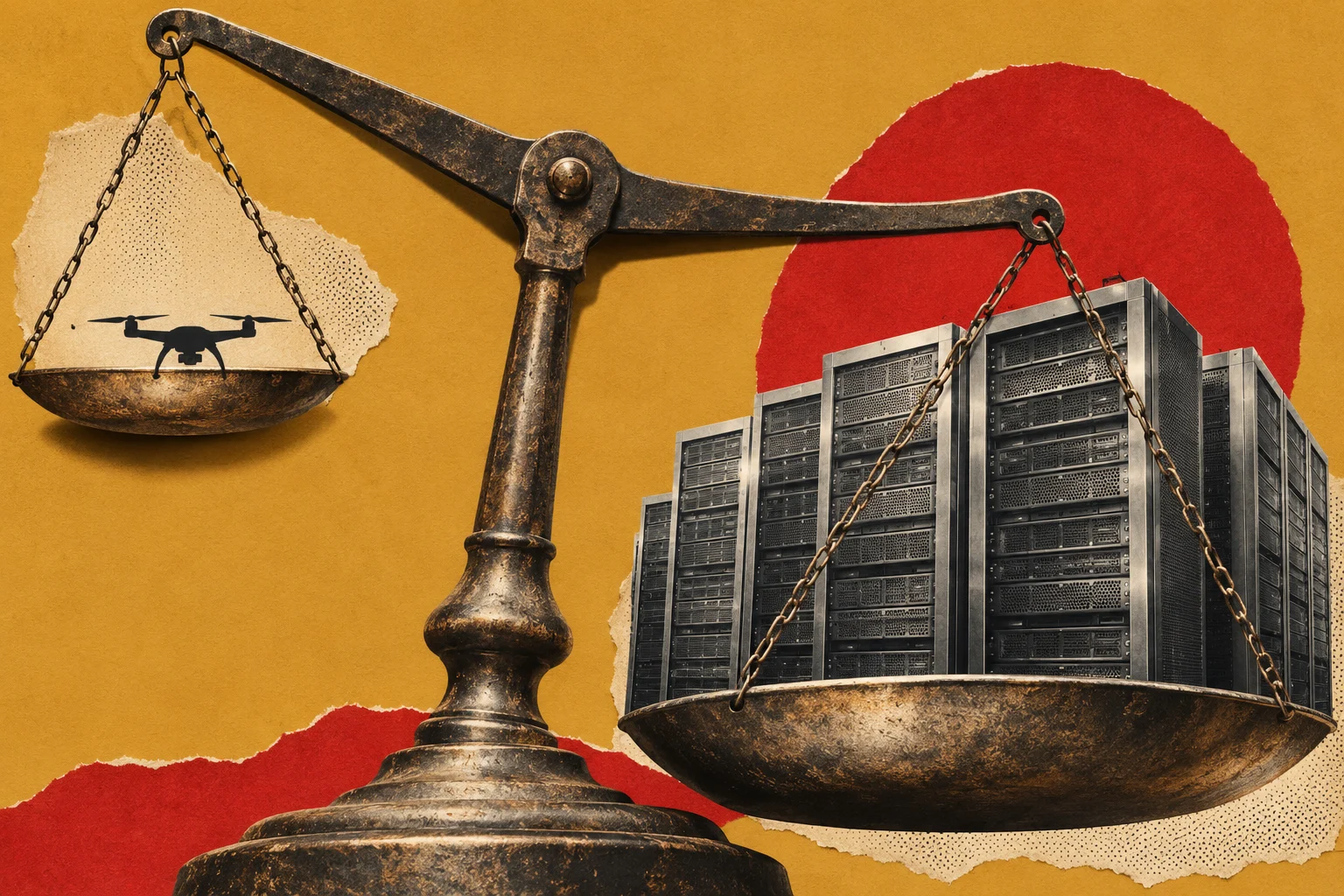
That ratio describes something old. Weak powers have always looked for the soft and expensive point in a strong power’s body. In earlier wars it was the bridge, the refinery or the power station. Now it is a windowless hall full of other people’s memory, built for efficiency and not for siege. The companies spent billions on redundancy against floods, outages and hackers. Nobody, it seems, wrote a sprinkler budget for a war.
What resilience means now
Much of the conversation turned to what governments and the hyperscalers (Amazon, Google, Microsoft, Meta) should learn. Jarnecki pointed to Ukraine, which took steps to protect its cloud infrastructure when Vladimir Putin ordered the full-scale invasion in February 2022. The country that has had a data center war fought on its soil for four years became, by necessity, the one others study.
Neither war has given anyone a reason to stop. Iran has shown what a cheap drone can do to an expensive region of the cloud. Ukraine has shown that a stricken platform can survive by moving its work elsewhere, and that it cannot always save everything it held. In September Amazon’s engineers found their own word for what had been lost: data hosted “exclusively” in one place. In the cloud’s vocabulary it is the nearest thing to an epitaph.