
In the summer of 1977, a young man lowered a yellow canoe into the Lincoln Memorial Reflecting Pool and paddled its length with a few friends beside him — legally, ceremonially, a sendoff before they flew to Austria for their first Canoe Slalom World Championship. Nearly five decades later, that same man faced up to ten years in prison for touching the pool’s water. Between those two gestures lies the whole arc of a capital and how it hardened. The man is David Hearn, three-time Olympic canoeist, and his story was laid out by Aleena Fayaz for CNN.
The Reflecting Pool, 2,000 feet of shallow water at the heart of the National Mall, sits at the center of President Donald Trump’s project to remake Washington in his image. It remains fenced off after what federal prosecutors themselves came to describe as a $14 million renovation that was “botched.” To Trump, Hearn was a vandal who attacked a prized beautification project. To others, a soft-spoken Marylander caught in the white glare of the president’s ire — until a federal judge dismissed the case against him with prejudice.
A life on the water
Hearn, 67, grew up at the foot of Great Falls Park, where the Potomac rushes past and whitewater paddlers make their pilgrimage. His father Carter and his sister Cathy were whitewater paddlers too. He took time off from college every other spring to train for the biennial World Championships, raced in the 1992, 1996 and 2000 Olympics, collected gold, silver and bronze across dozens of countries, and then coached the next generations. “There was not a whitewater canoer or kayaker in the DC region or nationally or internationally that didn’t know or revere Davey Hearn,” said Adam Van Grack, one of his students.

The river had already tangled him with authority once. In 1996, just before his second Olympics, he was arrested for paddling the roaring Potomac against a Park Police officer’s orders, facing a possible fine of up to $5,000 and six months in jail, the Washington Post reported at the time; the charges were dismissed. Four months later, training near Little Falls Dam, he and Cathy helped rescue fishermen stranded in the choppy current, ferrying them to shore. “They were kind of stranded out there,” he told the Post. “They could’ve stayed there indefinitely, but I’m not sure how they would’ve gotten back.”
The bare hand in green water
This past June, on a breezy afternoon, Hearn left his Bethesda home on a 52-mile training ride, preparing for the UCI Gran Fondo World Championships in Japan. Passing the National Mall, he thought of the pool where he often stopped, and of reports he had heard about its peeling synthetic liner. Curiosity was professional: his business builds canoes, and he knows synthetics. “I was curious about why it’s peeling,” he said in an interview the day after his arrest.
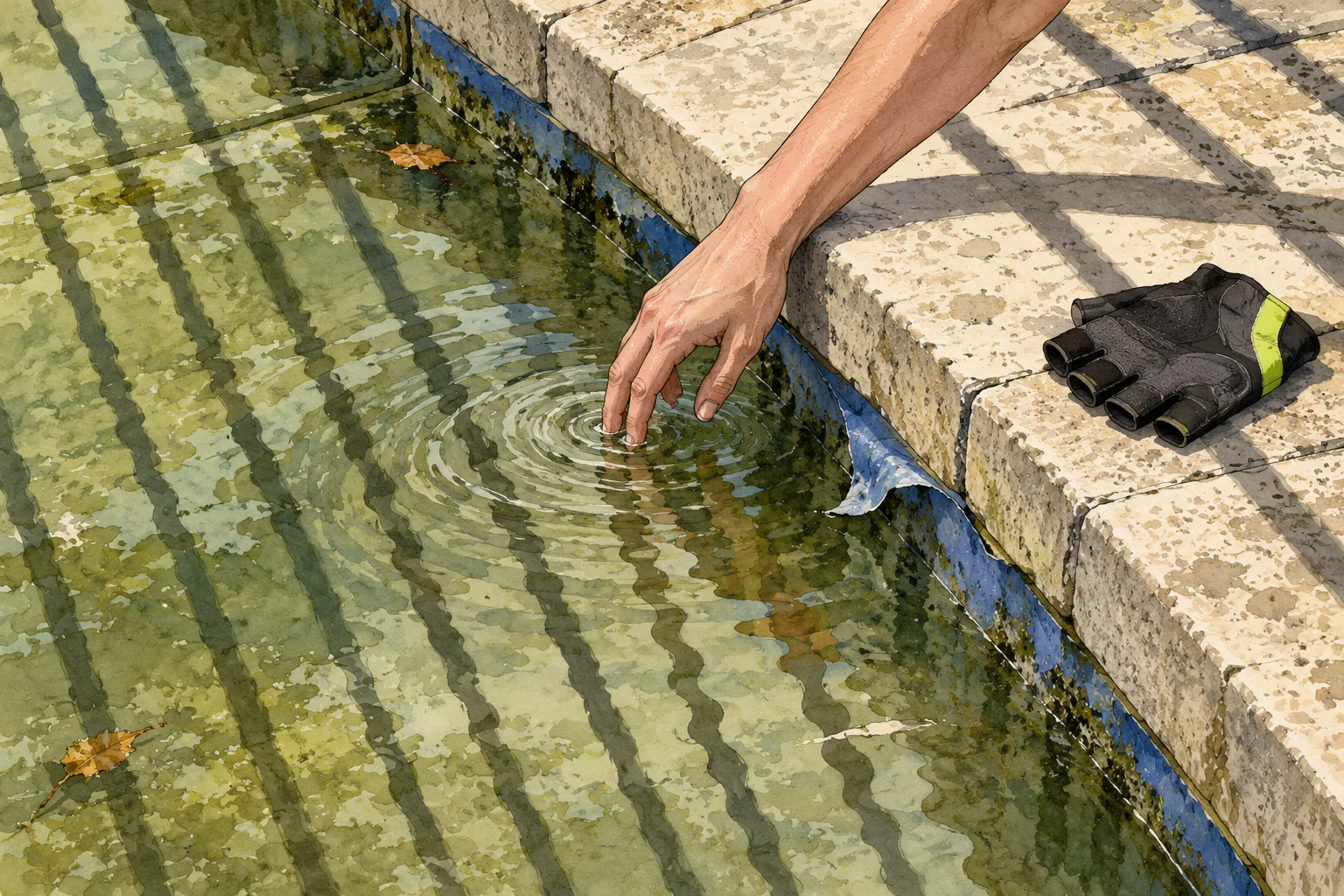
He slipped off a biking glove and dipped his bare hand into water gone green with algae, brushing a flap of blue sealant. A National Park Service official ordered him to stop touching the water. Hearn waited, returned to his bike, and — by his own account — suggested they walk over to a Park Police officer together. Within seconds, he said, his hands were behind his back in handcuffs. Still in his grey and neon green jersey, he sat nearly five hours in a cell roughly six by eight feet, which he described at the time as a respite after a pleasant ride.
He did not know the political weather above him. Trump had already seized on the theory that the pool’s troubles were vandalism, not workmanship, warning on social media that anyone caught tampering with the memorial faced serious charges and lengthy prison sentences.
Shot first, questions later
Less than two weeks after the ride, a grand jury in Washington, DC, Superior Court indicted Hearn for allegedly damaging the pool. At a July 2 press conference, US Attorney Jeanine Pirro described him “violently” ripping up about two square feet of the massive pool, belligerent and rude toward federal officers. She cited “tremendous evidence” for the felony charge. Hearn pleaded not guilty; outside the courthouse, supporters chanted, “Free Davey Hearn! Free Davey Hearn! Free Davey Hearn!”
Then Pirro’s own office filed papers sharply contradicting the vandalism case: the rush to finish Trump’s renovation had produced “hasty and botched work.” The prosecution collapsed, and by October a federal judge dismissed the charges with prejudice. “In securing the Indictment against Mr. Hearn, the government shot first and asked questions later,” wrote DC Superior Court Judge Todd Edelman.
“He was worried about it. He was stressed by it, and he told me through the whole thing that he lost a lot of sleep over it,” said Bill Endicott, Hearn’s coach and neighbor. “We didn’t joke about it at all. I mean, in retrospect, the whole thing is so farcical.”
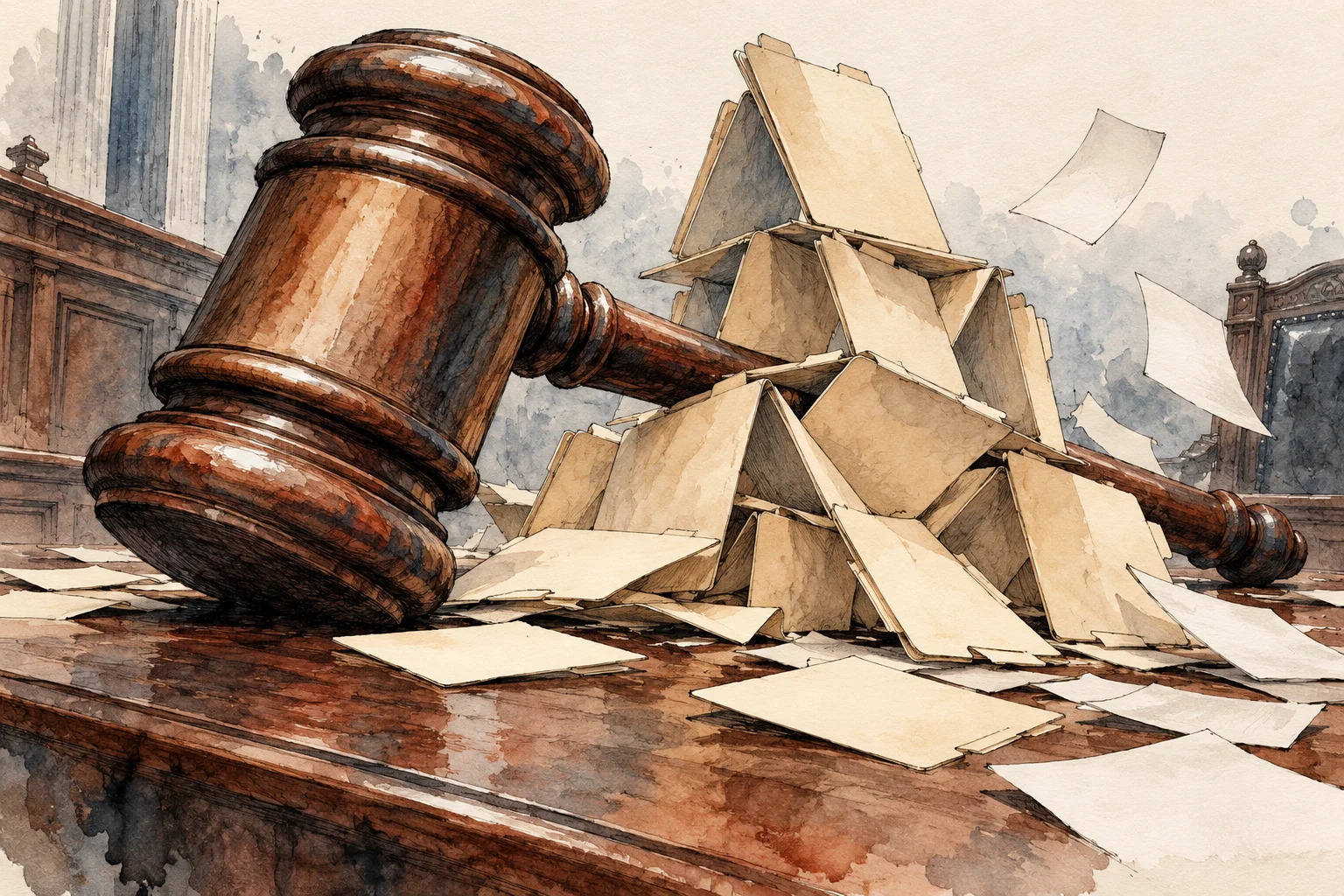
Trump held to his vandal theory and turned on Pirro, blasting her for choking under judicial pressure. The accused, meanwhile, became something rarer than an exonerated man: a symbol. Hearn joined a peculiar roster of local foils to the president — the man who became a resistance icon by throwing a Subway sandwich at a Customs and Border Protection officer during last year’s federal takeover of Washington, the woman elected to the Loudoun County board after losing her government contractor job for flipping off Trump’s motorcade in 2017.
The next fence
Maryland Rep. Jamie Raskin, who represents Hearn’s district, called him “an everyman” who “took his lumps and decided to fight it every step of the way, and became a hero for his poise and equanimity.”
On a rainy October morning, a few miles from the pool that had nearly imprisoned him, Hearn stood in the greenways of East Potomac Park’s public golf course, a brass band ushering cyclists through the crowd. The administration wants to convert the park, with its Potomac views, into a championship-caliber course — another beautification project, like the pool, already in litigation. “Davey! Davey! Davey!” the people chanted, circling him.
“I’ve been used to representing my country over many years in the canoe kayak arena and three Olympics, and yet this has been an experience that surpassed that in many ways,” Hearn told them. The man who once rescued strangers from the river has found another current to stand against, and this time half the capital rows beside him.