
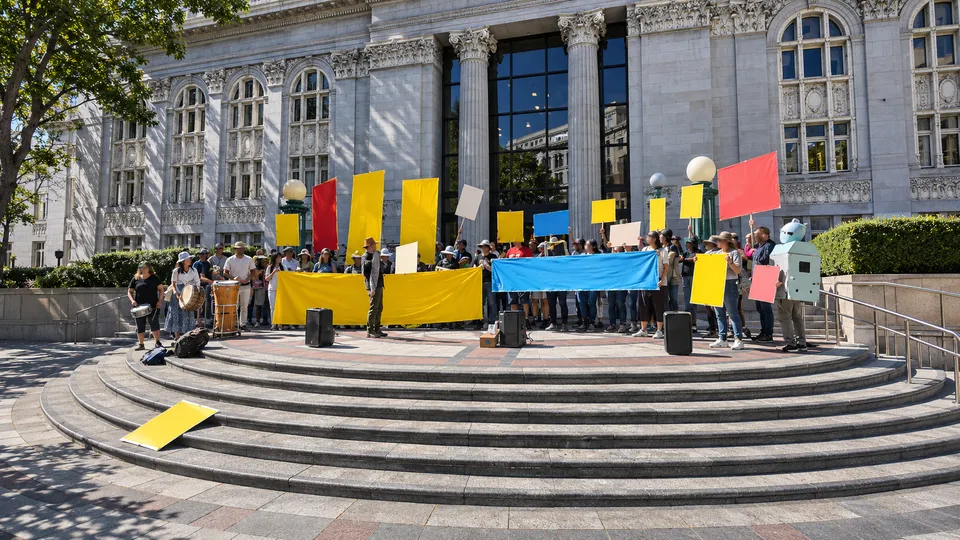
Protesters dressed as cardboard robots danced to a drumbeat outside Oakland City Hall last month, which is as good an image as any for the politics of artificial intelligence in 2026. Their target was data centres — the warehouses full of servers that process the AI boom’s digital information — and their worry, as Al Jazeera reports, was chiefly that the centres will strain the energy grid. The robots, presumably, ran on batteries.
The pleasing wrinkle is where this is happening: the San Francisco Bay Area, the place that more or less is the AI industry. In the final two months before today’s vote, at least seven Bay Area cities, including San Francisco and Richmond, have passed temporary moratoriums on data centre construction, Al Jazeera reports. Oakland passed its own on Oct. 6, after days of protest. This is the towns hosting the gold rush, adopting a zoning position against shovels.
There is electoral logic to it. Local politicians competing in Tuesday’s midterms have seized on data centres as a wedge issue to rally certain pockets of voters, and the activist consensus, as one observer told Al Jazeera, is that “data centres poll very poorly.” A moratorium is a nearly perfect campaign instrument: it costs nothing, it commits the city to nothing permanent, and it lets a candidate stand against both Big Tech and higher electricity use at the same time. Whether the grid strain is better solved by a pause than by, say, planning for the load, is a question for after the election. The inconvenient part of the arrangement — that the computing has to happen somewhere, in a building, plugged into someone’s grid — doesn’t pause with it.