
Of everything said around Xi Jinping’s recent summit in Washington, the strangest remark surfaced only afterward, from a television studio on a Sunday morning. David Perdue, the US ambassador to China, told Fox News that President Donald Trump had, at one point, made his Chinese counterpart an offer that few leaders in modern history have extended to a rival superpower.
“President Trump continues to say, ‘Hey, we sell arms to other people around the world,’” Perdue said. “He actually asked President Xi, would he like to buy some at one point.”
The suggestion, as Al Jazeera reported, baffled most observers — another off-script remark that appeared to stray from official policy, one that promptly forced the State Department to clarify that Washington has no such plans.
Pressed on his ambassador’s account on Monday, Trump seemed surprised, CNN reported, and answered with a denial that wandered, mid-sentence, into a shrug:
To China? You mean to Taiwan? I’ve never heard of that one. I’m going to have to ask him. Now, they’d probably like to buy it because we do make better equipment than that, so maybe it’s a good idea. But we didn’t discuss that.
“He may have been talking about Taiwan,” the president added. “I think he was talking about Taiwan.” The State Department had by then delivered its own verdict to reporters: “U.S. law prohibits arms sales to China and there is no offer or plan to sell arms to China.” A US official added: “The U.S. government has no plans to sell weapons to China.”
The law invoked has an old and bloody birthday. According to the US Government Accountability Office, in June 1989 the United States and the members of the European Union embargoed the sale of military items to China to protest the massacre of demonstrators in Beijing’s Tiananmen Square. The ban is written into US law and bars the sale to China of all military items, lethal and nonlethal, on the US Munitions List — though a president may waive it if he believes doing so serves the national interest.
Arming the adversary
Foreign policy experts, Fortune reported, were left baffled. Such a sale would contradict the slew of sanctions and trade restrictions the Trump administration itself has placed on China, and would dismiss China’s role in supplying munitions and military intelligence to Iran. The remark also landed after reports that China had obtained sensitive parts for the F-35 fighter that could be used to neutralize US stealth technology.
“You would not [want to] help China to modernize its military and turn against yourself,” Zhiqun Zhu, a professor of political science and international relations at Bucknell University, told Fortune. “Especially with the intense competition between the two powers now. I mean, it doesn’t make sense.”
Ryan Hass, director of the Brookings Institution’s China center, wrote on social media that the disclosure “puts the question to rest” about whether Trump views China as a security threat, and warned the offer “will be unsettling to American partners at the pointy edge of China’s spear.” Trump has called China a strategic competitor — he invoked that competition when rejecting calls to slow down AI development — yet he has also expressed affinity for strongmen like Xi, Russia’s Vladimir Putin and North Korea’s Kim Jong-un, and has often appeared to prioritize personal ties with the leaders of US adversaries over the interests of US allies.
The island whose weapons wait
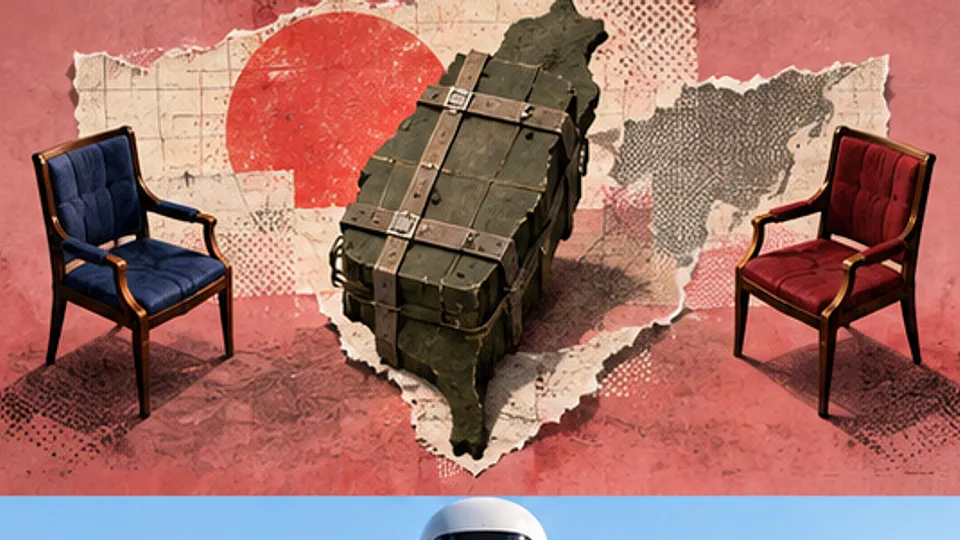
There is an island at the center of this story, and it was not mentioned on the Sunday show. The White House is withholding a $14 billion arms package for Taiwan — which, Fortune notes, puts it in violation of the 1979 Taiwan Relations Act, passed after Washington established diplomatic relations with Beijing and requiring the US to provide the weapons Taiwan needs to defend itself. In May, senators signed a bipartisan letter demanding the sale be completed; ahead of Xi’s arrival at the White House last week, Republican leaders led by Kentucky Senator Mitch McConnell presented another letter to the State and Defense Departments reiterating the need to finish the transaction.
Trump has previously called the pending Taiwan sale a “very good negotiating chip” with China — and he said it as Xi was pressing him to oppose Taiwanese independence. “He still considers the arms sales as a leverage, as a bargaining chip at least,” Zhu said. “If China offers something really effective, it’s not inconceivable that he may further delay or even just temporarily cancel further arms sales to Taiwan.”
The merchant’s method
To Zhu, the episode is a window into a diplomacy conducted like an auction. “He really viewed this as part of the commercial diplomacy he’s conducting,” he said of Trump. “He views all these things as transactional. This is obviously from the U.S. perspective a very important geopolitical, geo-economic issue. But from Trump’s perspective, this is transactional. This has almost nothing to do with China.”
The pattern has precedents. Despite the heated AI race, Trump carved an exception into the US ban on sales of Nvidia and AMD chips to China, allowing certain sales under a revenue-sharing model in which Washington takes a cut of up to 25 percent. Last year his administration brokered a peace deal between Armenia and Azerbaijan that granted the US exclusive rights to build a transit corridor between the two countries, grandly named the Trump Route for International Peace and Prosperity.
Presidents for decades have practiced transactional diplomacy, Fortune observes — rulers have always traded with one hand and armed with the other — but few have placed financial gain so plainly above long-term national security. “If this is a strategic issue, obviously, he will not offer arms sales to China to help China modernize its military,” Zhu said. The State Department has filed its denial, the White House has none to give, and somewhere between the ambassador and his president a sentence hangs in the air, uncorrected: he asked Xi if he would like to buy some. The president says he will have to ask him.