
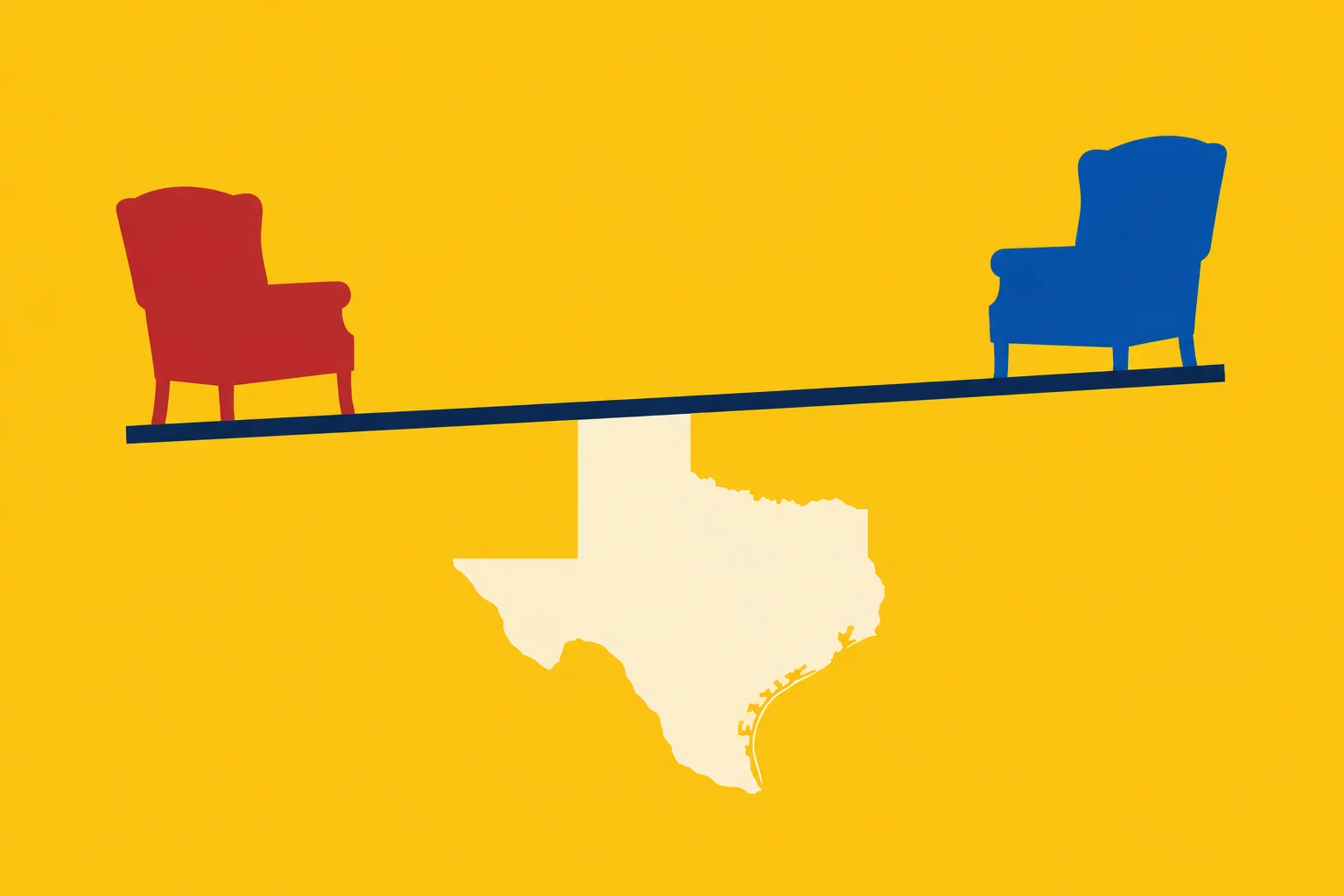
In Tuesday’s U.S. midterm elections, the race with the most riding on it is for a Senate seat in Texas. Republican Ken Paxton faces Democrat James Talarico, and the outcome could decide which party controls the Senate for the rest of Donald Trump’s presidency, as CBC News’ Mike Crawley reports. “If we lose Texas, we’re going to lose the country,” Paxton has told crowds at rally after rally — which is standard campaign hyperbole, except that the arithmetic of Senate control makes it unusually close to true.
Here is the odd part: nearly every reason the Republicans might lose Texas traces back to Trump himself. He intervened from the start, endorsing Paxton to become the party’s candidate over the long-serving incumbent senator, John Cornyn. Now the reasons the seat is at risk — Paxton’s ethical record, the high price of gas and diesel after Trump’s war on Iran, and heavy-handed Immigration and Customs Enforcement tactics — all belong to the president. No Texas Democrat has won a U.S. Senate race since 1988, the year before Talarico was born. Trump carried the state by 13 percentage points just two years ago. And yet polling averages now suggest a Democratic win is a distinct possibility.
Paxton has been the state’s attorney general since 2015, and his baggage is genuinely unusual. A grand jury indicted him for securities fraud — a charge dropped only after he struck a plea deal — and the Texas House impeached him for abusing his office to help a political donor, though the state Senate declined to convict. Last year his wife, a Texas state senator, filed for divorce citing “biblical grounds” and accusing him of adultery.? This is the man the president chose for the seat.
Talarico is a former teacher and Presbyterian seminarian who has served in the state legislature since 2019. Paxton campaigns on low taxes, a crackdown on illegal immigration and Trump’s agenda; Talarico on stopping cuts to health-care funding, term limits for Congress, and shifting the tax burden from the middle class to corporations and the wealthy. Both describe the stakes in monumental terms. The race “isn’t just red versus blue,” Paxton told a rally in the Dallas suburb of Allen. “It’s the America our founders gave us versus something they would never recognize.” Talarico, in Fort Worth the same day, shot back that “Ken Paxton is everything that’s wrong with our politics. We are running against the most corrupt politician in Texas.” Some of Paxton’s allies go further: Lydia Elizondo, the Republican candidate for district attorney in Hidalgo County, told a crowd, “We cannot let evil win. That evil has a name, and its name is James Talarico.”

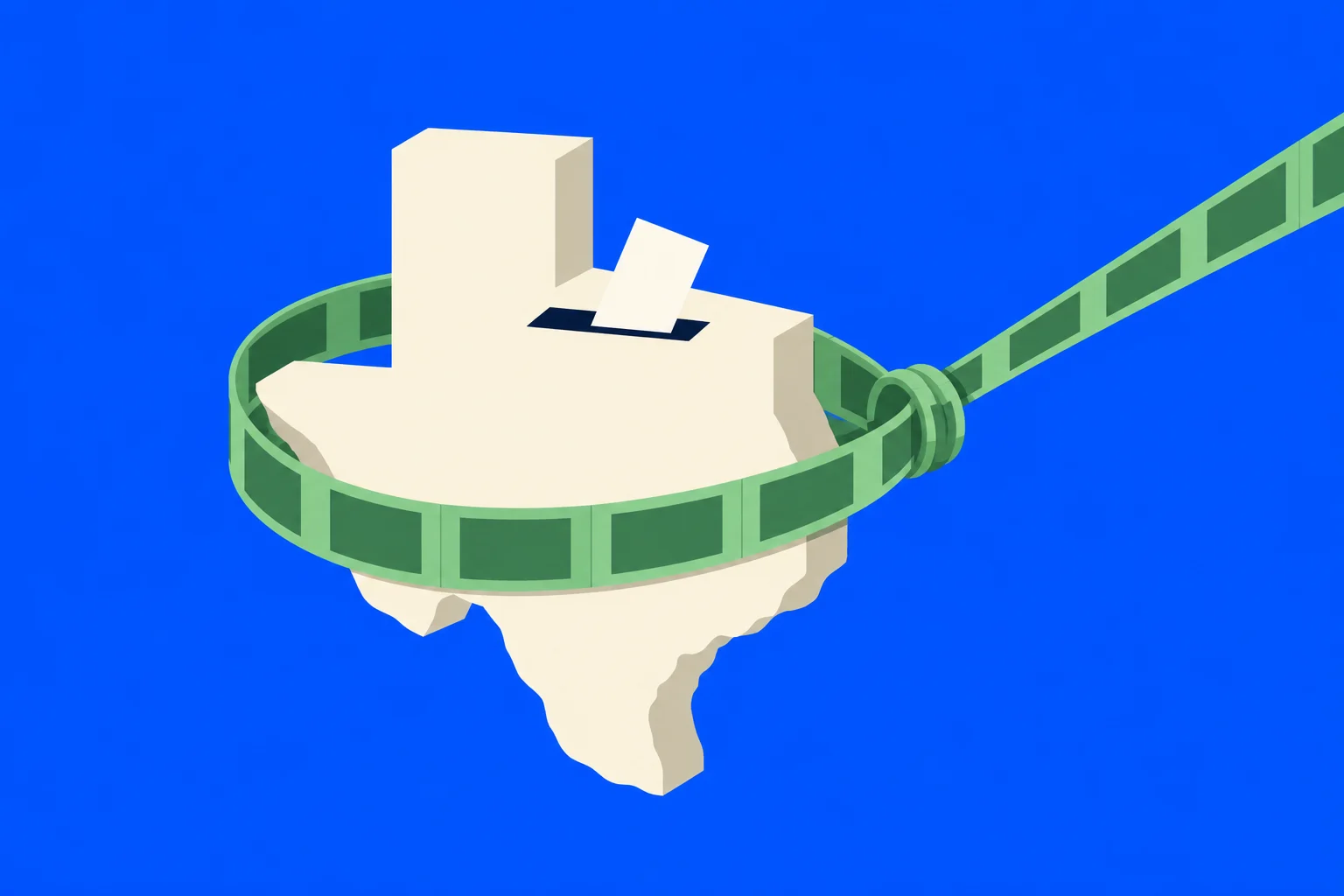
And then there is the money, which is a story of its own. Spending on advertising by the candidates, the parties and corporate-funded political action committees since the Texas primaries began has passed $500 million US, according to data compiled by the firm AdImpact — putting the race on track to become the single-most expensive non-presidential campaign in American history. A large share of it comes from one man: two of Elon Musk’s political action committees have funnelled more than $210 million US to help Paxton, according to election finance filings.
Consider what that $210 million is buying, economically speaking. If this race really does decide Senate control, then one Texas seat is worth rather a lot to someone whose businesses live in a world of federal regulators and contracts, and $210 million is a rounding error against that. The actual ads, though, are not about regulation. They are culture-war turnout machines: one claims Talarico wants “taxpayer-funded sex-change surgeries on kids,” another that he backs “putting parents in jail if they do not support surgically transitioning their children.” Talarico has rejected the accusations as lies, and he has made the spending itself into a closing argument. “Elon Musk is trying to buy this Senate seat,” he told a booing Fort Worth crowd. “But on November 3rd, we will deliver a crystal-clear message to the world’s first trillionaire. We will let Elon Musk know that Texas is not for sale.”
There are signs the Democratic message is landing. During the first week of early voting in Texas, voters who had previously cast ballots in Democratic primaries slightly outnumbered those from Republican primaries — a scenario one Republican political consultant called unprecedented. In the South Texas city of Edinburg, first-time voter Laysha Chavez, a biology student, told CBC News that ICE deportations separating long-settled families were her deciding factor: “Seeing that happen really breaks my heart because you never know who it could be next.” A range of polling suggests Hispanic Texans, who swung toward Trump in record numbers in 2024, have soured on Republicans in 2026. Paxton still draws committed supporters — about 100 attended his evening rally in Edinburg — such as Ruben Martinez, who backs the party’s handling of illegal immigration: “So it’s not fair that somebody just comes out of nowhere and goes straight to the door and maybe fills up the last seat.”
I think the interesting question is not whether Texas has turned blue — a 13-point state does not quietly flip — but what it costs to hold. Voters on both sides talk about values as much as pocketbooks. At the Fort Worth rally, Daniel Mitchell wore a T-shirt reading “I’m a Talafreako,” reclaiming a nickname Trump uses for Talarico; of Paxton he said, “Paxton’s a fraud ... you can tell that he sells out for whatever makes him happiest in the moment.” At Paxton’s rally in Allen, attendees covered the campaign bus with Christian messages — Mardi Day of Plano chose “Blessed is the nation whose God is the Lord” — and neither the corruption allegations nor the adultery claims have moved Paxton’s most devout backers an inch. Message discipline on one side; faith and loyalty on the other; and $500 million of advertising in between. Texas, on November 3rd, will reveal what money can and cannot buy.