
On 21 September 2026 Greg Abbott, the governor of Texas, told the Texas Commission on Environmental Quality to stop. The state’s grid operator, ERCOT, was to finish an audit of what the data center boom was doing to the electricity supply, and until it did, the governor’s statement said, “TCEQ will issue no permits sought by data center projects.” The sentence was short and left no room for doubt. The commission was given until Monday, 19 October, to report back on how it was complying.
An order is a piece of paper. Underneath the paper, a state keeps machinery that does not read governors’ letters.
The stamp
At the TCEQ that machinery has a name: STEERS, the commission’s electronic system for filing construction applications. Part of its work is to grant what the agency calls automatic authorizations. One of these is the construction stormwater permit, which lets a builder raise and level the ground. In Texas that approval is a key step for any construction project, and sometimes the last one.
“STEERS is a portal that TCEQ uses to rubber stamp construction approvals,” Sam Law, a researcher at the FracTracker Alliance, told Matthew Gault of 404 Media. “It seems like they forgot about it and the portal has been quietly issuing approvals since the governor’s order for a pause, including for OpenAI and Amazon this Monday and Tuesday.”

On 19 October, the day the compliance update was due, FracTracker and Public Citizen published their findings. As Inside Climate News reported, the groups counted 35 permitting actions on data center projects between 21 September and 16 October. Fourteen were applications for gas plants and generators that moved forward in review. Eleven were construction stormwater approvals. Seven were air emission-limit certifications and three were public notices for major-source air permits. Notices of preliminary approval were mailed to the NRG Prairie Energy Center, VoltaGrid’s ABI-1 power plant and a self-powered Nexus data center in Hubbard. Stormwater approvals went to the Caldwell Valley Technology Park in Caldwell County, Crusoe’s campus in Abilene and EdgeConneX’s Cedar Creek campus. On 14 October, the report noted, the agency had told FracTracker that permits for infrastructure directly supporting data centers were paused and that applications could be filed but would not advance.
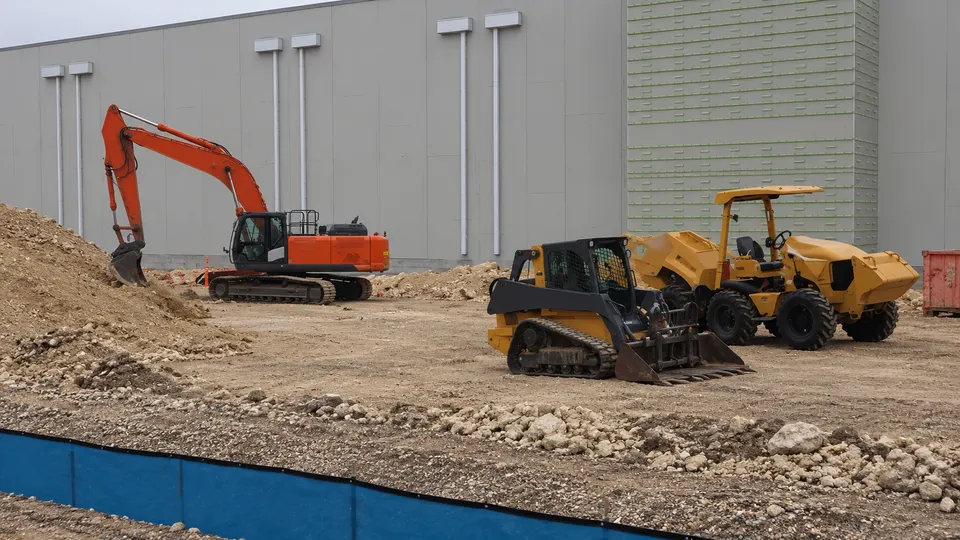
The gas plants had kept moving through the files before, as rews reported earlier this week. What was new was the ground itself, being cleared and levelled under permits the state said it had stopped issuing.
Two versions of the record
The state’s first answer was about wording. Andrew Mahaleris, the governor’s press secretary, said the pause applied to approving permits, not to processing them. “No permits have been approved,” he said. In its 19 October letter to Abbott, the Texas Tribune reported, the commission’s interim executive director wrote that the agency had paused permits connected to construction or infrastructure “directly supporting data centers.”

The commission’s own database said something else. According to Public Citizen, the registry marked each of these permits “approved” and “active”, with start dates after the governor’s directive. The group says the agency still denies having issued them. “The TCEQ failed to follow the governor’s directive and is trying to gaslight Texans about it,” said Kathryn Guerra of its TCEQ Watchdog Campaign.
This is an old problem for bureaucracies, offered here as reflection rather than reporting. An official can say what the government intends, but a database records what the government actually did, and the two do not always match.
Going dark
On Tuesday, 20 October, the STEERS site returned a 404 error. Before it went down, 404 Media had looked at 17 permits tied to data center projects and seen them change from “active” to “suspended” in the commission’s central registry. All 17 were stormwater construction approvals. Houston Public Media reported that a TCEQ spokesman, Ryan Vise, confirmed the suspensions in a statement that day. The commission did not answer 404 Media’s request for comment, and Law said his own inquiries got no reply.
By Wednesday the site carried a notice:
TCEQ’s electronic filing application used for automatic authorizations has been temporarily shut down to ensure all applications are reviewed by agency staff to determine if they are related to data centers.

So the system that had been approving permits on its own will now have people checking what it receives. Law noticed the irony. “Now they’ve taken the unprecedented step of suspending 17 approvals and taking down the whole site as they switch to a more involved human review process,” he said. “The irony is not lost on me. When fighting the AI data centers build out, it’s nice to have a clear example of how some work is better left to humans.” According to Public Citizen, the groups found another permit approved as late as Wednesday.
Nobody can yet say how long the pause will last. Lawyers at Bracewell expect ERCOT’s audit to be finished in mid-December. The firm also notes that developers cannot get around the freeze by generating their own power, because on-site gas generation needs TCEQ air permits, and those are paused too. Beveridge & Diamond, another firm, says there is no clear date for when the audits will end or when the commission will start issuing permits again.
Law’s last worry concerned the sites themselves. “I am very concerned that since contractors are accustomed to this automated approval process, they might not be aware of the suspension and continuing construction at some of the largest hyperscale facilities in Texas,” he said.