
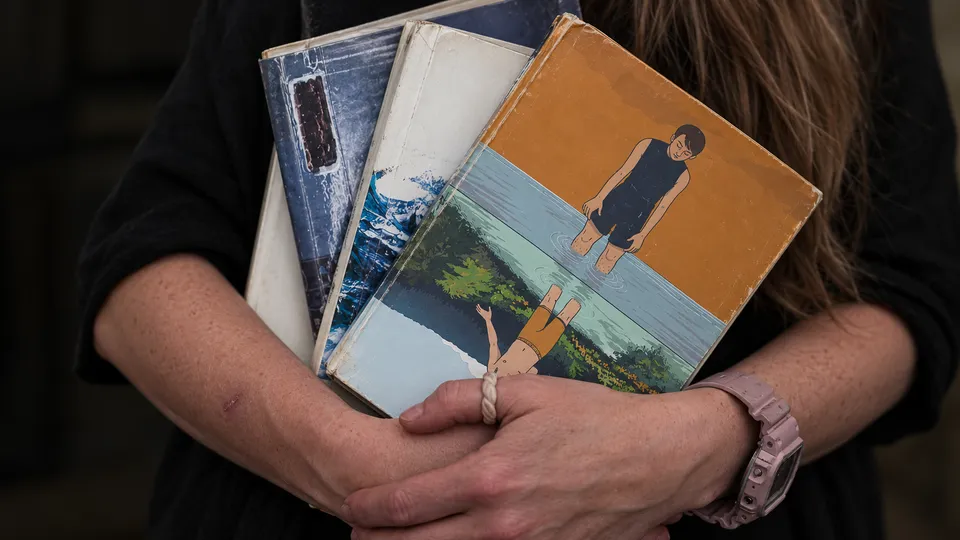
PEN America released a report on Monday counting nearly 12,000 book bans covering more than 7,300 individual titles in US schools during the 2025–2026 school year — the largest censorship figures the organization has ever recorded. The precise number, per other outlets’ reads of the report, was 11,982 bans across 114 school districts, also a record, with more than 4,500 of the banned titles not previously seen in PEN America’s tracking — another record, reported Straight Arrow News. Records tend to be set at the margins. These were set by an avalanche.
Texas alone accounted for more than 8,100 bans, roughly three-quarters of the national total and more than double the count in Florida, which was the second-most prolific state with over 3,200. Between them, two states produced about 94 percent of all the bans PEN America counted. According to PEN America, the Texas surge flowed from SB 13, a state law passed in 2025 that banned a broad array of books censorship proponents consider “profane” or “indecent.”
It is worth pausing on what SB 13 does mechanically. On PEN America’s own description, the law adds the “indecent” or “profane” prohibition on top of library restrictions passed in 2023 and requires the immediate removal of any challenged material, regardless of whether the challenge has merit. So the compliance posture for a school district is not “evaluate complaints”; it’s “pull first.” If you’re a district administrator facing a vague statute and personal liability-shaped uncertainty, mass removal is the cheap option.
Which is where the software comes in. PEN America found the Texas bans have been unusually broad because state officials used artificial intelligence to generate a recommended list of books to ban. “In several cases, AI recommended banning books that were banned elsewhere,” the report notes, “creating a snowball effect for frequently banned books while the expertise of librarians and the communities they serve are ignored.”
Think of it as a small optimization problem, the kind an AI is genuinely good at: a book is more likely to be bannable if another district already judged it bannable, so the model learns to flag whatever everyone else flagged, and the list mostly grows in one direction. A librarian, by construction, has seen the book in the library and has some local knowledge about who reads it. The AI has seen a training set. Neither of these is a legal standard, but only one of them scales to 8,100 bans in a school year.
The most frequently banned book in the country was Sold, a 2006 young adult novel by journalist Patricia McCormick about a teenage girl in Nepal sold into sexual slavery. The most banned individual author was Stephen King.
Kasey Meehan, director of PEN America’s Freedom to Read program, argued that banning popular young adult titles is doubly damaging at a time when reading is broadly declining. “Schools should be doing everything possible to connect kids with reading by introducing them to engaging stories and formats,” Meehan said. “Instead, many are doing the opposite, banning books that help kids see themselves in literature, deepen their understanding and empathy of others, and develop their imaginations.”
Philomena Polefrone, the program’s senior manager, attributed the breadth of the bans to “chilling directives from state politicians” that “have created chaos and fear.” “Unsure how to comply, districts are removing books en masse, sometimes with the ‘help’ of crude AI tools that only make the problem worse,” Polefrone said. “Increasingly, these bans are invisible. Thousands of these cases are only recorded because of public information requests by Florida Freedom to Read and Texas Freedom to Read. Books paid for by taxpayers are being removed from shelves and the local community may not even know about it.”
So the loop closes neatly. Taxpayers buy the books. The state passes a law vague enough that districts remove them en masse to be safe. Software picks the books based, in part, on what got removed somewhere else. And the only reason anyone outside the district finds out is if a nonprofit files a records request. The most remarkable number in the whole report may be that 12,000 is the count of the bans somebody managed to see.