
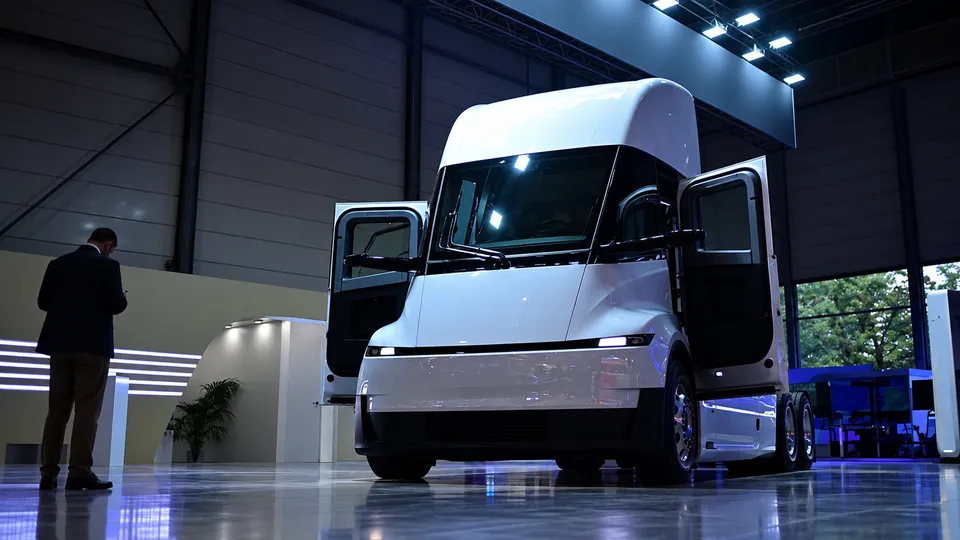
The Tesla Semi was unveiled in November of 2017, which means the truck is now old enough to have a history of being promised. It has one. Production was first predicted for 2019; it began in October 2022, dribbled, stalled. On Thursday, Tesla opened its first factory for high-volume Semi production in Sparks, Nevada, according to CNBC, and marked the moment with a pre-taped address from Elon Musk. Electrek reports the plant is built for 50,000 trucks a year, with a new drivetrain and 4680 cells, and deliveries starting now. The long-range model still claims the number from nine years ago: 500 miles.
Nine years is long enough for the world the truck was designed for to be dismantled. Wired notes that the Trump administration and the GOP — the same group Musk spent millions to put into the White House — cut billions in federal support for electric vehicles last year, and is now working to lower fuel-economy standards for truck engines, rules that would have forced manufacturers toward aggressive climate goals. Heavy trucks account for some 7 percent of U.S. greenhouse gas emissions. The buyer of a 500-mile electric rig now lives in a country whose infrastructure ambitions for such rigs have been, to use the available word, reduced.
And yet the buyer is coming anyway. This week an alliance of shippers that includes Microsoft and PepsiCo placed a record order for 2,500 Semis, to be delivered starting this year and continuing over the next 18 months, Wired reports. If the trucks arrive, they would nearly double the number of heavy-duty electric trucks on American roads. The alliance said pooling demand among many carriers let the manufacturers bring prices down.
The selection was not an act of faith, at least on paper. The group chose Tesla over competitors after “assessing price, performance, production capability, and service support,” Meena Bibra, a spokesperson for the nonprofit Smart Freight Centre, which was involved in the deal, told Wired. Carriers accustomed to another maker’s vehicles, or whose needs are better met elsewhere, may still buy electric trucks from Kenworth, Ride and Volvo.
What changed, since the last time the Semi was almost here, is the price of not buying one. U.S. diesel prices hit record highs this month, up nearly double from a year ago, as the Iran War disrupts oil production and shipping in the Middle East. Musk, in his address, said the truck “is going to make a ton of sense economically because the cost of electricity is much less than the cost of diesel, especially in these crazy times” — according to Wired’s account, a nod to the conflict launched by the administration he once worked for. The arithmetic of the fleet manager has gone where the policy of the government refused to.
One thing has not arrived. Full Self-Driving (Supervised), Tesla’s driver-assistance feature, will not be available on the Semi at launch, though Musk said in the address it would debut in “the very near future.” The phrase has a lineage. The predecessor technology, Enhanced Autopilot, was promised at the original 2017 unveiling. Nine years, and the future remains very near.