
Ten commercial tankers were attacked in the Strait of Hormuz between September 28 and October 4, a weekly record and well above the previous high of six, according to Kpler data cited in a CNN report. On Tuesday only seven tankers transited the strait, less than half the seven-day average and the lowest daily count since July 23. The strait is the main exit route for Gulf crude, which is why a count of seven crossings moves prices thousands of kilometres away.
Brent crude, the global benchmark, rose more than 5% intraday on Thursday before settling at $105 a barrel, up 4.8%, at 8:30 a.m. ET. West Texas Intermediate rose by a similar margin to $92.48. European natural gas prices neared their mid-September high before pulling back, and ICE Gasoil Futures, the European diesel benchmark, closed 6% higher on Wednesday. The bond market read this as inflation: European bonds sold off on the continent’s reliance on imported energy.
One caveat on the transit count: Kpler describes its figures as preliminary, and they tend to be revised upward. Many ships now switch off their automatic identification systems to avoid detection — so-called ‘dark’ transits — so the real number of crossings is higher than seven by an unknown margin. The attacks, though, are hard to hide. In the latest incident on Wednesday, a tanker reported being struck by “multiple projectiles,” causing casualties, according to the UK Maritime Trade Operations agency.
The awkward part for the market is that attacks are rising while supply from the region is improving. More crude has been flowing out of the Gulf even as the risk to crews and cargoes grows. “There is a clear tug-of-war at the moment between improving supply from the region and lingering threats to supply,” commodities strategists at the bank ING wrote in a note Wednesday. “The only way to see prices trade sustainably lower is for lingering risks to be addressed.” That is a conditional, and the record shows the condition is not being met: attacks per week went from a high of six to a new high of ten.
Hormuz is not the only constraint this week
Hurricane Isais is heading for the US Gulf Coast refining hub. Shell and Chevron said they would curtail regional production and evacuate nonessential personnel. Separately, the International Energy Agency said its member governments would not add to the 400 million barrels of oil they agreed to release in March — the announcement that sent European diesel futures up 6% on Wednesday.
On that release, the arithmetic is worth keeping straight. Roughly 325 million of the 400 million barrels have been released to date, leaving about 100 million still to reach the market — including the diesel release G7 countries agreed to last week — which the IEA said Wednesday it would “accelerate.” Behind that sits a larger buffer: member governments hold about 1.1 billion barrels of public emergency stocks, of which over 200 million barrels are diesel, according to the agency. “The IEA stands ready to release more of these stocks to the market if and when required,” it said.
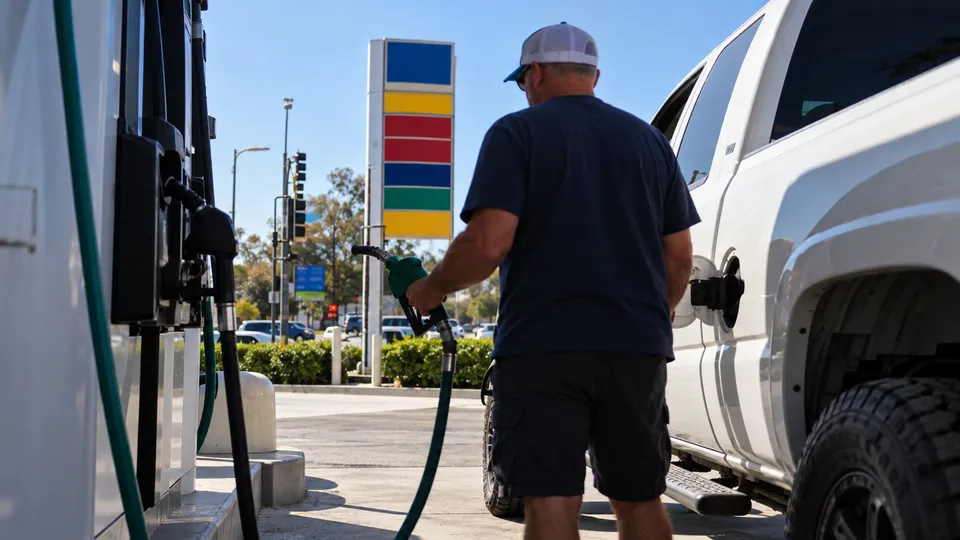
At the pump, none of this is translating into relief yet, but it isn’t compounding either: average US diesel was $6.28 a gallon on Thursday, slightly down on the day, and regular gasoline was flat at $4.36, per AAA data. The numbers to watch next are the revised Kpler transit count for Tuesday — how far above seven it climbs once dark transits are captured — and whether the next week’s attack tally comes in below ten. Both are measurable, and the market is pricing both.