
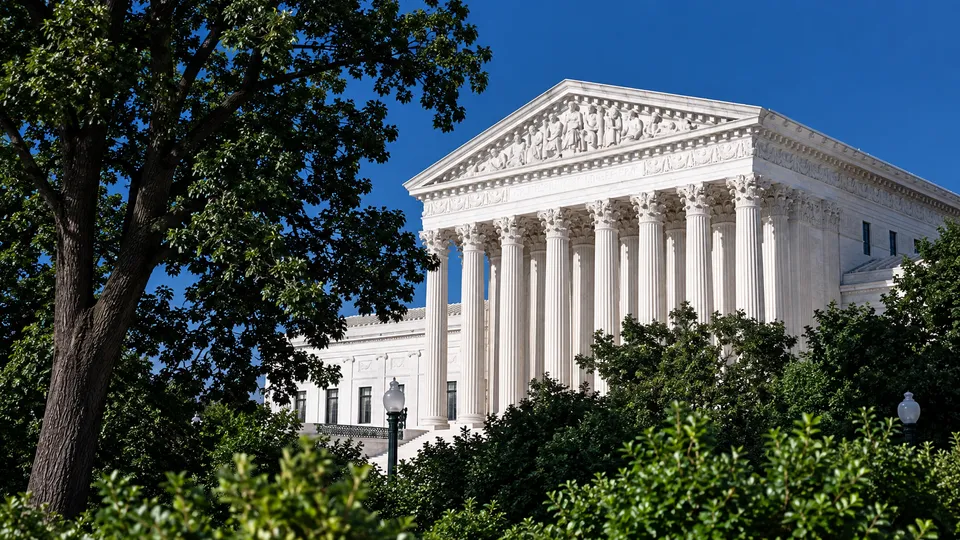
The U.S. Supreme Court on Tuesday let the Trump administration resume deporting migrants to countries other than their own without giving them a chance to raise fears of torture there, and said it would hear full arguments in the case in December.
More than 25,000 migrants have been deported to at least 29 countries under the policy since it began last year, according to a tally by human rights groups cited by Reuters.
The court’s six-justice conservative majority granted an emergency request from the Justice Department to put on hold a ruling by U.S. District Judge Brian Murphy in Boston, which the Boston-based 1st U.S. Circuit Court of Appeals had upheld on September 18. Murphy found in February that the policy violates federal immigration law and the due process protections of the Fifth Amendment. The court’s brief, unsigned order gave no reasoning.
Justices Sonia Sotomayor, Elena Kagan and Ketanji Brown Jackson dissented without issuing a written opinion, according to the order. It is the third time the court has allowed the administration to enforce the policy on an emergency basis, according to CNN and NBC News.
The justices said they would hear oral arguments in December on whether the district court had jurisdiction to decide the case and to order relief covering the entire class of migrants, and whether the policy itself is lawful under due process protections and the Convention Against Torture, a treaty the Senate ratified in 1994 that generally bars deportation to a country where torture is likely. The court also invited the government to propose additional questions, according to SCOTUSblog. A ruling is expected by July, according to CNN and MS NOW.
Competing accounts of harm
Solicitor General D. John Sauer told the court the policy is “an essential tool to remove certain aliens, including some of the worst criminal aliens,” and said the appeals court ruling had caused “substantial logistical problems with ongoing removal operations,” including the cancellation of a flight carrying about 70 people with criminal convictions bound for three countries, according to Reuters and NBC News.
James Percival, general counsel of the Department of Homeland Security, wrote on social media that the ruling was “a bad day for criminal illegals and open-borders activists alike,” adding, “It’s not too late to get $3,000 and a flight home.” Attorney General Todd Blanche called the policy “entirely lawful and a critical tool for immigration enforcement.”
Trina Realmuto, a lawyer for the plaintiffs at the National Immigration Litigation Alliance, said the court had “allowed the administration to resume sending people to third countries where they face persecution or torture,” calling it “a devastating result for people who may be put on a plane before they ever have notice or an opportunity to raise a fear claim.” In court filings, her office said deported migrants had faced “prolonged and arbitrary detention, beatings and sexual assault, disappearance, and chain refoulement to countries from which the United States had already granted them protection.”
Denying a stay does not prevent third-country removals. Rather, it simply requires them to do so lawfully.
The lead plaintiff, identified in court papers only as D.V.D., is a Cuban immigrant with severe mental illness who says he fears being sent to a country without psychiatric care, according to NBC News.
Reports of abuse abroad
The ruling came a day after more than 20 independent United Nations human rights experts warned that the deportations were “triggering a cascade of human rights violations” in the more than 35 countries that have signed agreements to accept deportees, increasing risks of “torture and ill-treatment and enforced disappearance” and breaching the international principle against returning people to danger, according to the experts’ statement. They said children, women, people with disabilities, trafficking victims, LGBT people and stateless people faced the gravest risk.
Earlier this month, two men deported to Equatorial Guinea, Ahmed Soliman and Samson Birhane, were arrested by local police, had bags placed over their heads and were beaten in the head, back and ribs, according to lawyers and Amnesty International cited by the Associated Press. Representative Adelita Grijalva, an Arizona Democrat whose constituent Soliman had lived in Phoenix, said the policy was “a black eye on Lady Liberty” and that the United States was “sending vulnerable people into harm’s way – and, in some cases, potentially to their deaths.”

Deportees have been sent to countries including South Sudan, Uganda, Liberia, the Central African Republic and Equatorial Guinea, with the largest number going to Mexico, according to Reuters and the Migration Policy Institute. The State Department advises Americans against travel to South Sudan because of crime, kidnapping and armed conflict, NPR reported.
Under the policy, migrants can be deported quickly to a third country that has given a blanket diplomatic assurance it will not torture or persecute them, or, absent such assurance, must be notified of the destination and given a chance to raise a fear of harm on their own, according to Reuters. The Trump administration has said such assurances from receiving governments make individual case-by-case review unnecessary.
The Supreme Court’s order came days after Sauer filed an emergency appeal on September 24 asking the justices to pause the appeals court ruling. Oral arguments are scheduled for the court’s December session, with a final decision expected before the term ends next summer.