
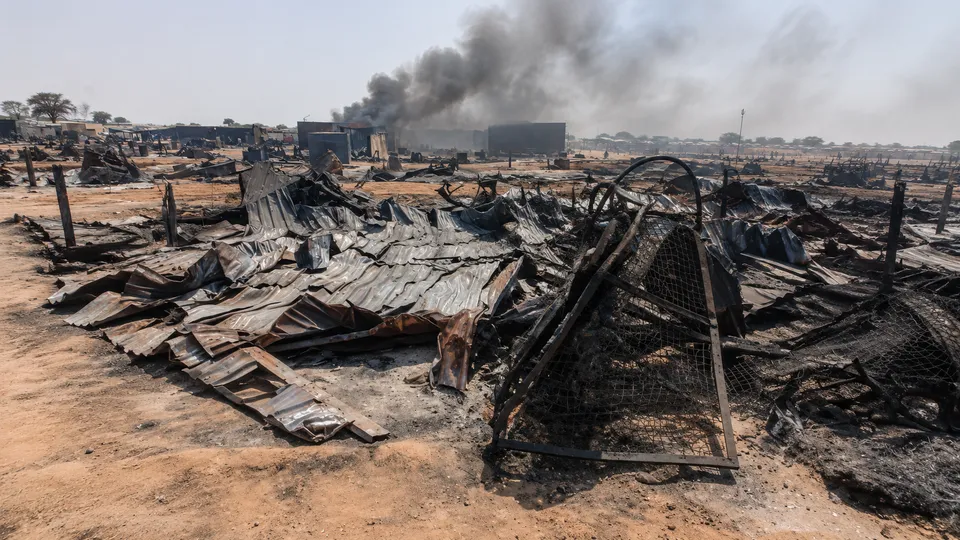
More than 180 drones launched from Ethiopian territory have struck Sudan, according to Sudan’s Sovereignty Council, headed by army chief Abdel Fattah al-Burhan. Khartoum has now carried that claim to two bodies at once: a formal complaint to the United Nations Security Council and another to the African Union’s Peace and Security Council, filings Al Jazeera reported on November 2 after a series of deadly drone attacks this year.
The allegation, as Mohammad Mansour laid out in Al Jazeera, is that the Rapid Support Forces — the paramilitary that has been at war with the Sudanese Armed Forces since April 2023 — is using Ethiopian territory to launch attacks against civilian sites, including power stations. Three and a half years into the war, that would make the conflict’s supply chain explicitly cross-border: not just foreign backing for the RSF, which has been alleged before, but foreign soil as a launch platform.
Mansour’s central point is that the accusation sits on a deep and longstanding rift between Sudan and Ethiopia — one that, he writes, threatens to intensify the internal conflicts running in both countries. Ethiopia has its own armed fractures; Sudan’s war has already split the state. A filing at the Security Council does not settle whether the drones in fact launched from Ethiopian territory, and no independent verification of the 180-drone figure has been produced. What it settles is that Khartoum now wants the claim on the record of two international bodies, whether or not either acts.
What would move this from allegation to established fact is technical and knowable: recovered airframes, radar tracks or satellite imagery putting launch points inside Ethiopia, or a UN panel-of-experts finding to that effect. The next number to watch is whether the Security Council takes up the complaint at all — and what Ethiopia says when it does.