
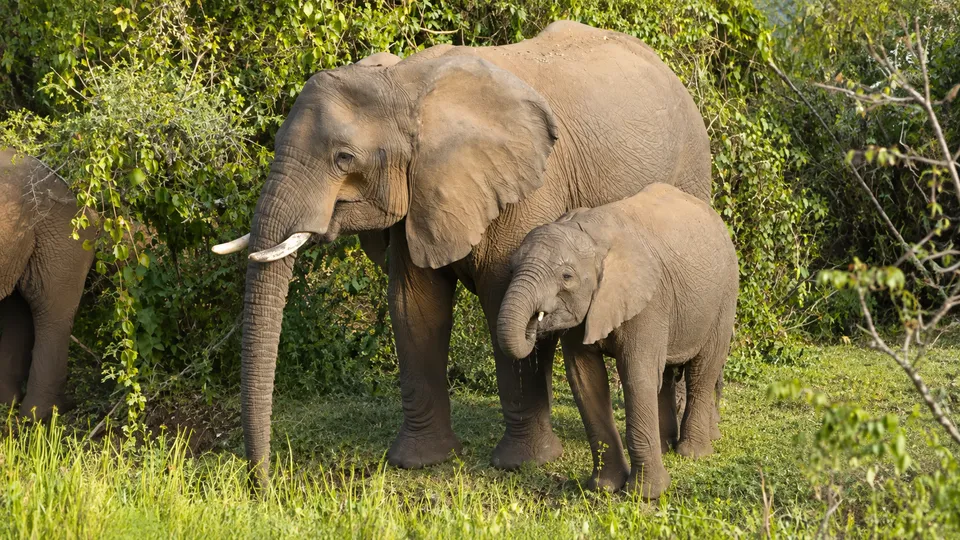
African elephants in Kenya’s Mount Elgon region may treat themselves and their young with medicinal plants, according to a study published on Thursday in the journal Nature that drew on the knowledge of local communities.
The research identified 35 plants that elephants are reported to seek out, 34 of which are used locally in traditional medicine, according to the study, which was reported by CBC.
Elodie Freymann, a co-author of the study and a post-doctoral fellow at Brown University in Rhode Island who studies animal self-medication, told CBC the accounts were no longer a surprise to her.
“Knowing how intelligent and complex elephants are and elephant societies are, it was just a matter of time, I think, before we began learning just about the extent of the diversity of the medicinal plants that elephants are using in the wild.”
The findings rest on interviews with eight members of the Sabaot community who have lived and worked alongside the elephants for decades, including wildlife scouts, community guides and village elders, CBC reported.
They described elephants that appeared weak, lethargic or sick in the stomach seeking out specific plants used in local medicine, and mother elephants feeding known medicinal plants to their calves, in one account mixing a plant with her milk.
Eight of the nine most frequently mentioned plants have documented pharmacological properties in scientific literature, according to the study.
“We went to the source. We went to people who have lived amongst these elephant populations for decades and decades,” Freymann told CBC, adding that Western science had for a long time failed to champion local voices.
Chase LaDue, an elephant ecologist not involved in the research, called the study a good starting point but said it did not prove the elephants were intentionally medicating themselves or their young.
“There were no health data showing any of these elephants were actually sick, and nobody measured whether eating these plants changed anything,” said LaDue, a curator at the Oklahoma City Zoo and executive director of the Sri Lanka Elephant Project, in an email to CBC.
LaDue said calves routinely put their trunks into their mothers’ mouths to sample what she is chewing, one of the main ways they learn what to eat. “It’s possible something like that is being described here and understood through a medical lens. I’d want to see it before calling it medicine,” he said.
He also noted that in a region rich in plants, overlap between elephants’ diets and traditional medicine could be coincidence. Freymann countered that medicinal plants tend to contain bitter compounds, saying: “In small doses, they’re medicines, but in high doses, they’re poisons.”
Freymann agreed the study was only a first step. Her team has given the interviewees cameras to record elephants consuming the plants, and reviewing that footage will be the next phase of the research, CBC reported.
If confirmed, elephants would join chimpanzees, other great apes and some insects and birds among animals documented self-medicating. “Habitat loss doesn’t just mean the loss of foods for animals. It doesn’t mean the loss of territory for animals. It also means the loss for medicine,” Freymann said.