
Nearly 93% of known plastic chemicals used in food packaging, clothing, toys and other common household and personal care products pose a high risk to human health, a report released on Wednesday found.
The potential harms include cancer, genetic changes and endocrine, reproductive and organ toxicity, said Naima Fenderl, lead author of “Poison Plastics: How Chemicals in Everyday Plastics are Harming Your Health,” produced by the Environmental Justice Foundation, a London-based nonprofit, and provided exclusively to CNN.
“We looked at what these plastic chemicals can do to the body along with exposure levels to calculate overall health risk,” Fenderl said.
Across five categories the report analysed, almost 92% of chemicals in food-contact plastics were high risk; nearly 89% of children’s toys contained high-risk plastics; some 93% of textiles and clothing were made with dangerous chemicals; over 92% of household products such as bottled water, kitchenware, tableware and office supplies contained high-risk chemicals; and nearly 93% of hygiene and medical plastics — including dental floss, tampons, pill casings, patches and syringes — contained dangerous chemicals.
The report said a further concern was what science does not know: nearly 80% of the 3,552 chemicals it examined lacked sufficient data to determine toxicity or exposure risks.
Dr. Philip Landrigan, a paediatrician and director of the Global Observatory on Planetary Health at Boston College, who was not involved in the report, said it did “a brilliant job” of presenting the information in user-friendly form. “We simply do not have a clue what harm those chemicals might be causing us and our kids,” he said, adding that the names and composition of many chemicals in consumer products are not publicly available.
The American Chemistry Council, an industry trade association, told CNN in an email that the report should be viewed with “considerable caution,” saying it omitted the International Council of Chemical Associations’ publicly available plastic additives database and regulatory databases in the United States and the European Union.
“The report’s selective framing misleads and dubiously characterizes chemicals as unregulated by excluding major regulatory frameworks from the analysis,” said Kimberly Wise White, the council’s vice president of regulatory and scientific affairs. “Without them, this report does more to generate headlines than to advance the science.”
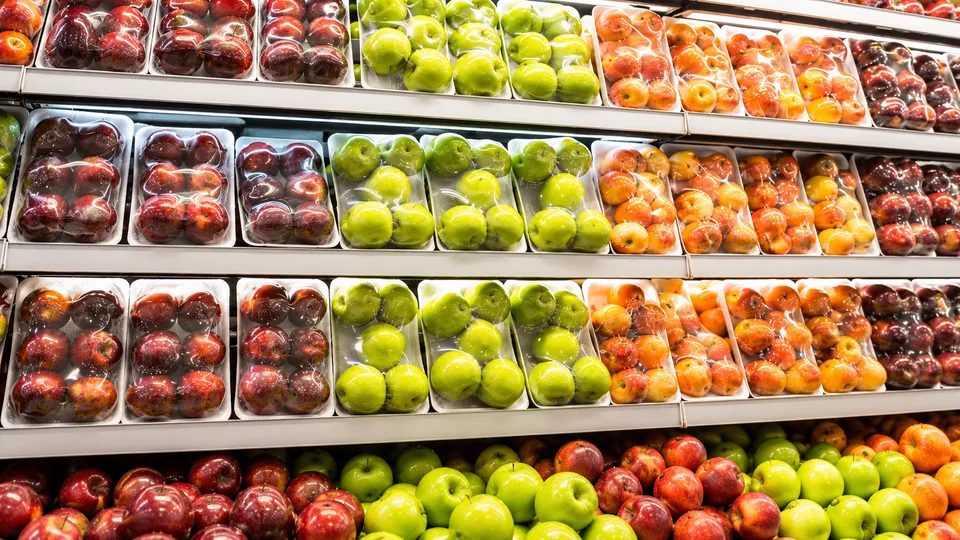
Plastic pervades consumer goods. More than 80% of produce in U.S. supermarkets is wrapped in single-use plastic, about 60% of clothing is made from plastic-based synthetic fabrics and an estimated 90% of toys are made of plastic.
The Environmental Justice Foundation built its analysis on PlastChem, a database created in 2024 by international scientists that identified 16,000 chemicals in plastics, of which 4,200 were deemed “highly hazardous” to human health and the environment and more than 10,000 had no available data. Jane Muncke, a PlastChem co-author and managing director of the Food Packaging Forum in Zurich, said by email that the new report repackaged the data in a “policy-relevant, real-world context.”
PlastChem groups chemicals into 15 priority groups for regulation, including bisphenols such as BPA, which at high levels have been linked to premature death; phthalates, linked to thousands of deaths worldwide from heart disease; and PFAS “forever chemicals,” linked to billions of dollars in U.S. healthcare costs. Many of the chemicals are endocrine disruptors tied to obesity, low birth weight, gestational diabetes, birth defects and neurodevelopmental disorders, said Martin Wagner, PlastChem’s project lead and a biology professor at the Norwegian University of Science and Technology, adding that they also persist in the environment, build up in the body and spread through water.
More than 50% of the known high-risk chemicals are not regulated by major jurisdictions such as the European Union or by treaties including the Basel, Minamata, Montreal, Rotterdam and Stockholm conventions, Fenderl said. “The United States has not ratified several of these international agreements that other countries have ratified, including the Basel, Rotterdam and Stockholm conventions,” she said. “That actually leaves US consumers particularly vulnerable to these health risks.”
Manufacturers made roughly 2 million metric tons of plastic a year in 1950, according to the report; today the figure exceeds 430 million metric tons, and scientists project output will more than double by 2050, along with 2 billion metric tons of chemical plastic additives. Landrigan said 325,000 synthetic chemicals have been invented since chemical manufacturing expanded after World War II, with toxicologic information available on at most about 20% of them.