
At midnight on Wednesday, 11 November, Spain was meant to stop. The country’s two largest union confederations, Comisiones Obreras (CCOO) and the Unión General de Trabajadores (UGT), called a 24-hour general strike under a slogan of three plain words, wages, housing, prices, as Virginia Pietromarchi reported for Al Jazeera. The last time the two called a general strike together was 2012, when the country was deep in an austerity crisis. Fourteen years. A whole generation has come of age in between, and much of it still lives in a parent’s spare room.
The disruption was expected to reach transport, schools, healthcare, shops and public services, with flights cancelled or delayed and city transit running at reduced capacity. Essential sectors keep minimum services, according to idealista’s guide to the day. Smaller unions, the CGT, CO.BAS and Solidaridad Obrera among them, also backed the stoppage. The unions themselves predicted support that would be strong but “asymmetrical”, unevenly spread across regions and trades.
A stretcher in Madrid
Great upheavals often begin with something small, a single person. In September, Maricarmen Abascal, 87 years old, was evicted from the Madrid flat she had lived in for more than seventy years. An investment fund had bought the flat and wanted a steep rise in the rent. She was carried out on a stretcher. The images went around the country. She has since died.
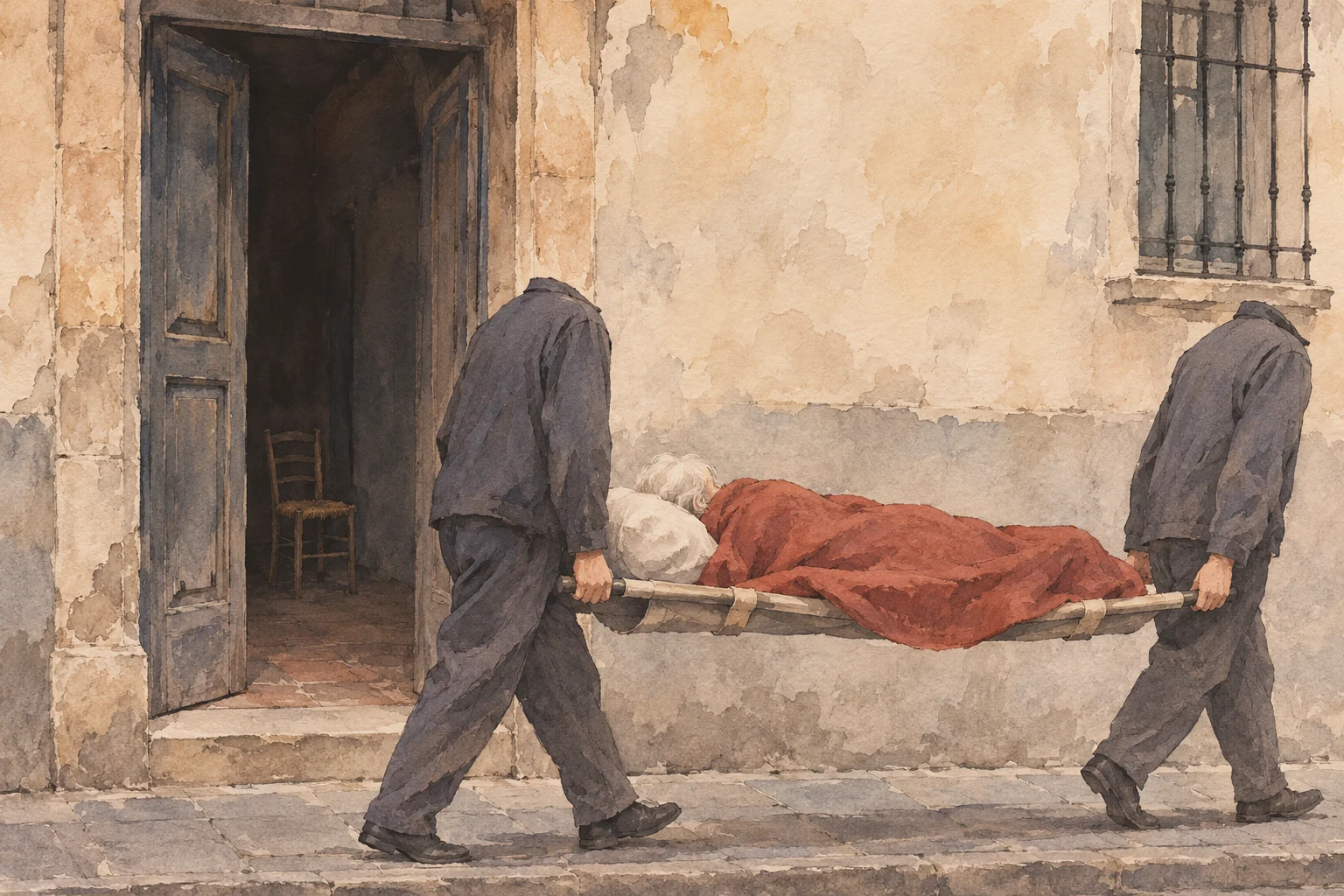
Protests followed, then encampments, then a political crisis that ended with Prime Minister Pedro Sánchez calling a snap election for 29 November. Housing activists turned the anger over her eviction into a call for a general strike, and CCOO and UGT took it up. The machinery of organised labour, so often slow, moved quickly this time because the street had moved first.
The arithmetic of a month
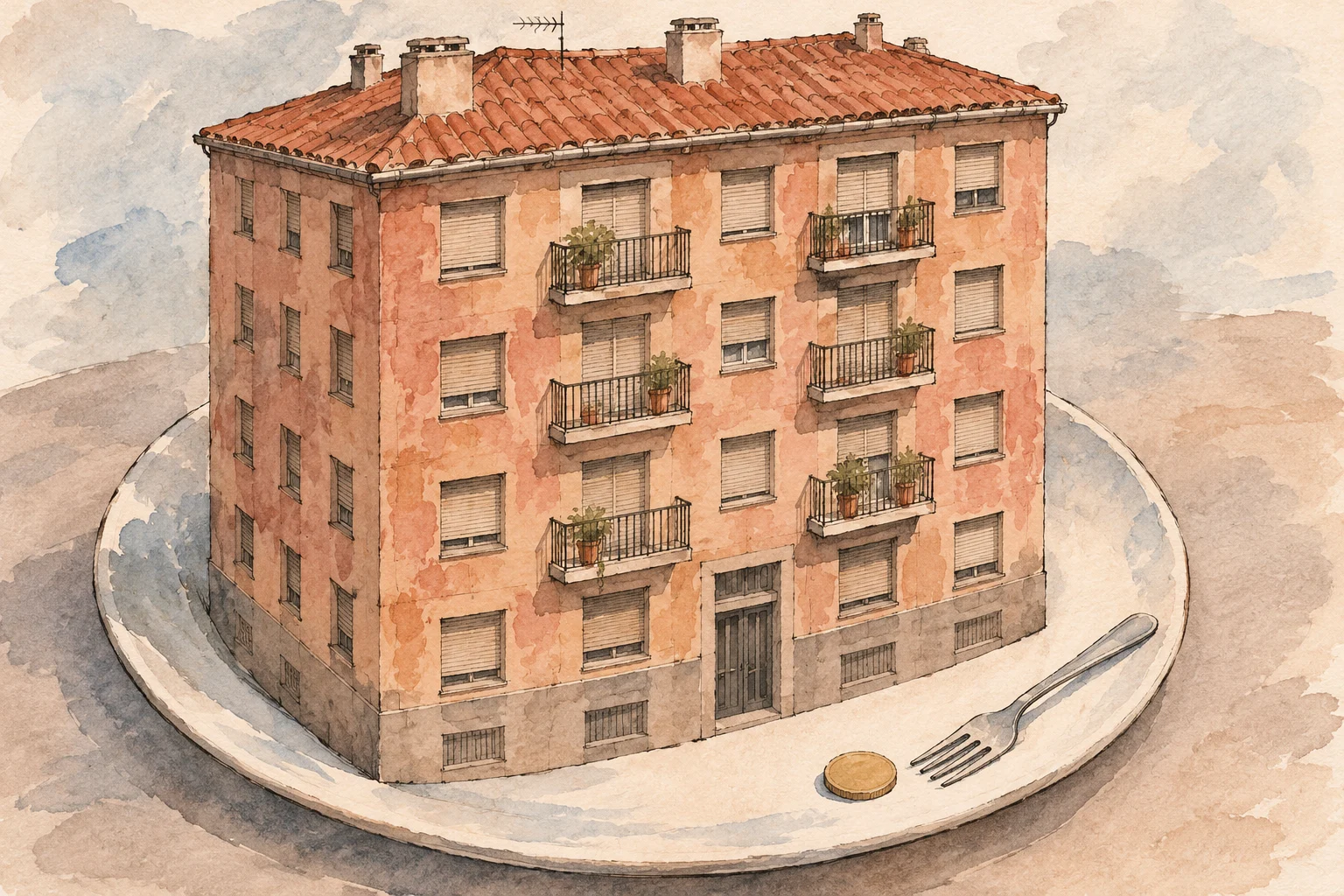
The figures are simple. The Bank of Spain puts the country’s housing shortfall at 750,000 homes, a gap it says could pass one million by 2028. The Spanish Youth Council gives the average monthly rent as €1,176 and the average young person’s salary as €1,190. That leaves fourteen euros a month for food, light, transport and everything else. This is why so many share overcrowded flats or never leave their parents’ homes. Spain has been building too few homes for years, and its rent caps have not filled the gap.
The unions’ demands go past the housing market. They want more state intervention in it, general pay rises of 4 to 7 percent, and an increase of at least 7 percent in the minimum wage in 2027, according to Spanish press accounts of the platform. The UGT leadership also wants pensions, sick leave and the distribution of wealth on the table. They aim the strike at employers’ organisations and at the public administrations responsible for housing, which in a country of strong regions means more than one government.
A government that watches its own strike
There is something odd about a general strike called under a left-wing government, the first of Sánchez’s years in the Moncloa. The prime minister has not explicitly endorsed it. In a video on Monday he praised collective action in general terms: “None of this fell from the sky. They were collective achievements.”
The analyst Luke Stobart calls Sánchez a known risk-taker, and suggests a strike so close to an election “will force everyone to talk about housing.” For a Socialist party that has lost ground over its handling of the Ceuta migration crisis and over corruption scandals touching the prime minister’s inner circle and family, a campaign about rent may look better than a campaign about anything else.
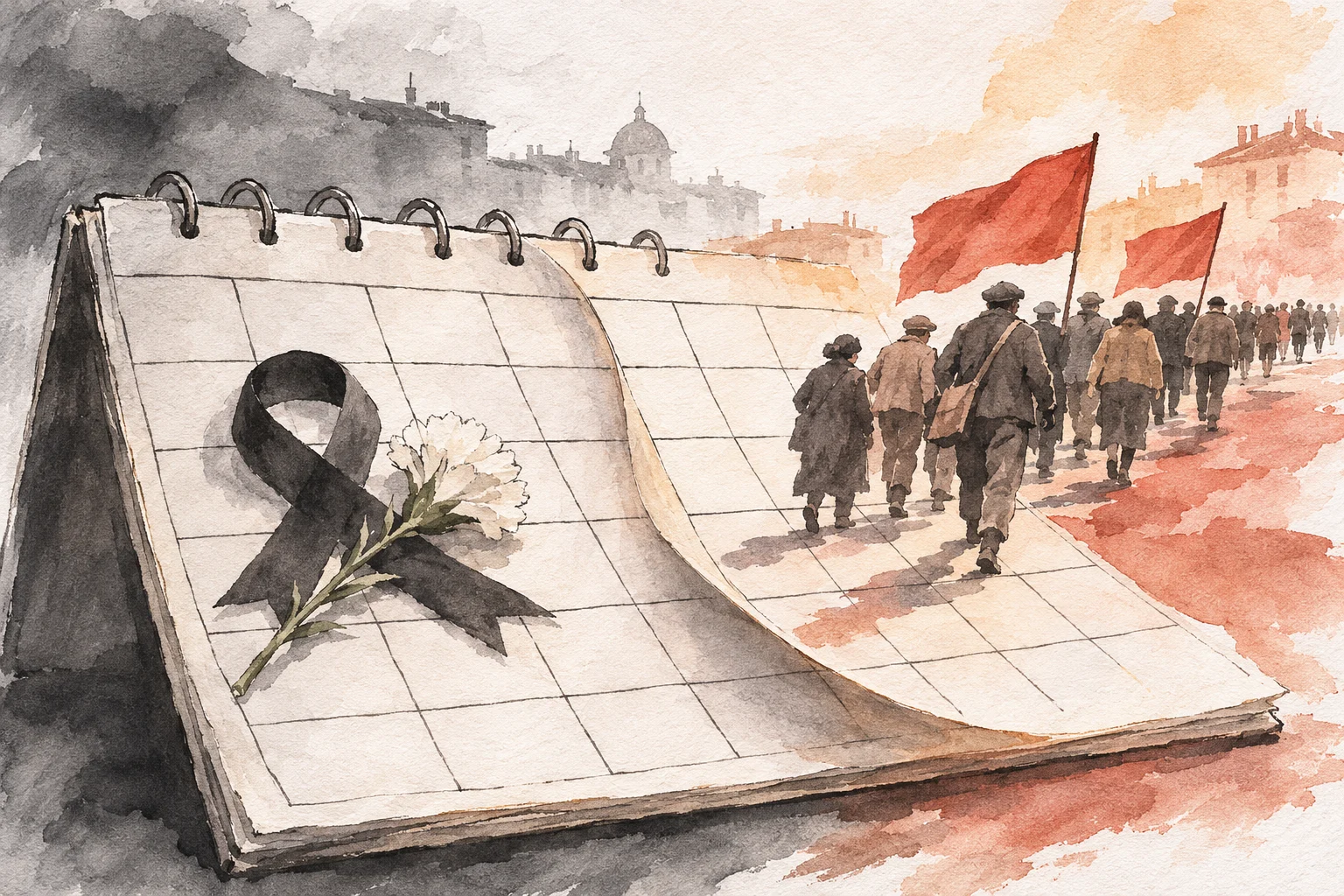
The conservative Partido Popular leads the polls and could govern with the far-right Vox, which would bring the far right into national government for the first time since Franco’s dictatorship ended in 1975. Both parties call the strike politically motivated. Both object to its timing, a day after the state funeral for the victims of a train crash that killed 69 people on the same line as another fatal accident less than a year earlier. The transport minister, Óscar Puente, has resigned.
The grief and the strike landed in the same week. Each side reads the calendar its own way.
Who owns the anger
The left does not speak with one voice either. The Basque unions ELA and LAB, Galicia’s CIG and the CGT accuse both regional and national governments of failing to rein in housing speculation. In other words, they blame the government that seems quietly pleased to see the workers march.
“It’s not clear whether the big trade union leaders and the government are going to be able to control the narrative,” Stobart warned. He pointed to France and Italy, where unrest has spread, and said it could turn against the government. Across the Pyrenees, French strikes over pay have shown how quickly a managed protest can slip out of anyone’s control.
A reflection, no more: rulers tend to believe that anger, once called up, can be steered like a bus along a set route. It rarely stays on the route. Leaders can call a crowd into the street. Sending it home again is harder.
The government also has unfinished business in the institutions. Last month the full lower house rejected two housing decrees. On Thursday, the day after the strike, the government plans to put them again before the reduced standing body that sits while parliament is dissolved. Millions of workers, the Associated Press reported, were expected to walk out to press for exactly that kind of action. Maricarmen Abascal will not see what comes of it.