
SpaceX’s Starship, the world’s most powerful launch vehicle, reached low-Earth orbit for the first time early Monday, roaring out of South Texas on its 14th test flight and deploying the first 26 of a new generation of Starlink satellites.
The milestone was deliberate. On Starship’s 13 previous flights, SpaceX intentionally dialed back the rocket’s full capability and flew suborbital trajectories, slow enough for gravity to pull the vehicle back before it could complete a lap around the planet, Ars Technica reported. After several successful suborbital flights in a row, officials decided this one should go all the way. The upper stage pushed its Raptor engines to orbital velocity, and it did.
Stephen Clark of Ars Technica wrote that Starship had gone “99 percent of the way to orbit” before, held back only by safety concerns about the possibility of stranding the huge rocket in space. For SpaceX, the payoff was immediate: the first 26 Starlink V3 satellites deployed on Monday, opening a growth path for the company’s internet network.
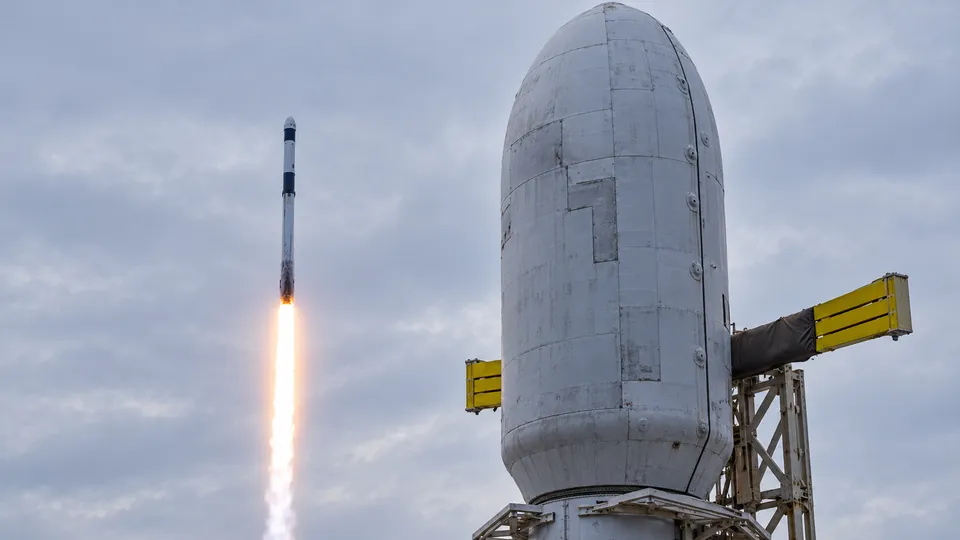
The Starship flight led off a launch triple-header for the company. On Thursday at 11:10 a.m., a Falcon 9 lifted a four-person crew aboard a Dragon capsule from Cape Canaveral Space Force Station in Florida, bound for a six-month expedition on the International Space Station, with docking planned for Thursday evening. SpaceX’s own launch photo showed a Falcon Heavy waiting for its launch window about 3.5 miles away at Kennedy Space Center.
The Crew-13 flight was SpaceX’s 21st human spaceflight launch. Its commander, Jessica Watkins, became the first Black woman to lead a mission into space. Her crewmate Joshua Kutryk of Canada flew while he and his wife are expecting their third child — a rare situation, though not unprecedented: NASA astronaut Randy Bresnik, who is set to command the Artemis III mission next year, was aboard the space shuttle Atlantis in 2009 when his daughter was born in Houston. The Crew-13 launch had been delayed several weeks to fix a leaky valve in Dragon’s propulsion system, a repair that involved cutting out the suspect valve and welding in a new one.
Hours later that same Thursday, a second Falcon 9 carried 130 payloads into polar Sun-synchronous orbit from Vandenberg Space Force Base in California on the Transporter-18 rideshare mission, Spaceflight Now reported. The cargo ranged from a Google artificial intelligence prototype and a methane-tracking satellite to pharmaceutical manufacturing labs and hardware for customers such as Starfish Space, Planet Labs and ICEYE. Such rideshare flights offer satellite startups cheap, predictable rides, though they are expected to go away — at least on Falcon 9 — as SpaceX shifts to the much larger Starship.
Elsewhere in the industry, Rocket Lab signed what it called its largest Electron launch agreement to date, a 20-mission deal with the Japanese radar-imaging company Synspective, Aviation Week and Space Technology reported. Electron has launched 13 of Synspective’s StriX satellites since 2020, most recently on Sept. 25, and the new agreement brings Synspective’s total bookings to 47 launches, including those already flown. “Signing 20 launches in a single deal is a massive vote of confidence not just in Electron but in the launch cadence, mission reliability, and orbital precision that Rocket Lab consistently delivers,” Peter Beck, the company’s founder and chief executive, said in a statement.
In Scotland, a Portuguese space technology company, Omnidea, has bought the assets and intellectual property of Orbex, the rocket maker that collapsed earlier this year, The Scotsman reported. Omnidea plans to base its British operations at Orbex’s former manufacturing facility, starting with a team of ex-Orbex employees, and to use the site for structures work and as a hub for flight and ground-system electronics. Orbex’s Prime rocket, which never reached a launch pad, remains dead.
Canada, meanwhile, is pursuing its own access to space, an appetite that the Trump administration’s threats and tariffs across the northern border have sharpened, Ars reported. This spring the Canadian government made its first awards to three companies — NordSpace, Reaction Dynamics and Canada Rocket Company — for light-lift rockets. Canada Rocket Company now says it is skipping the small-launch segment entirely for a medium-lift rocket called the R-2, with nine engines, landing legs and the capacity to carry 12.5 metric tons to low-Earth orbit.
“The advice we got from having spoken with about 150 engineers, from the director of Starship engineering all the way down to some entry-level folks, is that you’re not going to be able to de-risk a rocket development program by building a smaller rocket,” Hugh Kolias, the company’s chief executive, said in an interview with Ars. If all goes well, he said, the first launch could come by 2032.
Blue Origin, for its part, is seeking Federal Aviation Administration approval for up to 50 New Glenn launches and 50 booster landings per year.