
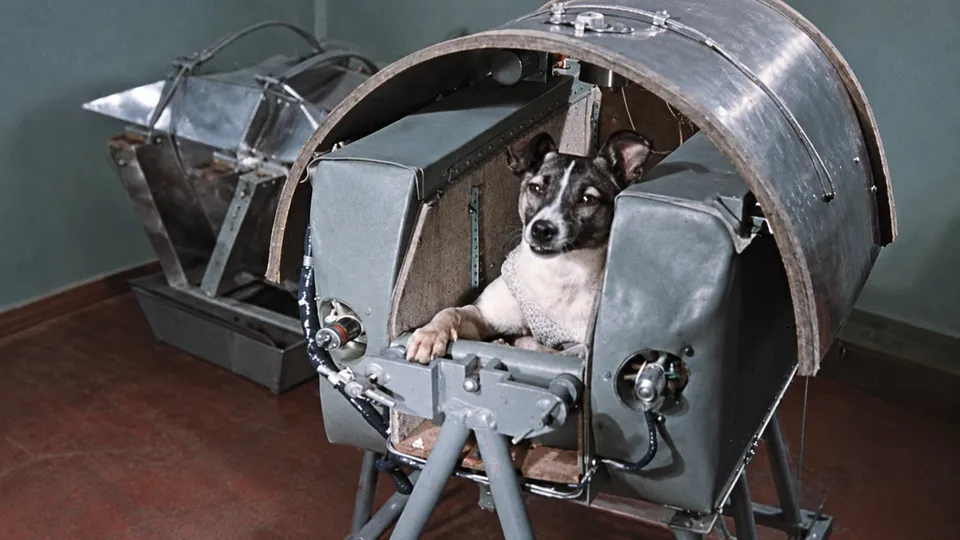
Laika, a Moscow stray, became the first living creature to orbit Earth 69 years ago on Tuesday, and the Soviet scientists who sent her up knew she would never come home.
Viktor Yazdovsky was 9 when he played with her shortly before the Nov. 3, 1957, launch from the Baikonur Cosmodrome. His father, Vladimir, ran the medical side of the Soviet space program. “Scientists then did not know how to return living creatures from orbit back to Earth,” Mr. Yazdovsky told the BBC’s Witness History in 2017, in an interview the BBC republished on Monday with others from its archive. “Everyone was very concerned for Laika. They knew that she would not return from her journey.”
His father brought the dog to the grandmother’s house outside Moscow because he thought she should have the experience of being in a home before the flight. “She was a very patient dog, very affectionate,” Mr. Yazdovsky said. “She was easy to train. She was considered very clever. She had very expressive dark eyes.”

The mission was rushed. Sputnik I, the first artificial satellite, reached orbit on Oct. 4, 1957, and Premier Nikita S. Khrushchev then asked for another launch in time for Nov. 7, the 40th anniversary of the 1917 revolution. Georgi Grechko, an engineer on the launch teams for both Sputniks, told the BBC in 2019 that Mr. Khrushchev said: “We didn’t believe you could launch a satellite before the Americans — but you did it.” That was in mid-October. “For the anniversary of the revolution on 7 November, I want you to launch something new,” Mr. Grechko recalled him saying.
“That’s why not everything could be thought through in this flight preparation,” Mr. Yazdovsky said.
The chief designer, Sergei Korolev, had built the R-7, which flew successfully in August 1957 as the world’s first intercontinental ballistic missile, after reverse-engineering the Nazi V-2 after World War II. He had wanted rockets to reach space since the 1930s, his daughter, Natalya Koroleva, told the BBC in 2019. “It was a burning passion throughout his life to design rockets and fly them,” Ms. Koroleva said.
“Even today, with all our progress, and computers everywhere, I don’t think that anyone could launch a new satellite in a month — but under Korolev’s leadership, that’s what we did,” Mr. Grechko said.
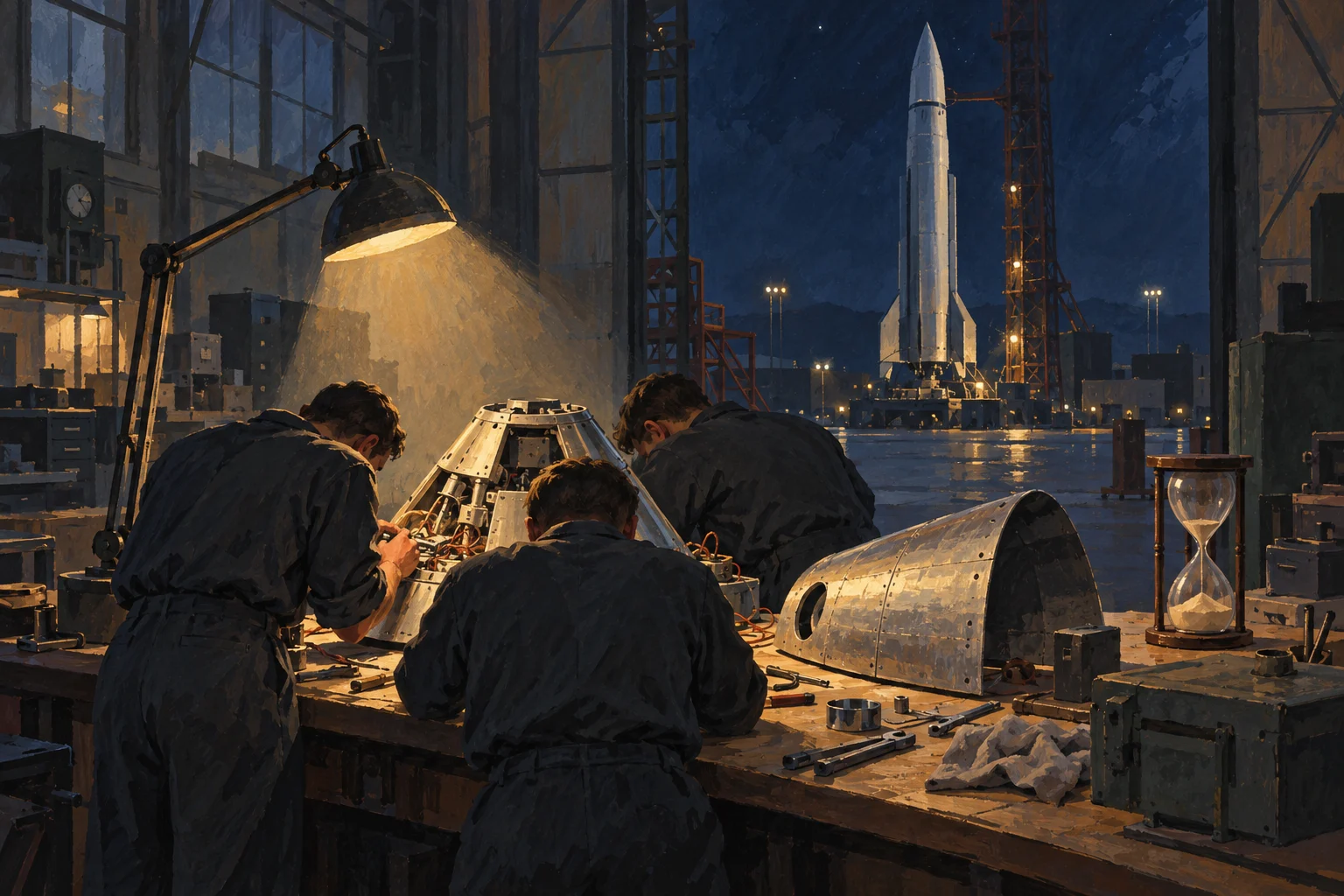
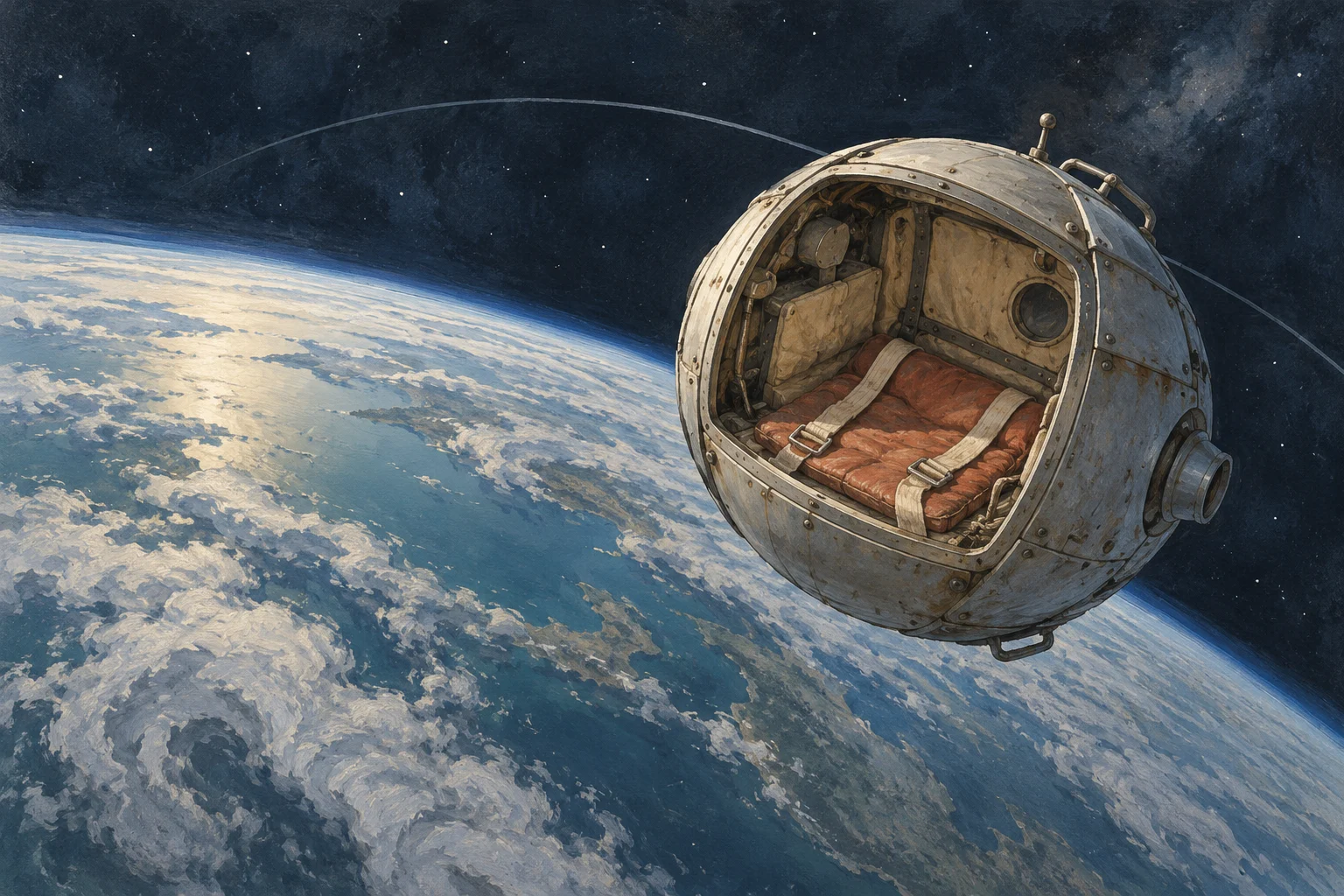
The speed cost Laika her life. Engineers added a pressurized compartment to the Sputnik I design, but “the system of thermal insulation of [Laika’s] capsule had not been properly developed,” Mr. Yazdovsky said. “She died because of the very high temperature in her capsule.”
For decades, Soviet and then Russian officials said she had lived several days in orbit. In 2002, Dimitri Malashenkov of the Institute for Biological Problems in Moscow told a conference in Houston that she died of overheating and stress five to seven hours after launch, according to Britannica. NASA’s catalog entry for Sputnik 2 still says she is believed to have survived about two days, not the 10 planned. Declassified printouts of her breathing, held by the Smithsonian’s National Air and Space Museum, show she reached orbit alive, circling Earth about every 103 minutes. The empty satellite stayed up 162 days and burned up on reentry on April 14, 1958, NASA said.
The Soviets sent more than 50 dogs into space between 1951 and 1965, and the flights before Laika’s were suborbital. American scientists used fruit flies and then monkeys. Monkeys often failed in flight, and some had heart attacks, Mr. Yazdovsky said, while Soviet researchers knew canine physiology well from Ivan Pavlov’s Nobel-winning work.
They wanted strays. “The strongest survived,” Mr. Yazdovsky said. “They were naturally selected by their life on the streets.” Females were picked because they were more compliant, and they had to weigh no more than 6 to 7 kilograms. Before launch they lived for days or weeks in tiny pressurized capsules while doctors tested them with noise, shifting air pressure and weightlessness.
Laika’s name started as Kudryavka, or Little Curly. She barked when she was introduced on the radio, and became Laika, Russian for “barker.”
Early reports were confused. One BBC report at the time said: “It is believed the Russians are planning to catapult the dog back to Earth, although there has been no official announcement confirming this.”
When it became clear she would die, animal welfare groups in Britain picketed the Soviet Embassy and asked dog owners to observe a minute’s silence. People marched with their dogs outside the UN building in New York, and the American Society for the Prevention of Cruelty to Animals sent a protest letter to the Soviets through the State Department.
Later missions carried recovery systems. On Aug. 19, 1960, the dogs Belka and Strelka made 17 orbits and landed alive the next day.
Laika’s face went on Soviet stamps, cigarettes and matches, and a 2-meter monument unveiled in Moscow in 2008 shows a rocket turning into a hand with a dog in its palm.
“Laika’s flight showed that a living creature could be alive in conditions of weightlessness,” Mr. Yazdovsky said, “and the door was opened for man’s travel into space.”