
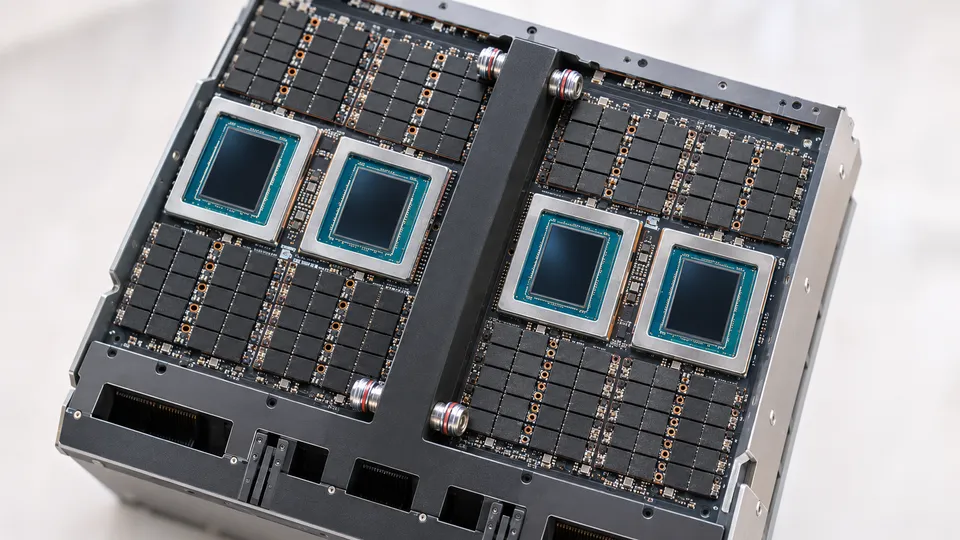
The freight left Oakland, on the eastern shore of San Francisco Bay, on August 29. Six pallets of Nvidia hardware, declared at $11.4 million, were bound for Fort Worth, Texas, according to local reports. The truck that collected them bore the logo of a food transportation company, Tom’s Hardware reported. The pickup went as planned. The paperwork, presumably, was in order.
Then the truck went south and dropped out of sight.
Police reportedly tried to trace it and lost the trail in San Bernardino County. Nobody seems to have realised the load was gone, or reported it, until early September. Oakland police are handling the case as a grand theft investigation, according to Bay Area coverage. As Ars Technica reported on Friday, two months after the pallets vanished in transit, no one has been arrested. Nothing has been recovered.
What was in the boxes
Even now, the public does not know exactly what was taken. Some headlines speak of GPUs or chips, but whether the pallets held graphics cards, finished servers or whole data center systems, and in what number, has not been confirmed. What is known is the arithmetic: $11.4 million spread across six pallets comes to an average of about $1.9 million each. A pallet is a wooden platform a forklift can lift. On these ones sat the price of a large suburban street of houses.

This is what the artificial intelligence boom has done to a shipping manifest. The hardware that companies are now racing to pack into data centers, and that Nvidia itself has been backing with its own balance sheet, has become something rarer than a commodity. It is dense, portable value. It fits in a trailer, and a trailer can be driven anywhere.
The price abroad
Olaf Groth, a professor at UC Berkeley’s Haas School of Business, has offered a plain account of why thieves take an interest. Speaking to ABC News, he described the gap between what the hardware costs at home and what it fetches overseas:
if a chip costs about $550,000, then they go for about $1 million or more abroad.
Those margins, he suggested, may be drawing criminals in, and changing what kind of criminals they are. “Because cargoes are getting bigger,” Groth said. “The heists are getting more complex and that will point toward a professionalization of the teams that are hijacking these.”
Here a reflection, and only that: every scarce object of power, whether salt, spice, oil or now silicon, eventually produces its own smugglers. The rules that govern where a thing may be sold are what create the premium for selling it somewhere else.

A route already travelled
Oakland is not the first time. In 2025, police investigated burglaries of Nvidia hardware worth more than $7.5 million around Fremont and Union City, two cities strung along the southern edge of the same bay. According to The Mercury News, investigators believe the group responsible picked up vehicles for the job in Southern California and then drove north to the Bay Area. Last year the crews were believed to come up from the south. This year the cargo was last traced heading south. The highway runs both ways.
Twenty thousand pounds of sand
Not every crew reads its target correctly. In September, as Wired reported, two trailers carrying Nvidia and PlusAI logos were stolen from outside a warehouse facility in California. Police found them close by. The thieves had evidently cut the locks, presumably expecting to find what the logos promised. Each trailer held 20,000 pounds of sand.
PlusAI works with Nvidia on autonomous trucking, and the sand had been loaded to imitate the weight of real freight for a vehicle learning to drive itself. The thieves had stolen a training exercise. In an economy where a brand painted on a trailer wall can stand for millions of dollars, someone had believed the paint.
The six pallets from Oakland held no sand. Whatever they did hold left the Bay Area at the end of August in a truck dressed as a food delivery, crossed into San Bernardino County, and has not been seen since.