
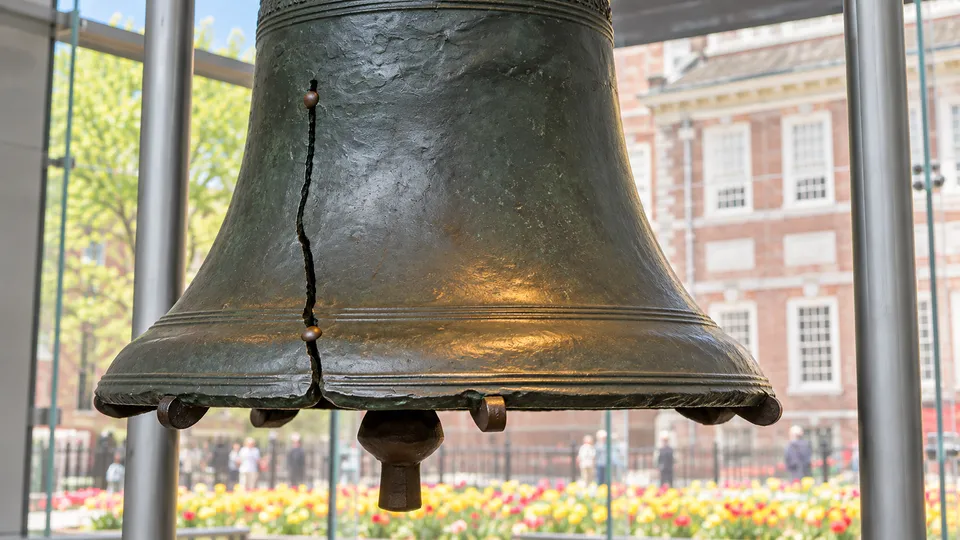
In Philadelphia hangs a bell that the republic honours for its voice, though nobody alive has heard it. Its last ringing came on February 23, 1846, during the holiday for George Washington’s birthday. The Public Ledger reported afterwards that “the old Independence Bell … now hangs in the great steeple irreparably cracked and forever dumb.” That was 180 years ago.
Now, for the country’s 250th anniversary, three researchers at Penn State have tried to work out what the silenced bell once sounded like, as Jennifer Ouellette reported for Ars Technica. They could not strike the original, so they struck a copy. Jon Young, Sean Collier and Aaron Stearns first presented the work at a meeting of the Acoustical Society of America in Philadelphia earlier this year, then wrote it up in an article for Physics Today.
A metal that would not hold
The bell’s trouble started at its birth. According to the National Park Service, Isaac Norris, Speaker of the Pennsylvania Assembly, ordered it in 1751 from the Whitechapel Foundry in London. It reached Philadelphia in 1752 and cracked at the rim the first time the clapper struck it in a test. Two local metalworkers, John Pass and John Stow, melted it down and recast it, and then had to do it again, because one bystander said the first recast sounded like coal scuttles banging together. A Grand Valley State University history dates the final version to June 11, 1753, when it was raised into the State House steeple.
The second recast passed. For years the bell summoned the Assembly, among its other duties, and it fell out of use after the Revolutionary War. Only in the 1830s, the Park Service says, did the old State House bell start to stand for liberty.
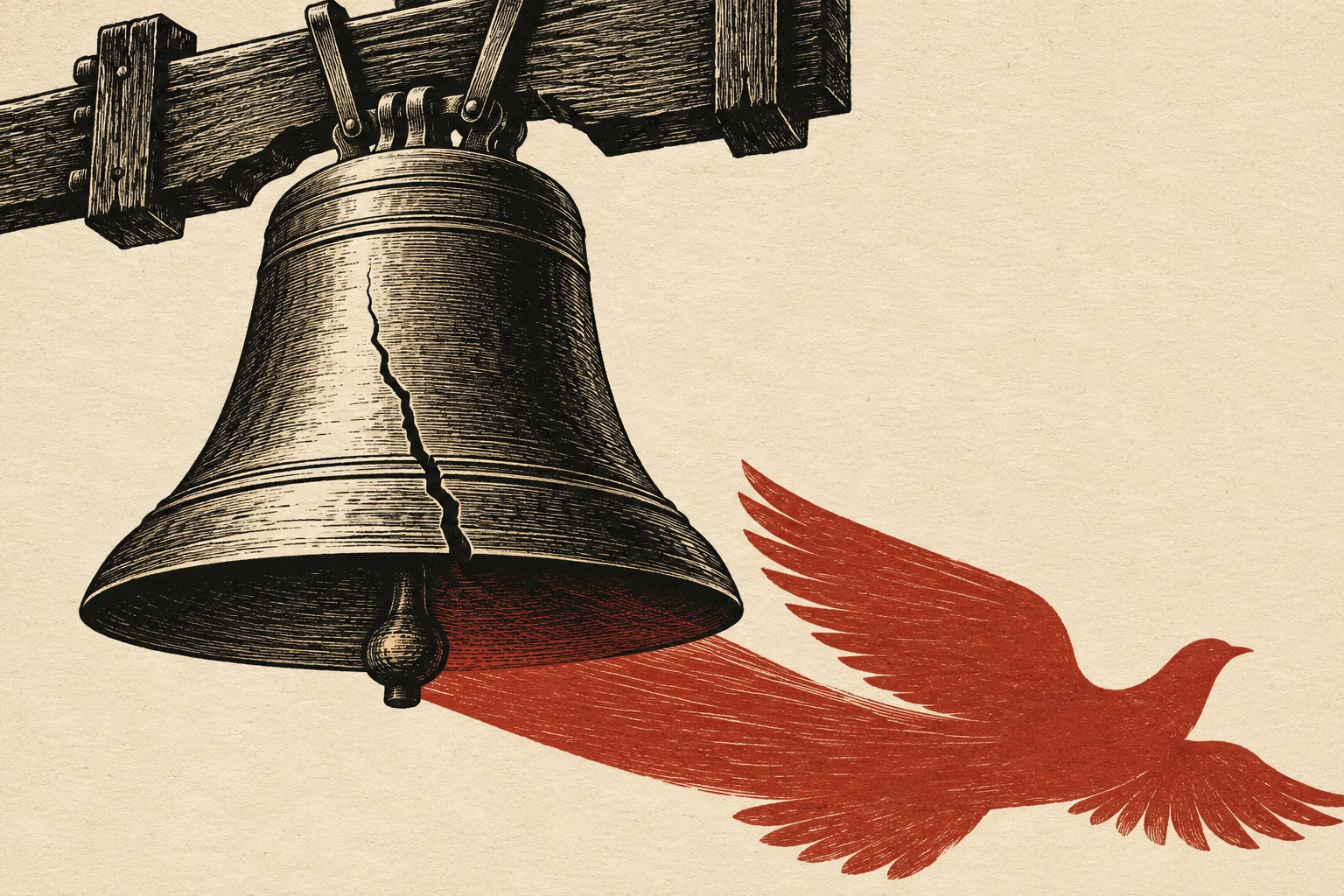
The cause of all that cracking was found much later. A 1975 study of the bell’s chemistry showed that its metals had formed “an extremely brittle alloy”, which also made it easy for souvenir hunters to chip pieces off the rim. Here a reflection is allowed. Nations often choose as their emblems objects that survived through veneration more than through strength. People kept this bell because it had broken.
Nobody knows exactly when the famous crack appeared, only that it happened between 1817 and 1846. The accounts of the 1846 repair also differ. The Ars Technica account says someone tried to fix a crack by filing its sides down, and that the February 23 ringing lengthened it. The Park Service says the split most likely opened in the early 1840s after nearly 90 years of hard use. On its account, metalworkers deliberately widened it by “stop drilling”, leaving more than 40 drill-bit marks, so the wide gap visitors see today is the repair itself. A second fissure, running up through the word “Liberty”, is what silenced the bell.
Five notes from a copy
The obvious approach fails. Collier said that if you rebuild the sound using only the scant information about the bell available online, you get “a terrible sounding bell that in presence does not match the silhouette of the iconic bell.” Full-size replicas were cast in the 20th century, though. Physics Today says one of them stood at Penn State’s University Park campus from 1996 before moving to Penn State Behrend, in the far northwest corner of the state. It carries the inscription and the names of Pass and Stow. It has no crack.
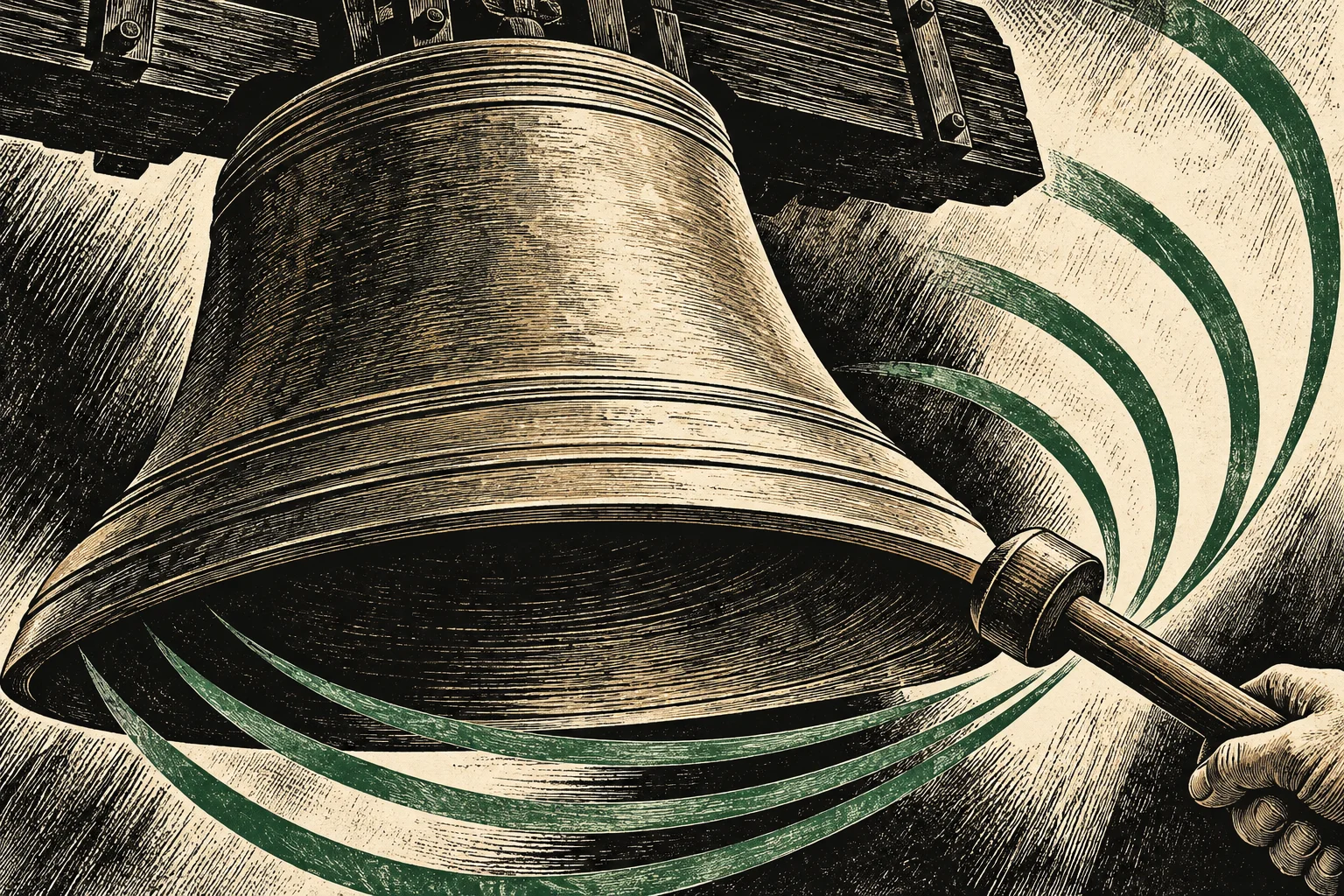
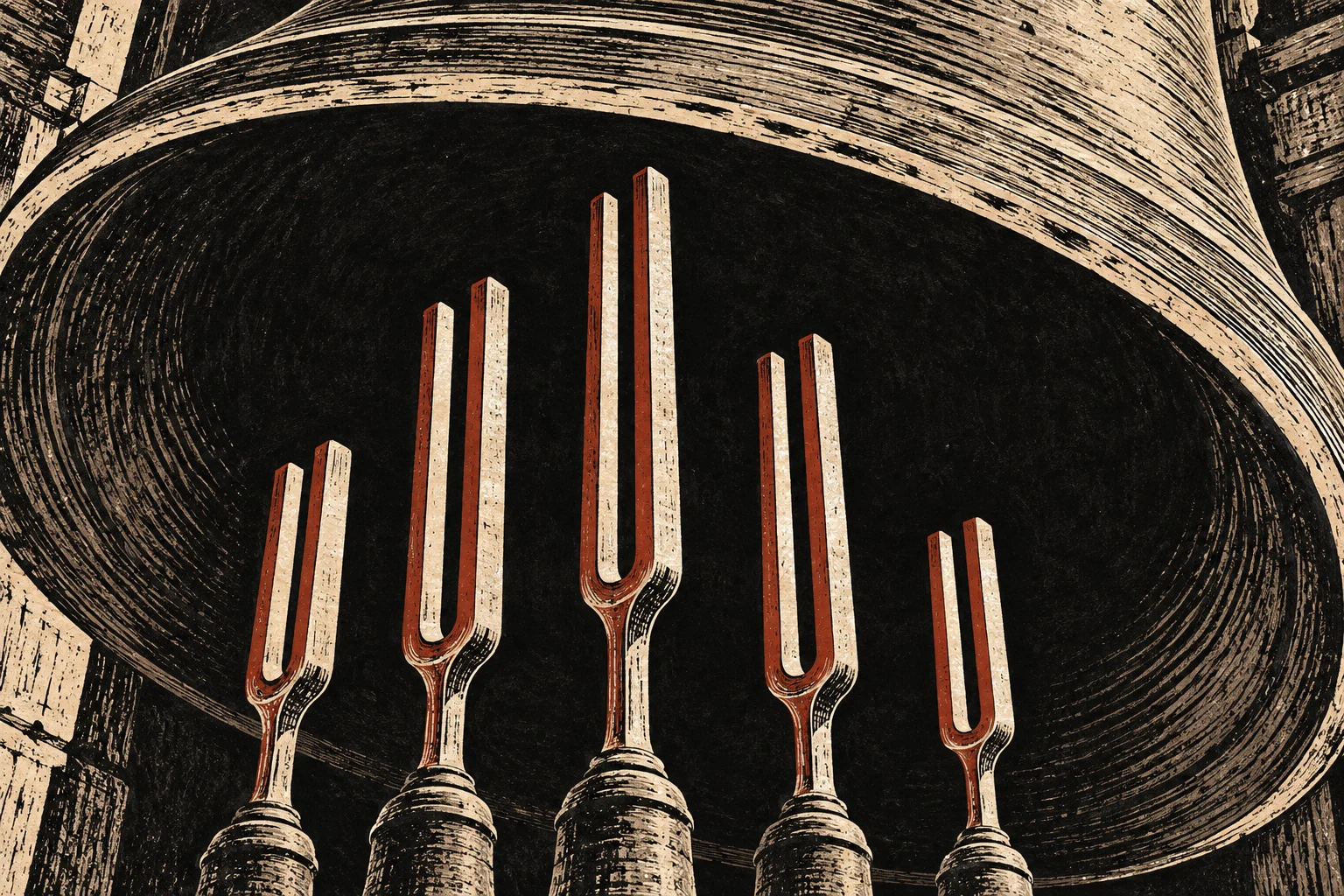
Anyone can tap the replica and hear it ring, but the researchers wanted numbers: which notes sound, which last longest, and how the bronze bends as it vibrates. Bell founders get these from modal analysis, the method they use to check tuning and correct it. According to the authors, Western church bells are normally tuned to their first five natural frequencies, called the hum, the fundamental, the tierce, the quint and the nominal, and these follow fixed ideal ratios.
Musically, the frequencies sound as a minor triad, which is why church bells are commonly perceived as having a somber tone.
The pitch a listener actually hears, the authors write, is “a subjective tone called the strike note”. It comes from the way the mode shapes combine, and from what the listener expects to hear.
The method was simple. The team glued accelerometers to different parts of the replica. They struck it at various points with a hammer fitted with a force gauge, which recorded the force of each blow over time while the accelerometers recorded how the bell answered. From those data they extracted the bell’s natural frequencies, the shape of each vibration and the rate at which each note dies away.
The hum note was 174 Hz. The fundamental was 323 Hz, the tierce 381 Hz, the quint 510 Hz and the nominal 623 Hz. The ratios between them came very close to those of an ideally tuned bell, and the fundamental’s mode shapes closely matched those of typical Western church bells. However brittle and troubled the original was, the shape it handed down to its copy is the shape of a properly tuned church bell.
What the copy cannot tell
How long the bell rang is harder to recover than which notes it rang. The loss factors, which measure how quickly the vibrations fade, were the trickiest part to measure. The team’s values fell within the typical range. But loss factors depend on the kind of bronze and on flaws in the casting, and the replica was made with 20th-century methods, not the 18th-century ones Pass and Stow used. The original’s ring may have died away in much the same way, but nobody can say so with confidence.
The work goes on. Penn State Behrend’s VAR Lab has made a 3D scan of the replica, and a COMSOL blog post used that geometry to simulate the sound pressure produced when the clapper strikes. On a Vision Systems Design podcast, the lab’s head, Chris Shelton, described a plan to 3D-print the bell at full scale and mount speakers underneath it. The speakers would play the bell as it might have sounded before the crack, and a simulation would reproduce how it sounds with the crack today.
The original still hangs at the Liberty Bell Center, in the care of the National Park Service, while the city of Philadelphia keeps ownership. Visitors there can look at X-ray images of the crack.