
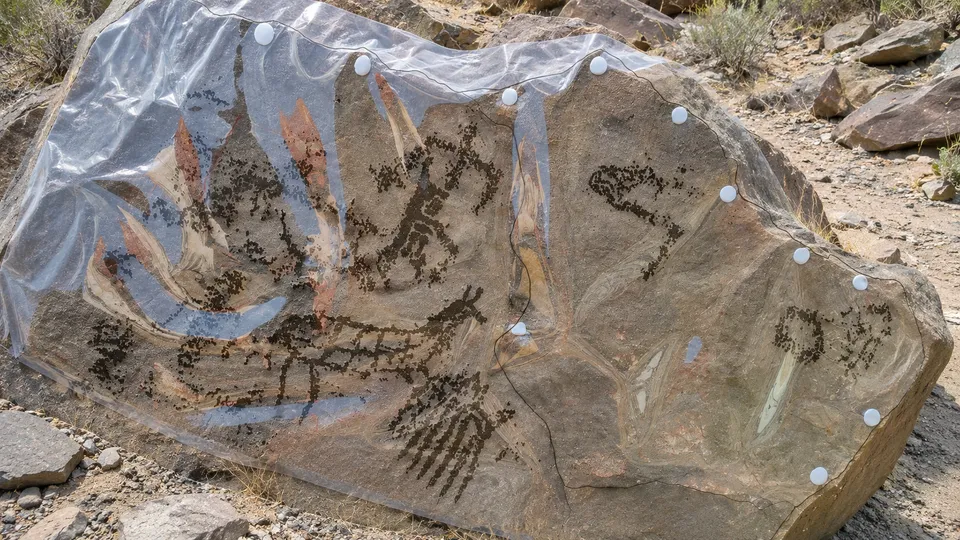
The sea is not visible from Wadi Al-Helo. The valley lies inside the Hajar Mountains of Sharjah, the stone spine of the Oman Peninsula, among slopes where the ibex and the wild ass once lived. Yet on a panel of rock there, archaeologists have recorded five sea turtles. People carved them, the researchers believe, about 7,000 years ago.
The Sharjah Archaeology Authority announced the find through the Emirates News Agency on 26 November, and the agency’s report calls the engravings rare. They are. Across the whole Oman Peninsula only two other places with comparable turtle carvings were known before. Wadi Al-Helo is the third. As Leman Altuntaş reported for Arkeonews, four of the five figures appear to show leatherbacks, Dermochelys coriacea, the largest sea turtle species still alive.
The ones who knew first
The order of events is worth setting down. Local residents pointed archaeologists to the area in 2022. Not until the authority’s fieldwork season of 2026 was the panel identified and recorded, a rock art panel no one had documented before. Four years separate the villagers’ knowledge from the state’s announcement.
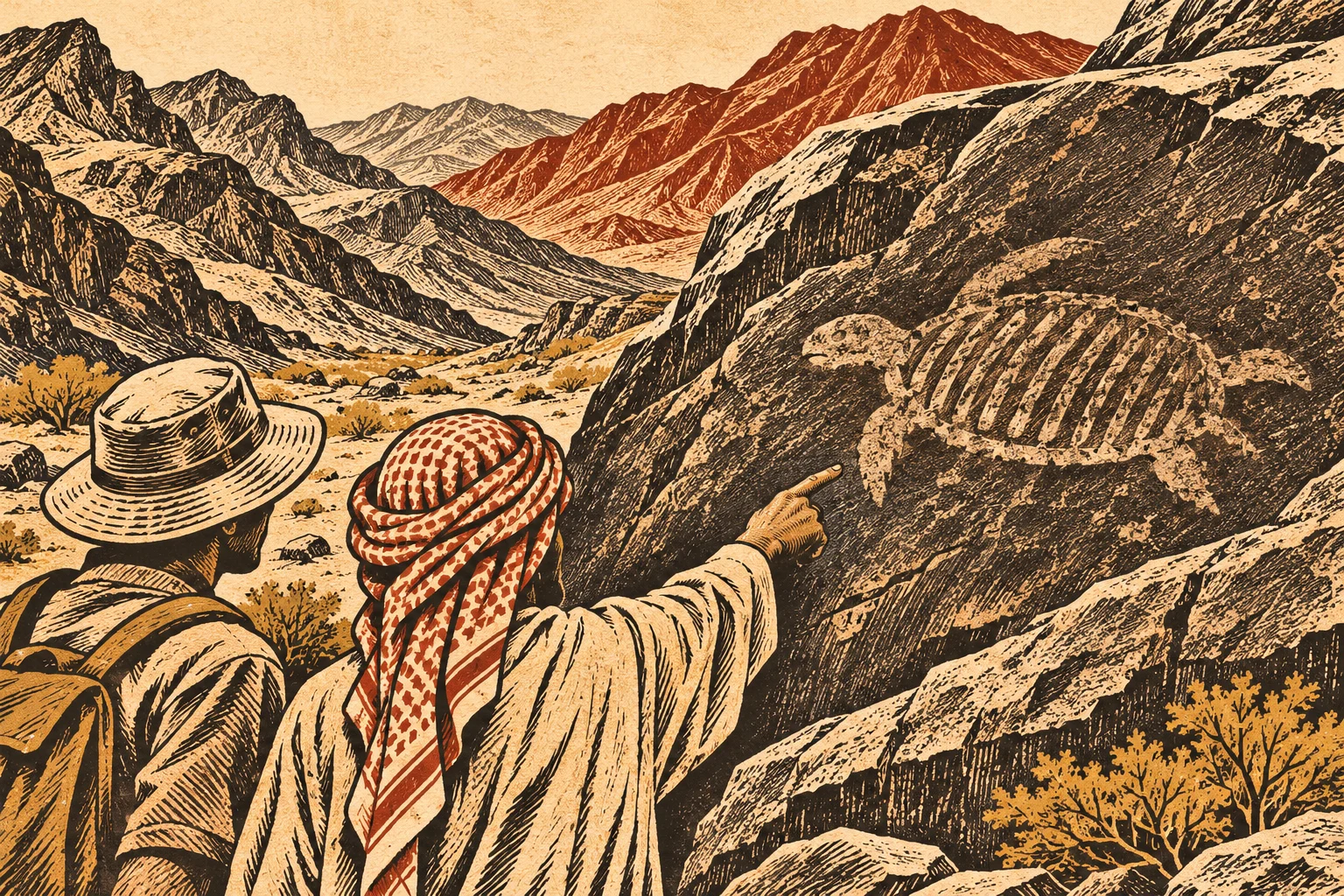
This is how the record of the past usually gets made, if one may reflect on it: those who live beside the rocks know them, and the institution that arrives later writes them into the archive, attaches a date and gives them a place in the national story. The authority deserves credit for listening. But the first witnesses here had no titles.
Ridges on a shell
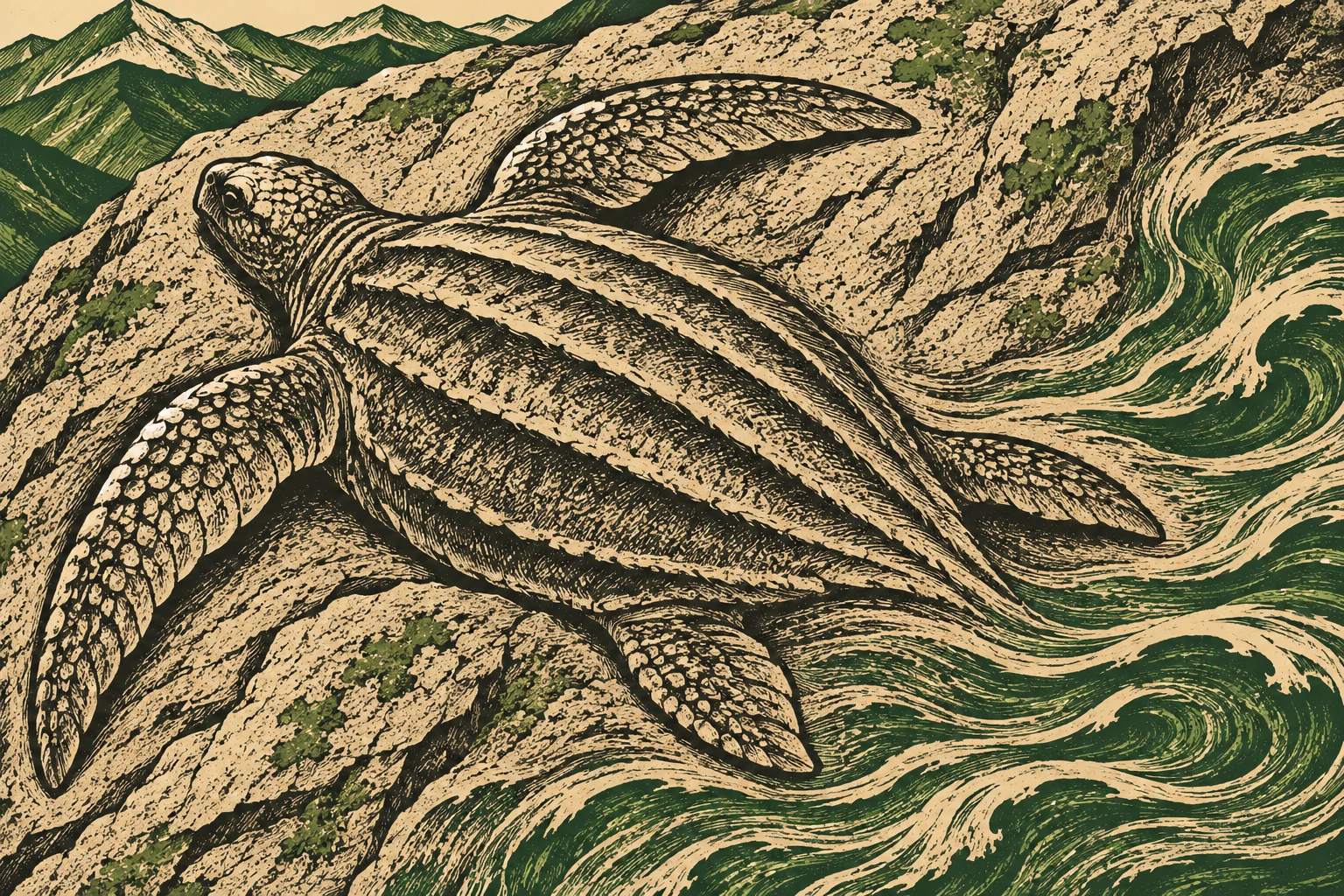
What allows the researchers to name a species from marks on rock is a detail of anatomy. Other sea turtles carry a hard shell covered in large scales. The leatherback has none; its back is leathery, and long ridges run down its length. The carvers cut lines into their turtles that closely resemble those ridges.
That points to people who knew these animals well. How they came to know them nobody can yet say. They may have met the turtles themselves, they may have walked to the coast, or they may have learned the shape from coastal communities. The researchers also raise the possibility that turtles were valued as medicine or carried some symbolic weight, but neither idea has firm archaeological support. The purpose of the carvings remains open.
The date is provisional too. The researchers place the engravings around 5000 BCE, when Neolithic communities lived in southeastern Arabia, but the precise age is uncertain, and so is the nature of any link between the carvers and the people of the shore. Khaleej Times put it with due caution: the carvings could date back to 5000 BCE.
Ibex, wild ass, turtle
The turtles do not stand alone in the valley. The authority has photographed several panels in Wadi Al-Helo and recorded them in three dimensions, building a digital archive of the place. Wild asses and ibexes appear on the panels recorded earlier, animals of the mountain and the desert that these communities would have seen around them. The National’s coverage shows turtles and wild asses carved at the same site.
Set among these, the turtles are strangers. They suggest that what the carvers chose to depict went beyond what grazed nearby. Further east, the rock art of Khatm Al Melaha near Kalba and the surrounding coast keeps more of the region’s old engraving tradition, a record of animals, human activity and the settings that moved prehistoric artists.
The valley’s later trade
Wadi Al-Helo has had several lives. A 2018 study in Arabian Archaeology and Epigraphy documented Neolithic activity at a site called HLO1-south. Thousands of years after the turtles were carved, the valley turned to copper. Archaeologists have found Early Bronze Age smelting workshops there, the remains of a settlement, and a watchtower.
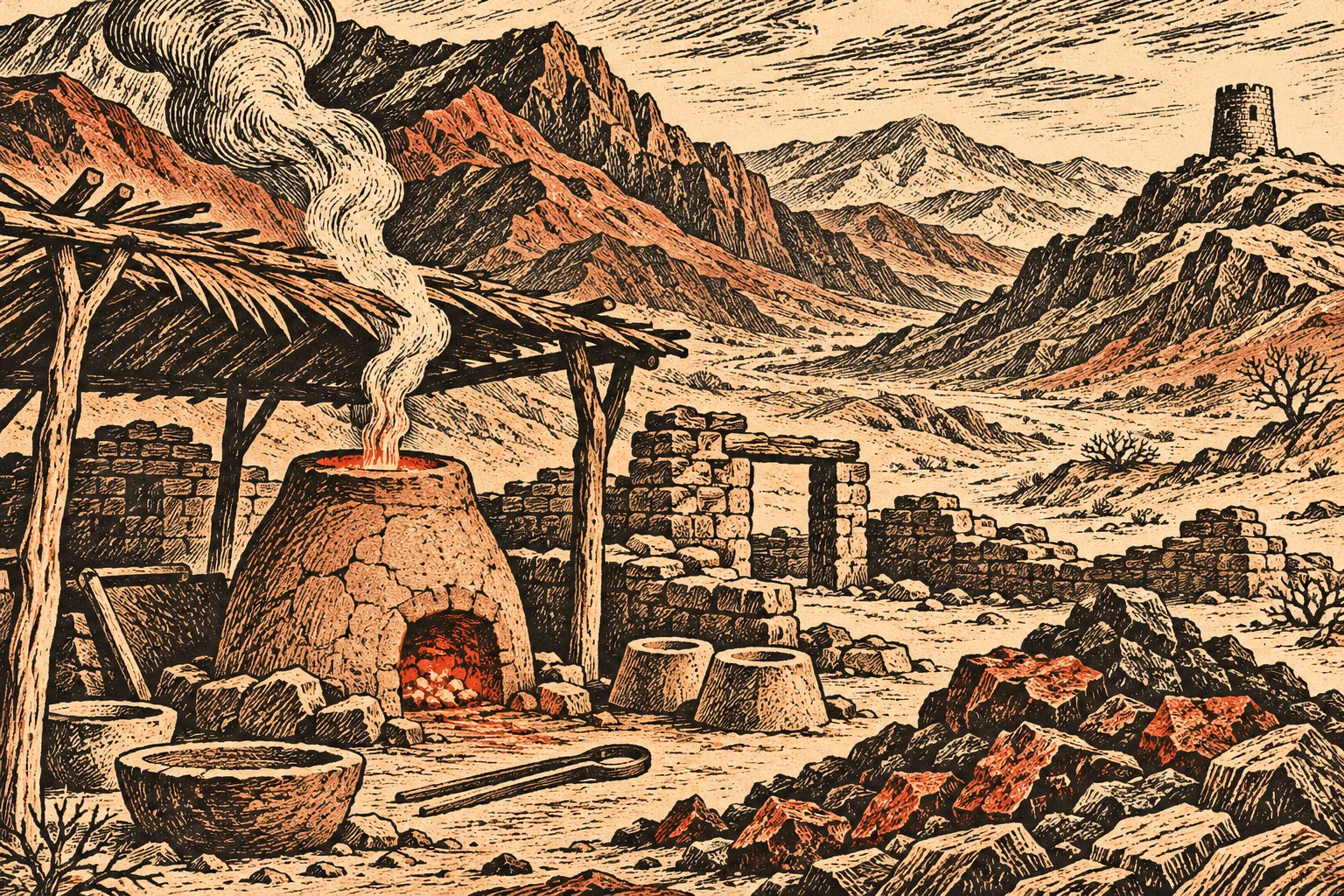
It is the copper, not the turtles, that the Emirates has put before UNESCO. The valley sits on the World Heritage Tentative List as “Wadi Al Helo: Testimony of Bronze Age Copper Production”, and the list entry renders the Arabic name as the sweet valley. A watchtower tells its own story: once there was metal in these hills, there was something to guard. The turtle carvings come from a world thousands of years older, before anyone had anything here worth watching over.
Between the mountain and the shore
So the open question is about movement. Travel, the passing on of knowledge, access to what the sea provided: any of these could explain why mountain people carved sea creatures in stone. The agency’s report suggests the inhabitants may have had ties to coastal communities, perhaps through networks running from the mountains to the sea. Whether Wadi Al-Helo belonged to such a network has not been established.
Arabia’s prehistory is being read slowly, one find at a time: poisoned stone points on a vanished lake, interlocking stone circles that no one has yet dated. Each answers one question and opens another. The task now in Wadi Al-Helo is to learn whether the ridged backs on the rock record a turtle someone actually saw on a beach, or one known only from a traveller’s description, passed inland from the coast and kept in stone.