
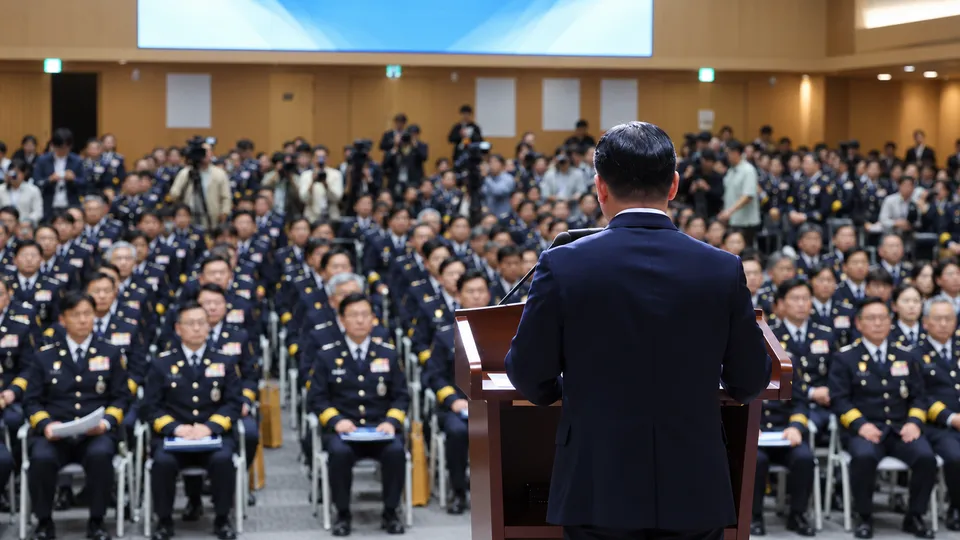
On October 2, after seventy-eight years, South Korea’s Prosecutors’ Office ceased to exist. Investigation now belongs to the police and to a new Serious Crimes Investigation Agency, which KBS reports will handle seven categories of major crimes; indictment belongs to a new Indictment Office, whose prosecutors may prosecute but not investigate. The Korea JoongAng Daily described the trade: prosecutors stripped of investigative power, police wielding more authority than ever. Three days later, the Chosun Ilbo published the arithmetic that haunts the reform.
The newspaper, working with the legal data company Lbox, examined the 41 criminal verdicts from last year in which defendants walked free because investigators had collected evidence illegally. In 28 of those cases — 68 percent — the tainted evidence was gathered by the police or the special judicial police. The proportion, it turns out, is old. In 2015, when ten such acquittals were recorded, and in 2020, when there were 22, roughly seven in ten again traced to police-run investigations.
Once, prosecutors commanded this ground: they directed police investigations and could control, at least in part, how evidence was gathered. The 2021 reallocation of investigative powers under the Moon Jae-in government abolished the prosecutor’s right to direct the police, and under President Lee Jae Myung the separation has been completed — investigation on one side, indictment on the other. A prosecutor at trial must now prove guilt from a file someone else compiled. People in the legal world say the road by which the prosecution could repair defective police procedure has been closed: as one figure put it, the body that collects the evidence and the body that must prove the crime have been divorced, and both indicting and winning convictions will grow harder. A lawyer who once served as a chief prosecutor expects disputes over illegally collected evidence to multiply in criminal trials, and he frames the matter as a question.
A prosecutor who took part in an investigation and a prosecutor who decides whether to indict from the records alone — will their attitude toward the evidence not differ from the very start?
The Flyers and the Telephone
In May 2024, police arrested an entertainment-establishment employee, identified in court only as A, for scattering prostitution flyers in the street, a violation of the Youth Protection Act. They took his mobile phone and asked a court for a warrant. The court answered precisely: do not seize the phone itself; copy only what pertains to the flyers. The police kept the phone anyway, dug through it, and found a video of A and his colleagues gang-raping a woman incapacitated by drink.
A fresh warrant was obtained for the sexual-assault allegation, but the police held off executing it while they worked in secret, visiting the victim to take her complaint. They had already sorted the evidence themselves and then drew up false records to make it appear that A had participated in the sorting. The court that heard the case ruled the illegally filmed video inadmissible — and with it the related statements and confessions — because the police had disregarded the court’s warrant for the convenience of their investigation. The sexual-assault charge ended in acquittal.
The Petrol Bottle
In December last year, a man in his fifties, quarrelling with his nephew over an inheritance, poured petrol over him and set him alight in an attempt to kill him. Police collected a PET bottle of petrol and other evidence at the scene, but skipped two steps: they never handed the suspect the list of seized items, and they never sent the victim’s fire-marked jumper for forensic analysis. The prosecution spotted the gaps and ordered supplementary work — return the seized goods, take them back properly, test the jumper — and only after that, this past May, was the man detained and indicted. Since the adjustment of investigative powers, having different prosecutors for investigation and for trial already left gaps in maintaining indictments, a senior prosecutor told the newspaper. Now the investigating bodies and the prosecuting body are different organisations, so the problem will grow more serious.
Twenty Years of Judgments
The rule that illegally gathered evidence cannot be used entered the Criminal Procedure Act in June 2007; that November the Supreme Court’s grand bench issued its first ruling, and for nearly twenty years Korea has in effect patched its search-and-seizure law through precedent. Lawyers now say precedent is no longer enough. They want statutes spelling out electronic-evidence procedure: how investigators judge whether material found during a search relates to the charges named in the warrant, at what moment a newly discovered clue to a different crime demands a fresh warrant, and how far police may dig into a phone a suspect hands over voluntarily.
A second proposal would have judges question the investigators seeking a warrant before issuing one, fixing in advance what may be seized and by what method, so the warrant states the scope of the search plainly and illegality is stopped before it happens. If a seizure is executed according to a warrant issued after such pre-issuance review, one lawyer said, the court that later tries the case will find it hard to raise objections to how the evidence was collected.
The police and the SCIA, critics add, must rebuild their manuals for planning and executing searches and accept legal checks before and during the work; some in the legal world want a standing channel through which investigators can consult Indictment Office prosecutors when a legal judgment is required. Internally, the police must strengthen training and manuals on due process, a senior police officer said, and in the end we must consult well with the Indictment Office, which requests the warrants and decides the indictments, so that the results of our investigations do not come to nothing.