
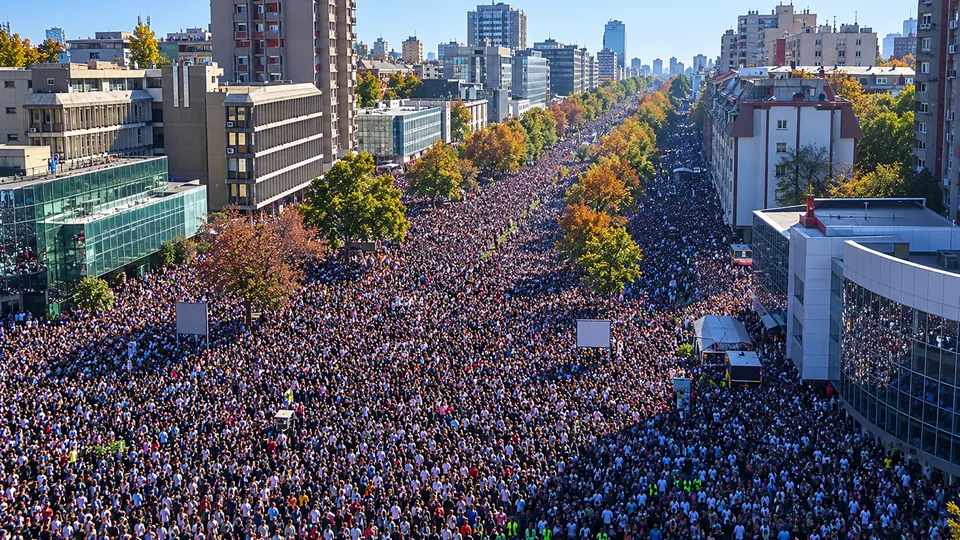
Thousands of students and their supporters gathered in Novi Sad and other Serbian cities on Sunday to mark two years since a train station canopy collapsed and killed 16 people. The protest movement that grew out of the disaster won national power a week ago.
Outside the station in the northern city, people stood for 16 minutes of silence and left roses and other flowers, The Associated Press reported. Ceremonies were held in other towns too. In the Oct. 25 parliamentary election, the Student List defeated Aleksandar Vucic’s Serbian Progressive Party, or SNS, ending its 14 years in power.
The disaster itself is still waiting for a trial. Prosecutors charged 13 people, among them former Construction Minister Goran Vesic, but the case stalled before reaching a courtroom. Since the vote, the students have demanded a review of high-profile investigations, including the one into the canopy, The AP reported.
Andreas von Beckerath, the head of the EU mission in Serbia, wrote on X that the collapse “shook Serbia to its core and moved citizens across the country to demand transparency and accountability.” He added, “May their memory keep inspiring a Serbia built on solidarity, public trust and rule of law.”
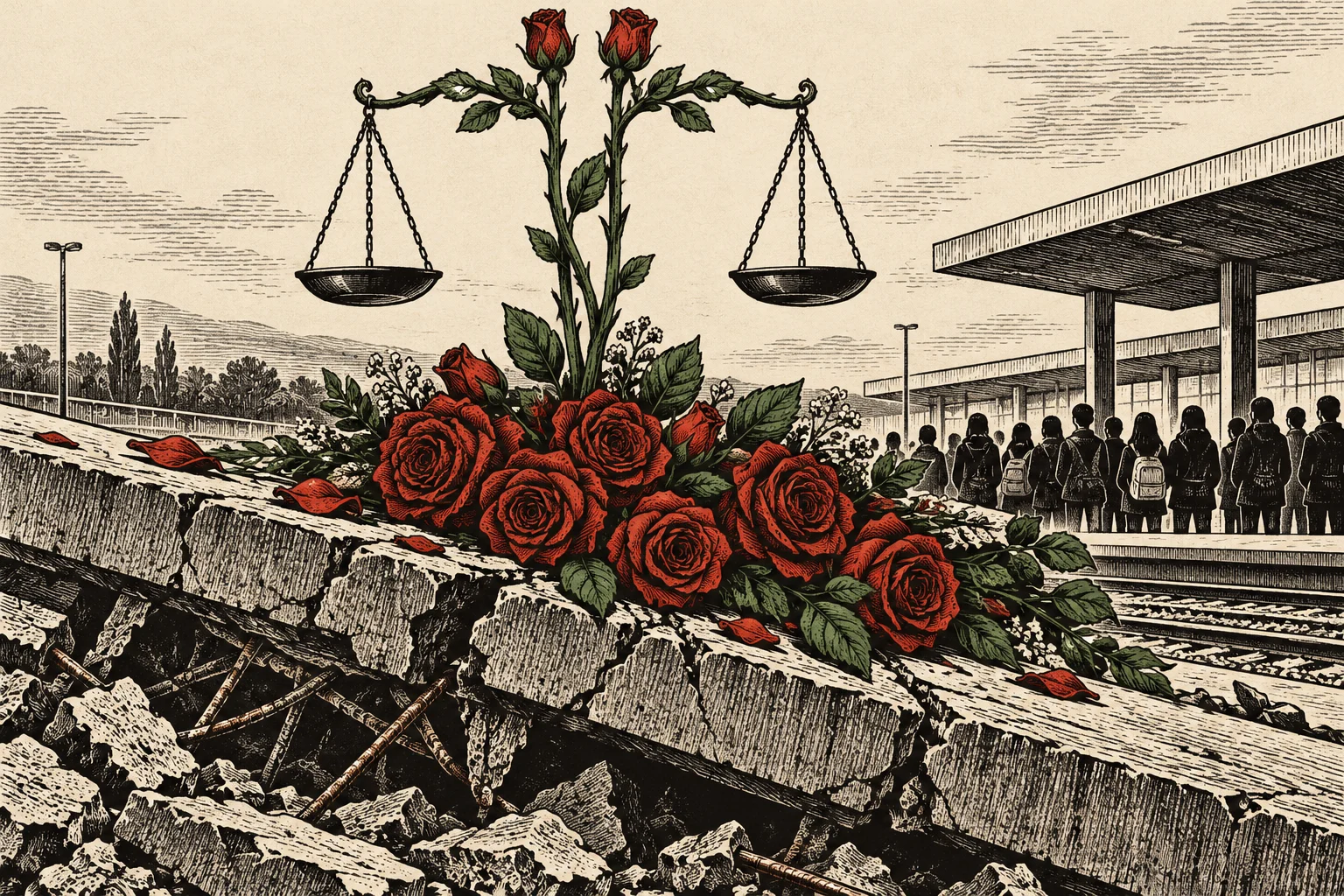
The concrete canopy fell from the newly renovated station building on Nov. 1, 2024. Fourteen people died at the scene and three were taken to hospital in critical condition. Two of them died later, one in November 2024 and one in March 2025, according to a timeline published by Al Jazeera. Officials first said the canopy hadn’t been renovated at all. An independent group of experts later found the work had been rushed under political orders.
Arrests came three weeks after the collapse, once the protests had grown. On Nov. 21, 2024, the higher public prosecutor’s office in Novi Sad said 11 people had been detained, Mr. Vesic among them. An indictment against 13 people followed on Dec. 30, covering serious crimes against public security, improper construction work and abuse of office. Higher courts then overturned detention orders for Mr. Vesic and for Jelena Tanaskovic, the acting general director of Serbia Railways Infrastructure, and moved both to house arrest.
In January 2025, the organized crime prosecutor in Belgrade opened a separate investigation into possible fraud, corruption and money laundering on the reconstruction. It covers Mr. Vesic, former Trade Minister Tomislav Momirovic and 12 others, including managers of construction and supervision companies.
In December 2025, the Novi Sad High Court found “insufficient evidence to support reasonable suspicion” against Mr. Vesic and five other defendants and confirmed charges against the other seven, Balkan Insight reported. On July 13, the Court of Appeals overturned that ruling, clearing the way for a trial of all 13 under the original indictment.
The protests outgrew the courtroom early. After students and professors were attacked at a memorial in Belgrade in late November 2024, students began occupying universities. In December, the government released eight binders holding 195 documents on the reconstruction, which the students said was not enough. Prime Minister Milos Vucevic resigned on Jan. 28, 2025, after governing party activists badly injured students in Novi Sad. Hundreds of thousands of people marched in Belgrade on March 15 that year.
Days before that march, 13 activists and students were arrested in Novi Sad and charged with undermining the constitutional order. Some later left for European Union countries. Mr. Vucic stepped down as president on Sept. 27 to lead his party’s electoral list, and on his last day in office he pardoned the prosecuted students and activists.
Mr. Vucic said he was pardoning 49 people. There has been speculation that some of those indicted over the canopy were among them, N1 reported, and it was not clear whether that was so. The Student List, made up of students, professors and legal experts, formed on Sept. 9 after the snap election was called. Turnout in the vote was the highest in more than 30 years.
On Oct. 19, a court in Novi Sad decided to leave Mr. Vesic and his former deputy out of jail and extended house arrest for four other defendants. It was not clear when the trial would start.