
Threats against the people the Secret Service protects are up just over 40 percent from last year, the agency’s director said in an interview broadcast on Sunday. The agency has opened 10,000 threat cases since January.
Sean Curran, who was the lead agent beside President Trump when a gunman opened fire in Butler, Pa., in 2024, gave the figures to Norah O’Donnell of 60 Minutes. The interview was his first joint appearance with his deputy, Matthew Quinn. The increase is in cases involving full-time protectees, Mr. Curran said. “And the year’s not over.”
“It’s like we’ve never seen before,” he said. He blamed the internet for much of it. “People are more accessible. Information is more accessible.”
Asked whether Mr. Trump’s polarizing politics were driving the numbers, Mr. Curran said the agency was apolitical and didn’t sort threats by party. Mr. Quinn said people on both sides of the aisle love or hate any president. “I think the biggest factor we’re dealing with today is mental health issues for sure,” he said. “More people are being pushed over the edge in either direction.”
Research by the Center for Strategic and International Studies found that in 2025, attacks from the left outnumbered those from the right for the first time in 30 years. This year the pattern has flipped, with more attacks coming from the right so far.

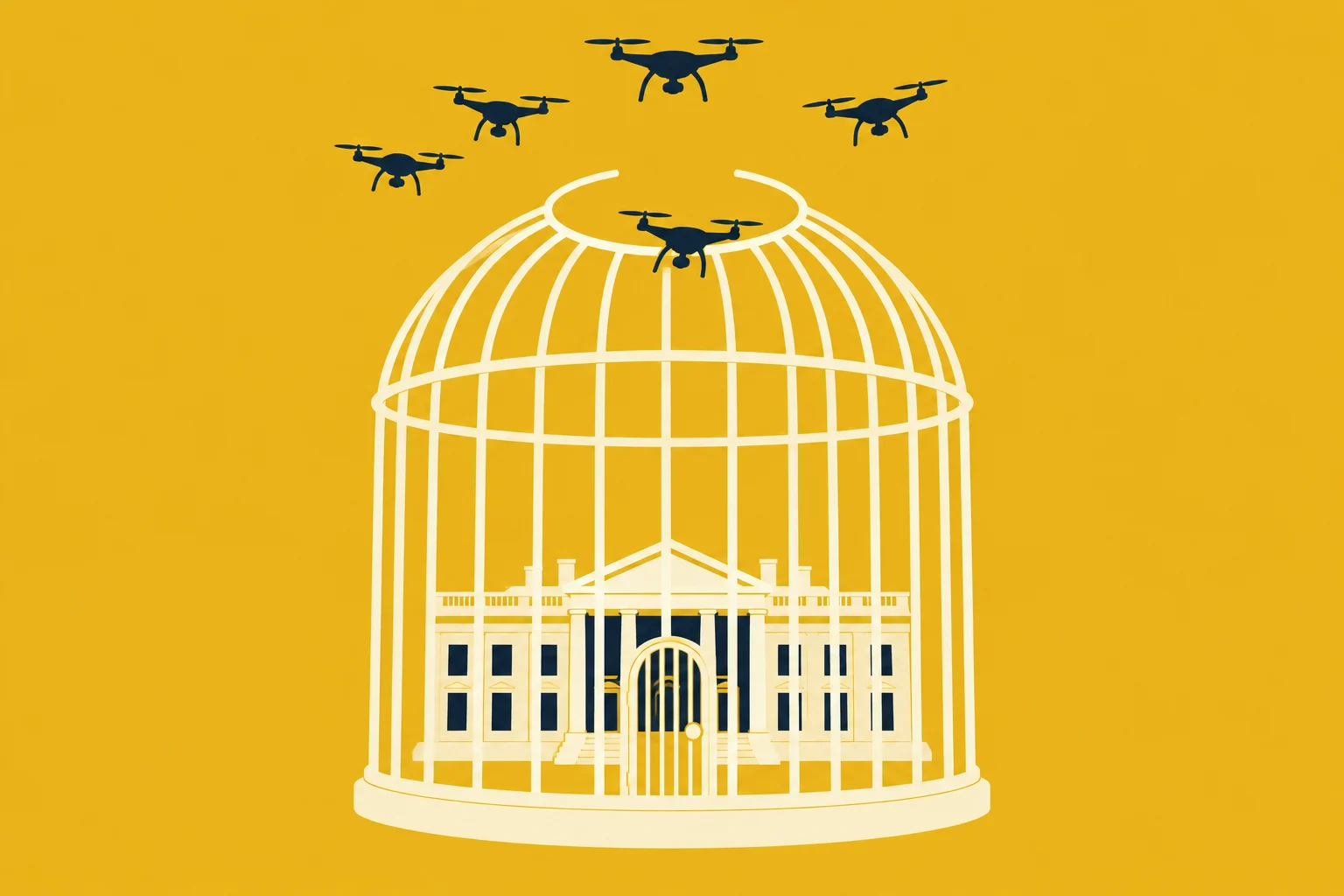
The agency is also preparing for armed drones. Mr. Quinn runs a new multimillion-dollar program to build offensive and defensive drone capabilities, and its tools include an AI- and radar-guided “drone hunter” that disables a hostile drone and catches it in a net, CBS News reported.
“Swarms are a huge problem and a big threat,” Mr. Quinn said. “I’d love to tell you the swarm problem is solved. It’s not. I will tell you that at the White House, White House is the safest place on Earth.”
Secret Service teams returned from the front in Ukraine about two weeks ago, he said. “We know that technology is going to hit the homeland at some point.”
It has already come close. The agency used electronic jamming equipment to bring down a drone at the Army-Navy game in December, which the president and members of Congress attended, 60 Minutes reported. Last week Mr. Curran left headquarters to test counter-drone ammunition himself. “We have to assume that that-- that it’s possible,” he said. “The second we’re not, we’re gonna get caught flat-footed.” A federal task force opened up to $7 billion in counter-drone contracts last month.
Iran is a separate worry. Eight months into the war, Iranian leaders have vowed revenge for the killing of their supreme leader. “Turn on the TV and you can see the funeral where there are massive banners saying ‘Kill President Trump,’” Mr. Quinn said.
Mr. Curran was among the agents who shielded Mr. Trump in Butler when Thomas Crooks fired eight rounds from a rooftop 155 yards away. Asked whether he had asked for more resources and been turned down, he said, “I’d rather not get into the past. I will tell you that I did request additional resources, and I’ll leave it at that.” Kimberly Cheatle resigned as director after a congressional hearing, and Mr. Trump named Mr. Curran to the job when his second term began.
The Department of Homeland Security’s inspector general found that the agency “missed multiple opportunities to detect, prevent, and disrupt the assassination attempt.” 60 Minutes said the report came out in June. The inspector general’s office lists the report as issued July 1. Among its findings, the Secret Service never received 102 radio transmissions from local officers warning about Mr. Crooks, Fox News reported. Asked whether it could happen again, Mr. Curran said it would not. “I am convinced.”
Staffing is still thin. A Homeland Security inspector general’s report found the counter-sniper team 73 percent below the level needed to protect the country’s most senior leaders. Mr. Quinn said 942 people were in training, compared with “maybe 200” last year.

The motorcade has grown. Mr. Curran added a medical truck with a trauma unit and a field surgeon after Butler, and an armored personnel carrier now travels with the president. Most of the updates to the limousine, which weighs up to 10 tons, are classified.
Protection also covers the new Air Force One, a 747 donated by Qatar. The Air Force says the security work on it cost nearly $400 million. Mr. Curran called the plane trusted but wouldn’t say why. Even so, in July the agency would not let Mr. Trump fly home from Turkey on it after intelligence reports of an Iranian plot to fire a missile at the presidential jet. He was quietly moved to another plane, while Cabinet members, staff, reporters and agents flew on the old Air Force One as a decoy.
“That’s not the first time we’ve done that,” Mr. Curran said. “We wish that wasn’t reported, because that takes some of our tactics away from being able to do something similar again.”
“Everyone else — staff, agents, media, personnel involved — are not the priority, including our own personnel,” Mr. Quinn said. “As hard as that may be for some to understand, the mission is to protect the president of the United States.”