
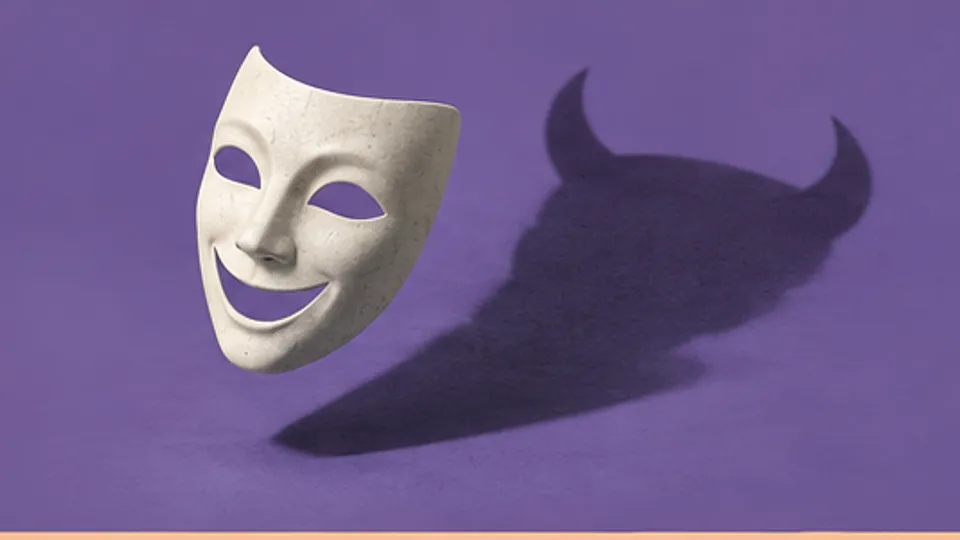
The standard PR playbook, if you are the chief executive of a company that is building what you keep describing as a civilisation-ending technology, is roughly this: warn everyone, gravely and at length, that the technology may end civilisation; accept the resulting coverage as proof of your seriousness; and then, when nobody in power seems inclined to make you stop building it, pivot back to talking about the protein folding. You can’t say the quiet part too often, or people start to notice that the warning and the building are being done by the same guy, at the same company, in the same week.
Saturday Night Live has noticed. On last night’s show, Jane Wickline — in her first season as a repertory player — portrayed Dario Amodei, the actual chief executive of Anthropic, on Weekend Update, as what Business Insider described as “a bumbling megalomaniac struggling to explain why his own technology won’t end the world.”
The conceit of the sketch is that Amodei has two personalities: one media-trained, one frighteningly not, and that the two of them keep talking to each other in public. When host Michael Che asks about the pros of AI, the media-trained Amodei hisses: “Land the plane, Dario.” The other one replies, simply: “I can’t.”
Which is, honestly, a pretty tight summary of the last month in AI discourse.
Because here is the real sequence of events. Earlier this month, the actual Dario Amodei published a genuinely grave essay on his personal website, arguing that AI models were getting out of control quickly, calling for a coordinated slowdown among the frontier AI companies, and asking for government regulation. A few days before that, former Anthropic researcher Jacob Coxon had quit the company and gone on a media tour warning that AI labs were, in his words, “gambling with our lives.” Then, in the weeks since the essay, Amodei has been on an altogether different tour, stridently promoting Anthropic’s breakthroughs in medical research and protein structure — and has stopped making the dire doomsday predictions entirely.
Put those pieces together and you get the joke. Personality one: the technology is racing out of control and someone must coordinate a slowdown. Personality two: look at these proteins. The plane, as it were, will not be landed. It will be given a safety briefing and then flown faster.
Now, to be fair to Amodei — and I think someone should be, briefly — there is a coherent position in there. You can believe a technology is dangerous and also believe that your company is the safest place to build it; that is roughly Anthropic’s founding thesis. The awkward part is the selling. “This might kill everyone, so please let us be the ones to finish it” is a genuinely strange pitch to take to investors, regulators and the general public simultaneously, and the fact that Anthropic has mostly made it work is one of the great communications achievements of the decade. When an appeals court let the Pentagon blacklist Anthropic for insisting on keeping limits on its Claude model, Amodei even got to be the industry’s beleaguered conscience while losing.
Washington, for its part, has been unmoved by the grave-essay genre. President Donald Trump mocked Amodei directly in a Truth Social post, accusing him of “pretending to be a ‘perfect little angel.’” Trump has shown what Business Insider called strong disinterest in regulating AI — though he did pledge last week to create an “AI Force” that would “watch over” AI companies, which is either a regulator or a prime-time drama, we’ll see. Despite all that, Amodei sat down to dinner with Trump last Sunday, because the perfect little angel business requires some attendance. The safety warnings, in any case, have so far failed to convince a plurality in either Washington or Silicon Valley that development of the tech should be paused or slowed. The market for doom is strong; the market for doing something about the doom is thinner.
So the burden of processing all of this fell, as it so often does, to a sketch show. The segment’s peak was Wickline-as-Amodei, dropping the media training altogether: “AI is the devil and I its maker!”
AI is the devil and I its maker!
I think the interesting question is whether this is the moment a tech CEO’s doom-saying officially becomes a bit — a recognised comic archetype, like the airline pilot apologising for turbulence. The essay was meant to start a regulatory conversation. Instead it started a casting conversation. At least one corner of the AI world was delighted: Yann LeCun, Meta’s former chief AI scientist and a longtime critic of AI doomerism, replied to a clip of the impression on X with a string of laughing emojis. LeCun’s whole position, for years, has been that the existential-danger talk is overblown, so watching the chief doomer become an SNL character is, for him, roughly Christmas.
Though here’s the thing about “AI is the devil and I its maker”: it’s a joke, but it’s also a verbatim-ish précis of the essay. Amodei said the technology is getting out of control; Amodei runs the company making it; Amodei would like everyone to slow down, in a coordinated way, starting presumably with someone else. Wickline didn’t exaggerate the argument. She just removed the part where it’s meant to sound reassuring.
Anyway. The plane is still up there. The good news, according to the co-pilot’s most recent statements, is that it has made real progress on protein structure.