
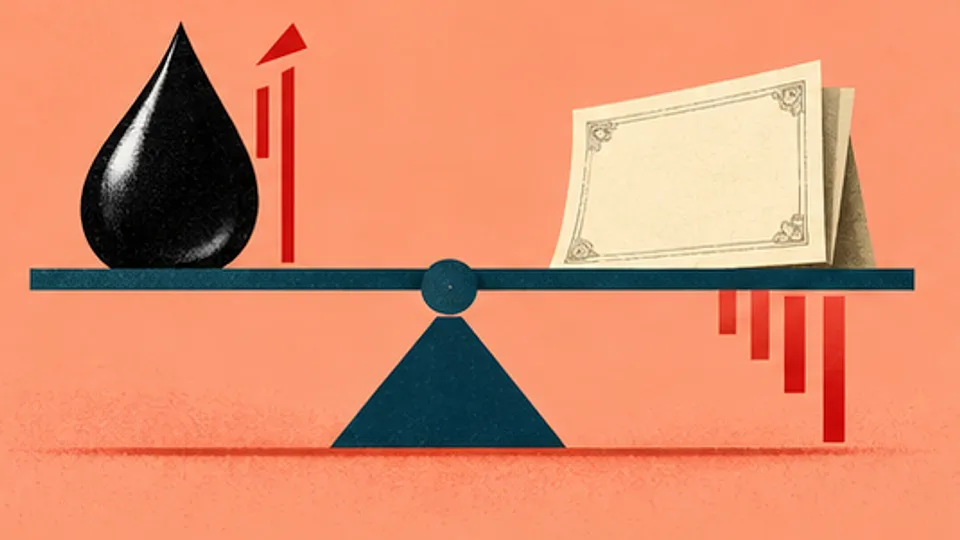
Eight months into the war with Iran, September handed investors a strange split: Brent crude back above $100 a barrel, bond yields at their highest levels in years, and a stock market that barely moved. The S&P 500 closed the month down just 0.45 percent.
That calm finish capped a third quarter in which the index gained 2 percent, leaving it up nearly 12 percent for the year and on track for a fourth straight year of double-digit gains. But the headline number hides a lopsided market. An equal-weight version of the S&P 500, which gives every stock the same influence regardless of size, fell 1.55 percent in the quarter.
Big Technology did most of the lifting. Meta shares rose 29 percent in the quarter and Microsoft 38 percent, and the tech sector gained 5 percent in September while every other sector in the index ended the month lower. Because the S&P 500 is weighted by market value, those gains offset declines nearly everywhere else.
Energy was the other winner as the war kept crude prices high — a windfall for whoever owns the barrels. Phillips 66 shares surged 51 percent in the quarter and have nearly doubled this year, up 98 percent. Chevron rose 23 percent in the quarter, ConocoPhillips 20 percent and ExxonMobil 19 percent. Energy and technology are the two best-performing sectors of 2026.
Bitcoin had an unexpectedly strong quarter as well, rallying more than 40 percent and touching $86,500, its highest level since January. The gains came even after the CLARITY Act, a crypto regulation bill, failed to pass the Senate. The cryptocurrency remains well below its record of more than $126,000, set nearly a year ago.
Bonds took the beating. A Vanguard exchange-traded fund tracking the total U.S. bond market is down 5 percent this year, and the iShares National Muni Bond fund is down about 6 percent, as central banks raised rates in response to the war-driven energy shock. The correlation between oil prices and the 10-year Treasury yield is at its highest since the 1990s, according to Cboe Global Markets. The one consolation for buyers: yields at multi-year highs mean new money earns far more income than it would have a few months ago.
Higher fuel costs hit transportation stocks hard. Norwegian Cruise Line shares fell 31 percent in the quarter — their worst since the second quarter of 2022 — and are down 34 percent this year. Royal Caribbean dropped 16 percent in the quarter; Carnival fell 14 percent and is down 20 percent for the year, though Carnival beat Wall Street’s earnings estimates on Tuesday on strong consumer demand. American Airlines shares sank 26 percent in the quarter.
Rising rates also squeezed precious metals, which pay no income. Gold futures fell more than 6 percent in September, silver dropped 9 percent and palladium 12 percent.
The wider picture is stranger still. Diesel prices have hit record highs and long-term bond yields are at their highest in decades, yet the economy has held up and corporate profits keep growing. After falling 5 percent in the first quarter and rallying 15 percent in the second, the S&P 500’s slender 2 percent third-quarter gain leaves Wall Street watching two more Federal Reserve rate decisions, another earnings season and whatever happens next in the Middle East.