
Ten months. One hundred and seventeen square kilometres.
That is how much of Ukraine Russian forces took between January and October 2026, according to the Institute for the Study of War. The Washington think tank counts the front by geolocating open-source footage, and it puts the figure at 117.38 sq km, or 45.32 square miles. John T Psaropoulos, reporting for Al Jazeera, set the number beside the two years before it. In 2025 Russia seized 5,304 sq km, 473 of them recaptured in Kursk. In 2024 it took 3,604. Measured by the day, the advance has slowed from 9.9 sq km in 2024 and 13.25 in 2025 to 0.38 this year.
That is less than half a square kilometre a day. A war once fought over cities is now moving at the pace of a farm boundary. In September and October, the ISW says, Russia lost ground it had firmly held as well as ground its infiltration groups had only slipped into.
The ledger
Ukraine’s General Staff keeps a different count. It estimates that 381,300 Russian soldiers were killed or seriously wounded between 1 January and 31 October. July, September and October each set a new monthly record: 42,860, then 46,230, then 54,400. The October figure passed the 50,000 a month that President Volodymyr Zelensky had set as the target. Al Jazeera says it cannot independently verify these numbers. If they are anywhere near right, Russia is losing men faster than it recruits them, since its recruitment is estimated at 24,000 to 30,000 a month.

A reflection, not a finding: a state can trade lives for land for a long time, and it has done so before. Trading lives for almost no land is a different calculation, and one the ruled tend to notice before their rulers do.
A Monday in Komyshuvakha
The slowdown on the ground has not slowed the war from the air. In the week to 6 November, Russia launched 2,346 drones and more than 80 missiles at Ukraine. The heaviest night was 3 November, with 370 drones and 76 missiles.
At least 50 people were killed at an aid distribution point in Komyshuvakha, in the Zaporizhzhia region. Ukraine’s military intelligence, the GUR, said the attackers “knew that on Mondays, humanitarian aid was distributed.”
The strike came as a six-day ceasefire in Oleshky ended. Melania Trump had brokered that truce, and it allowed 800 residents to be evacuated. The Russian military reporter Vladimir Romanov then reported how the evacuees chose: 17 busloads went to Ukraine and four to Russia. He was arrested.
Eight refineries in seven days
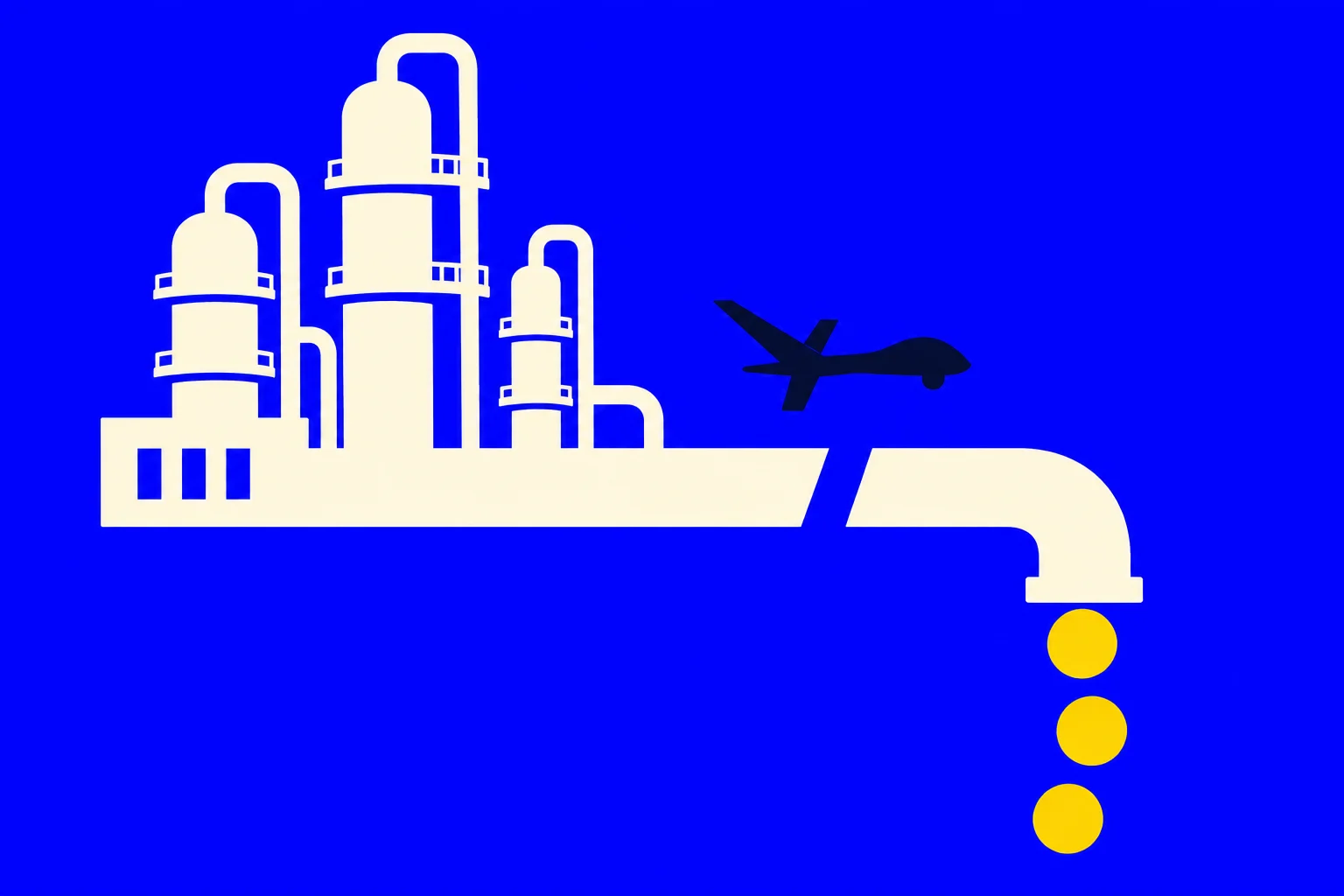
Kyiv has been hitting back where the money is. Ukrainian drones struck eight Russian refineries in seven days, among them Ufa, Lukoil’s plant at Nizhny Novgorod, Yaroslavl and Ryazan. Deputy Prime Minister Alexander Novak confirmed that three were hit on 30 October. Zelensky had promised exactly this campaign against the plants that pay for the war. Al Jazeera reads the strikes as an attempt to cut Russia’s energy supply and export revenue, and to wreck a deal its president had struck with Washington.
Tankers with nowhere to dock
The deal was made on 9 October. Donald Trump announced after a call with Vladimir Putin that Russia would supply diesel. In Al Jazeera’s account, he invited Moscow to sell 1.8 million tonnes on world markets by the end of the year. He also promised more than 300,000 metric tons of Russian diesel available immediately. America was short of fuel and the 3 November midterms were close. Al Jazeera notes that the offer contradicted US sanctions and the Lindsey Graham Act, which Trump had signed 11 days earlier.
The legal problem has not gone away. Treasury’s General License 135 allows Russian diesel to be sold and imported until 7 April 2027. But Congress has not repealed the 2022 Ending Importation of Russian Oil Act, and it still bans those imports, as France 24 laid out. That conflict was visible from the first week. On 27 October, Senator Richard Blumenthal wrote to a Greek shipping company warning it not to unload in the United States:
The president “may have given a licence to facilitate this transaction, but only Congress can make it legally valid.”
New Jersey’s governor, Mikie Sherrill, warned port and terminal operators that accepting the cargoes could bring severe penalties, PBS NewsHour reported. She argued that the administration had no power to override a ban Congress had passed. A bipartisan group of senators urged Trump to drop the deal, saying the US “should not provide Putin with a financial lifeline.” Lawmakers also warned banks, port authorities and fuel distributors that handling the imports could expose them to civil or criminal liability.

The buyers seem to have listened. Accounts of the Financial Times report differ. Al Jazeera, citing the FT, says four Russian diesel tankers have found no buyer willing to take the legal risk. Hromadske’s summary of the FT story says two of the first three tankers bound for the US turned away. The third changed its listed destination from New York to “for orders”, which leaves its port open. Matt Smith of the ship tracker Kpler told the paper he would not be surprised if it also dropped its US call. The Kremlin called the report fake news.
Even a full delivery would have been small. According to bne IntelliNews, the tankers carry 924,000 barrels, about a third of what American transport burns in a day. US diesel stocks have dropped below 100 million barrels for the first time in more than 20 years. The national average price passed $6 a gallon on 11 September. Neither the White House nor the Kremlin has said whether the agreement was ever put in writing, or what its price, payment terms or participating companies are.
The next test is the Agioi Fanendes, which was due in New York around 7 November.