
The qualifications a mediator needs for a US-Iran nuclear negotiation are short to list and hard for any one country to hold: working knowledge of enrichment physics, a channel into Tehran, standing in Washington and a stake in the outcome. Dmitri Trenin, writing for Al Jazeera, argues Russia now holds all four. Media reports cited in the piece say Moscow has offered to mediate between Washington and Tehran on a possible nuclear deal, and the diplomatic tempo around the offer has picked up: Foreign Minister Sergey Lavrov travelled to Iran this week — his first visit since February 2025, as rews reported when the trip opened — meeting President Masoud Pezeshkian and other senior officials, on the tail of two Putin-Pezeshkian meetings on October 8 and September 1. Whether the efforts will work, Trenin says, is too early to judge.
What Russia technically brings
The technical claim rests on Rosatom, the state-owned nuclear company Trenin describes as a leader in the world’s civilian nuclear energy field. Russia is currently building two new units at the Bushehr nuclear power plant, so its engineers and diplomats know the Iranian programme from the inside — which units, which fuel cycles, which parameters a deal would monitor. Its position on that programme, he writes, has been constant: support for Iranian domestic nuclear energy generation, opposition to Iranian development or acquisition of nuclear weapons. Proliferation that close to Russian borders is not something Moscow wants.
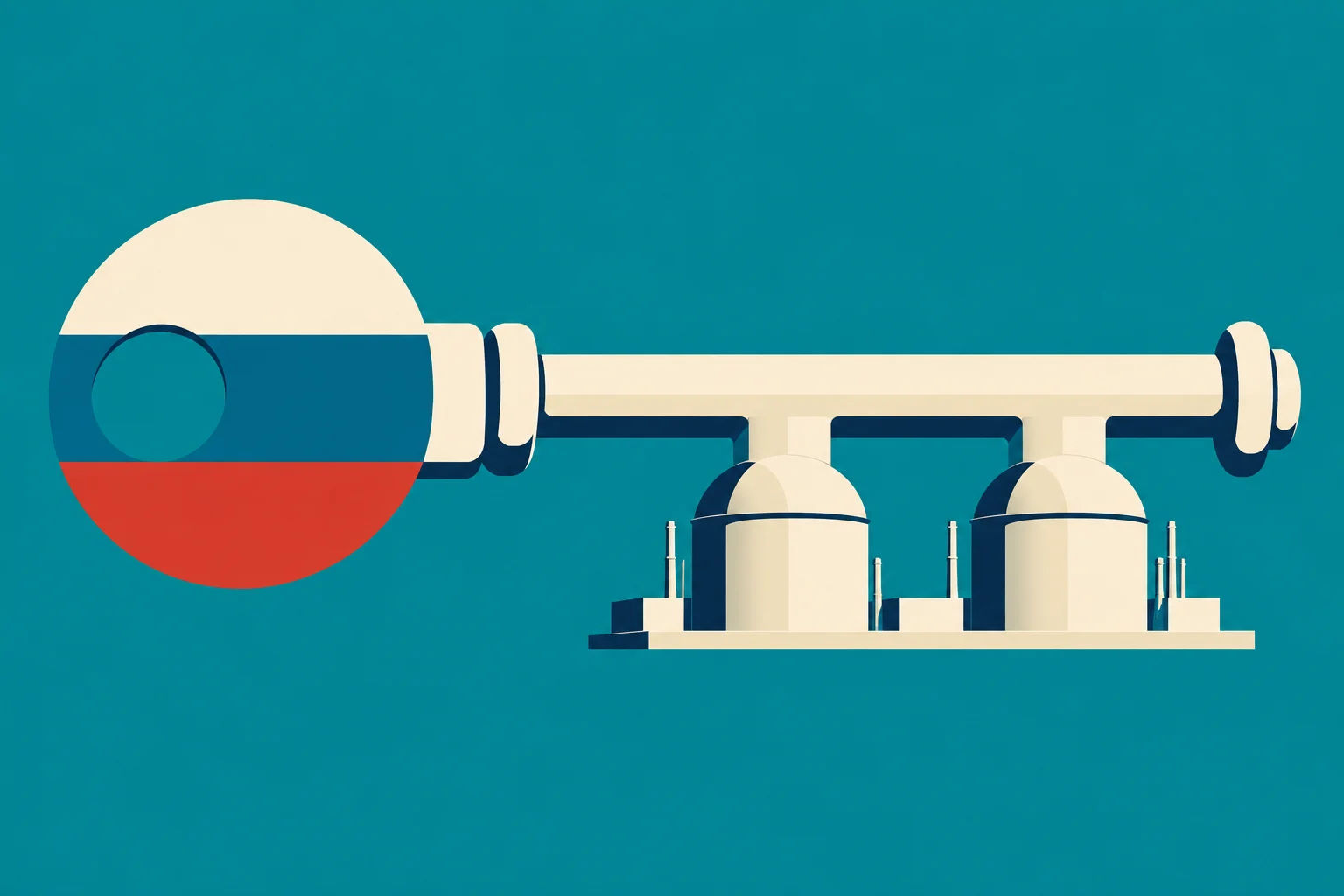
The relationship below the diplomacy has a ledger. Russia-Iran ties were long testy and improved in part, Trenin writes, because both countries have been attacked by the United States — directly in Iran’s case, by proxy in Russia’s. In 2022 Washington openly set the goal of ‘inflicting a strategic defeat on Russia’; Iran then transferred Shahed drone technology to Moscow. In early 2025 the two signed the Treaty on Comprehensive Strategic Partnership, setting parameters for economic, political and military cooperation. The clause that isn’t in it matters as much as the ones that are: the Russians proposed mutual military assistance, and the Iranians demurred. Trenin uses that to answer the criticism that Moscow failed Tehran in the 12-day war of 2025 and the ongoing conflict — Russia, he says, repaid its debt — but the same fact means the partnership tops out short of what allies do for each other.
Why peace pays more than oil spikes
The closure of the Strait of Hormuz pushed oil prices up and Russia, as a major exporter, gained financially. Trenin’s arithmetic dismisses the gain: it is short-duration, while the costs of a prolonged blockade are durable. Peace would unlock the International North-South Transport Corridor, Russia’s major logistical project to India, which runs through Iranian territory and does not work while Iran is at war. The corridor gives Moscow a specific, priced incentive to end the conflict rather than prolong it.
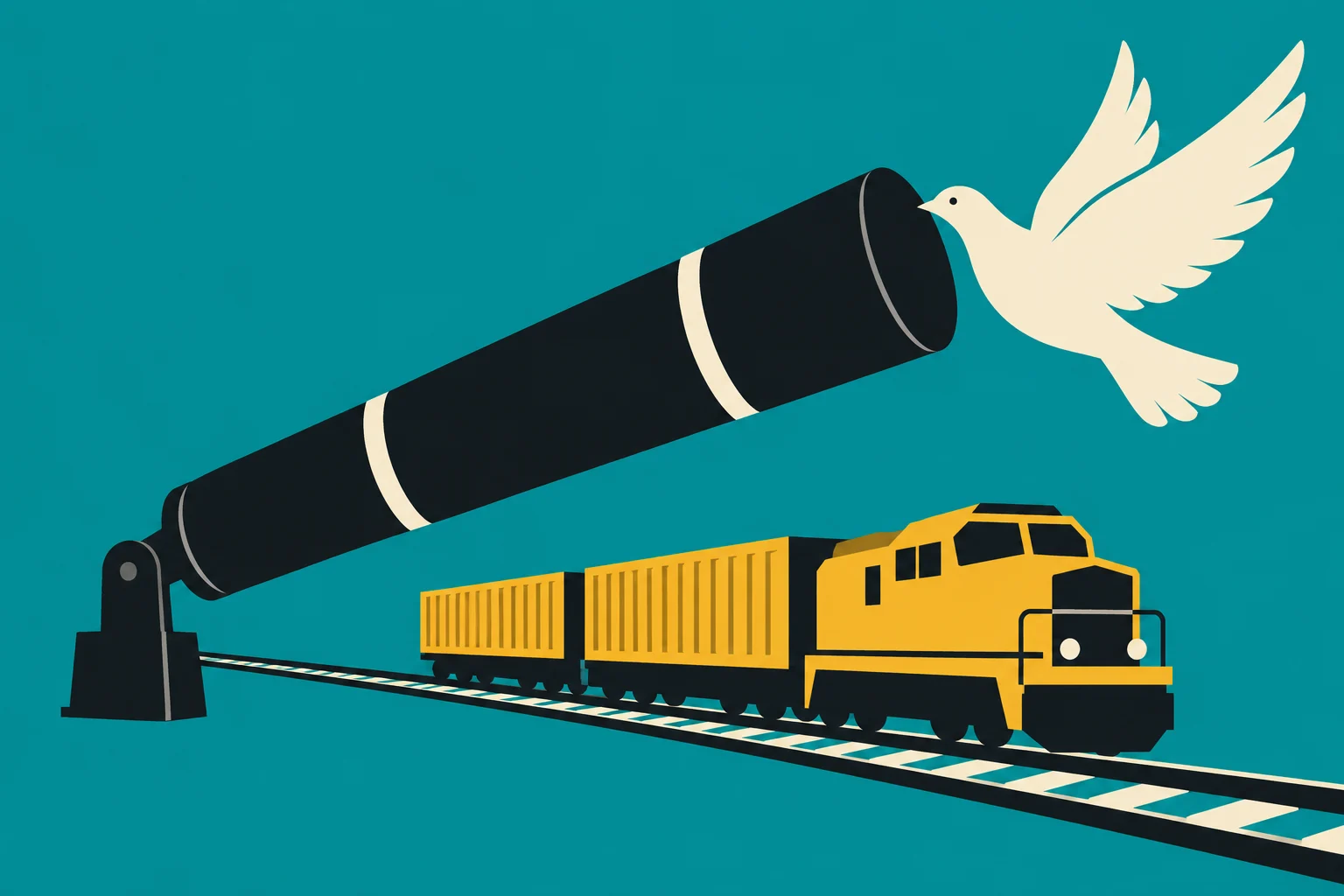
Moscow also needs an endgame it can sell to two audiences at once. It sees Iran as the true victor of the US-Israeli attacks, in Trenin’s account, because of its resilience — but it also sees the enormity of the damage inflicted on its partner. And it treats the Arab Gulf monarchies as important and useful allies whose territory has taken Iranian retaliatory strikes, meaning a mediation that only restores Iran’s position without ending strikes on the Gulf costs Russia elsewhere. The same week sharpened the point: the US State Department ordered nonemergency government employees and their family members to leave its mission in Saudi Arabia, with spokesperson Tommy Pigott saying the Iranian-supported Houthis have ‘increasingly engaged in hostilities against Saudi Arabia, including attacks on civilian airports and other critical infrastructure resulting in civilian casualties and severe travel disruptions,’ as Al Jazeera reported. Departures-ordered missions are what a wider war looks like before it is called one.
Eight parties become two
Russia was one of eight parties in the talks that produced the 2015 Joint Comprehensive Plan of Action. The field since then has thinned in both capitals. The US withdrew itself in May 2018, when Trump terminated American participation and reimposed sanctions, as ABC News recounts. France, Germany, the United Kingdom and the European Union then, in Trenin’s assessment, lost their standing in both Washington and Tehran because of their own actions. That arithmetic leaves President Trump with Russia and China as counterparties acceptable on both sides — a two-member shortlist Moscow created for itself nobody had to create for it.
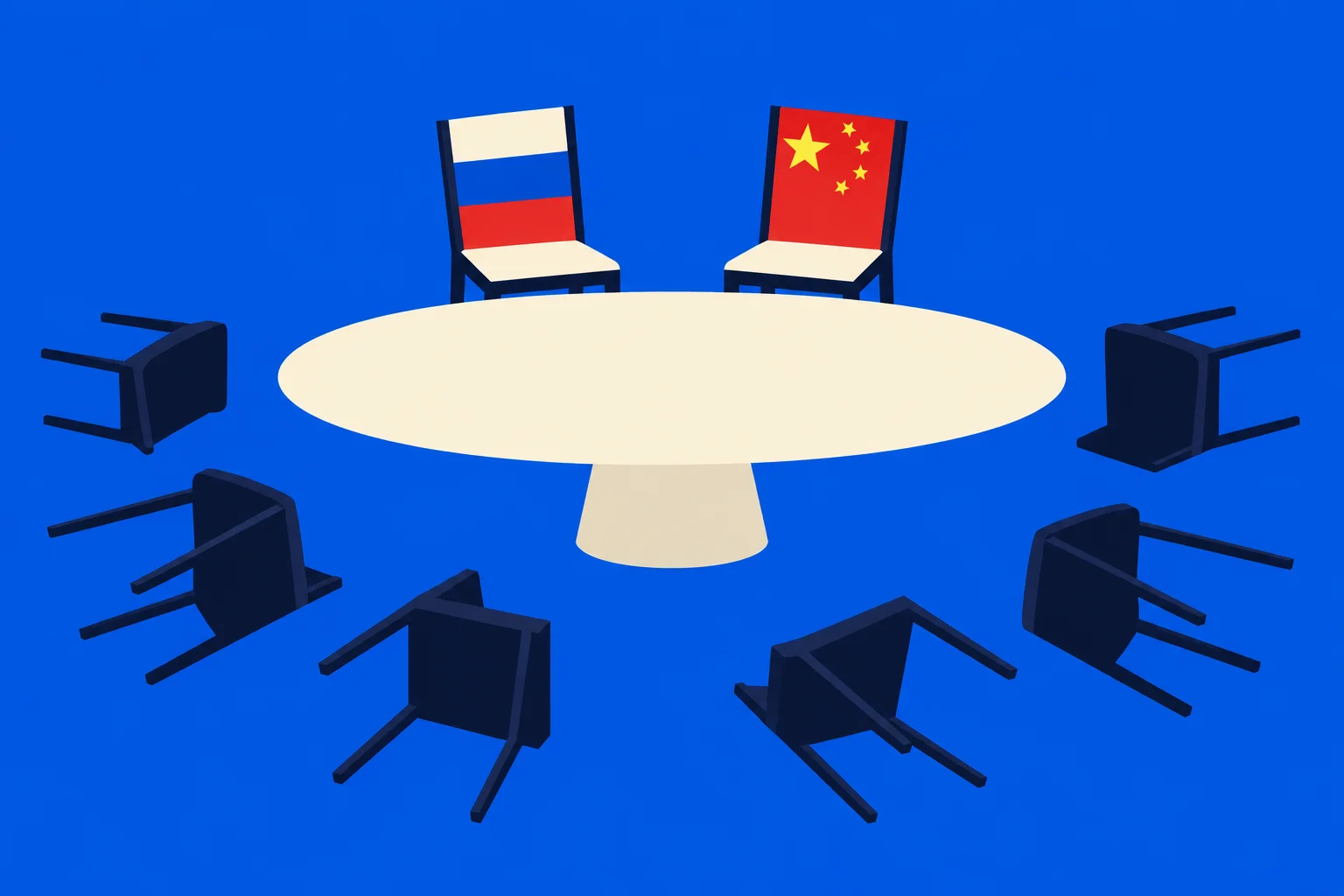
Putin reportedly delivered an Iranian proposal to Trump by phone this month, Trenin writes. In parallel, US diplomatic activity aimed at ending the Ukraine war has risen, with Trump for the first time applying pressure on Kiev; rews has covered Ukraine saying it is ready for US-brokered talks with Russia. Trump has also said an unprecedented trilateral meeting with Putin and Xi Jinping during the Asia-Pacific Economic Cooperation summit in Shenzhen next month would make sense if focused on denuclearisation.
Trenin’s closing move links the crises because they share the same three principals: Ukraine, Iran and Taiwan all sit on the fault lines between the US, China and Russia. The first-ever discussion of a trilateral meeting among their leaders, he writes, may not be a new world order but could be a small step toward balancing wars with diplomacy. The testable version is narrower: Iran has already declined a mutual-defence clause with Moscow once, and whether it now accepts terms its aircraft-and-drone supplier relays from Washington is the number — or rather the signature — that would tell us whether this mediation is a channel or an aspiration.