
Secretary of State Marco Rubio declared in a television interview this past week that “the truth is Cuba has already fallen,” the most direct statement yet from a Trump administration that has spent nine months tightening sanctions on the island.
Mr. Rubio, speaking to Fox News, meant that Cuba now has a more dysfunctional economy than before, is governed by a leadership with its hands tied and has become far more dependent on Washington. That is not the change many Cubans and Cuban Americans who have pressed for the definitive end of Castroism expected when President Trump removed Nicolás Maduro from power in Venezuela in January and assured them he would take care of Cuba next.
Many thought they would see in Havana the same operation American forces had carried out in Caracas. It never came. The first negotiations with Cubans did become public, but by then the White House had shifted its attention to the Middle East and the war with Iran.
A few days ago, a follower on Instagram asked Sandro Castro, a grandson of Fidel Castro who runs several Havana nightclubs, when change would come to Cuba. Mr. Castro, who has more than 165,000 followers, posted a photo of himself with a Cuban flag draped over his back, gazing at the capital’s cracked skyline. “Cuba is already changing, or haven’t you noticed?” he replied.
The change is real, if quiet. A new private class is taking on roles that used to belong to the state: supplying pharmacies, importing and distributing diesel, and keeping food on sale. That was unthinkable in the Cuba that Castroism designed. Most Cubans, who spend their days amid shortages and long blackouts, barely perceive it. Some mothers have stopped sending their children to school because there is no breakfast, no uniforms, even no teachers. But Cuba’s new rich understand it, and so does the Castro family.
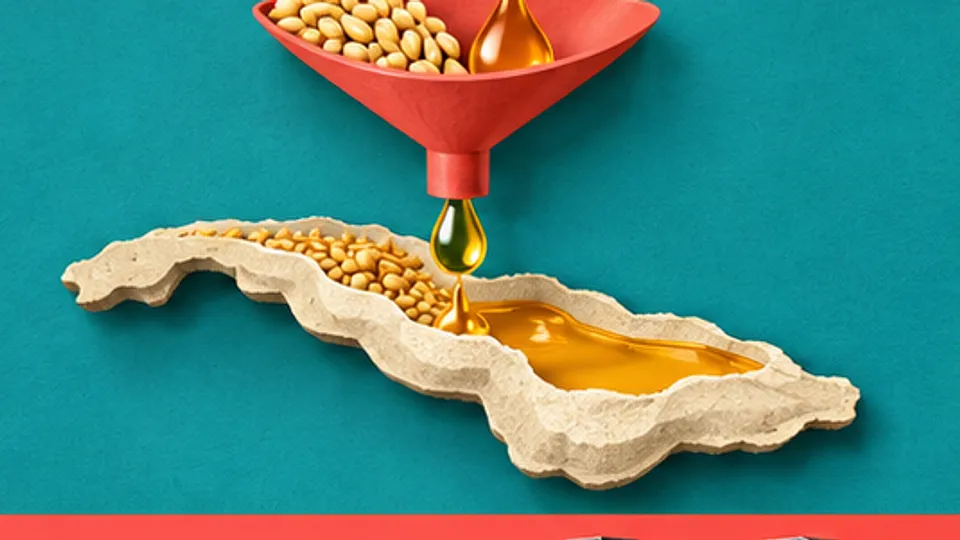
Since the start of the year, Washington has held a cordon of sanctions around the island that Mr. Rubio has described as “the strongest sanctions in the history” of bilateral relations. Except for one shipment delivered in March by the Russian tanker Anatoly Kolodkin, no oil has arrived from any of Cuba’s allies. It is now the private sector that imports the fuel from the United States that circulates on the island. According to economists’ estimates, some 799,704 barrels of diesel and 127,698 barrels of gasoline were imported between January and June. Almost every month, the White House announces new banking and financial restrictions.
The pressure has left Cuba isolated. Venezuela, its main supplier until January, is gone, and no other country has tried to challenge Washington’s sanctions policy.
The dependence shows in the figures. Imports of fuel, food and consumer goods have reached record levels. According to studies by Ricardo Torres, a professor at American University in Washington and a former researcher at the Center for the Study of the Cuban Economy, relief-item exports to the island this year total $126.6 million, frozen chicken products about $118 million, petroleum derivatives $117.1 million, and the vehicles now seen on Havana’s streets about $34.9 million. American exports to Cuba, just over $416.5 million last year, approached $700 million this year, a 61 percent increase. Remittances from the diaspora add more.
For nine months the signals from Washington have been hard to read: reports of drones over Havana’s skies, aircraft carriers near Cuban waters, frequent leaks that contradict the White House. Mr. Trump has suggested he will accelerate the promised change once the war with Iran is settled. At a recent Summit of the Shield of the Americas in New York, he joked that on his return from the Middle East he would leave his secretary of state “in the middle of Cuba.” “We’re gonna have one of those big, beautiful air craft carriers fly him in, drop him off, and he’ll figure out the rest. He always does,” he said.
Even as Mr. Trump said he believed the United States would reach an agreement with Cuba and that military action would not be necessary, CBS News reported that the Army Reserve was evaluating whether to provide the military’s Southern Command with police forces, medical personnel and other support that could presumably be used in a future attack on the island.
“The president says anything and Marco Rubio finds himself in a very difficult position to react to what he says,” said Andy Gómez, a former director of the Cuban and Cuban American Studies Institute at the University of Miami, who helped shape a policy proposal for U.S.-Cuba relations in the Obama era. “The scene is like a soap opera, a soap opera lived every day in Miami and in Cuba. There is a major global problem with the war with Iran, for which no solution is in sight; so Cuba has had to wait.”
Mr. Torres said Cuba’s dependence on a country 90 miles away is not new, but “now it is being done very directly, with full intent.” “Some measures are being taken that are creating new dependencies,” he said, pointing to fuel imports after the oil embargo and to Sherritt, the company that withdrew from Cuba because of the sanctions, after which American investors began showing up to negotiate with the U.S. government for a stake in the island. “The idea is that once the foreign companies leave, that vacancy can be used to position U.S. firms.”