
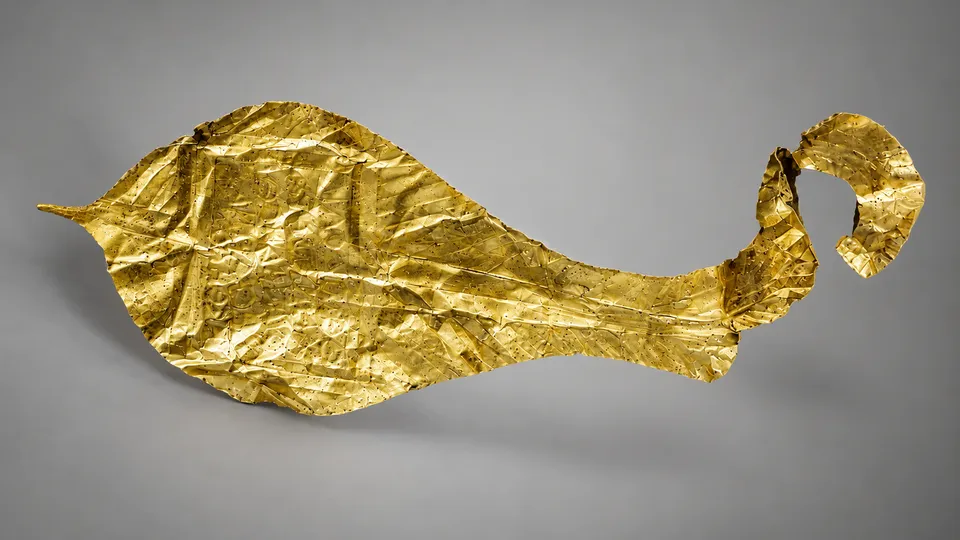
Archaeologists have proposed that a gold offering found at a Roman fortress in Georgia belonged to a Crimean merchant who supplied soldiers, Arkeonews reported on Oct. 22.
The thin gold plaque, discovered at Apsaros near Batumi, bears a Greek dedication to Jupiter Dolichenus and names its donor as Thrasymedes. Researchers believe he could be the prosperous trader of that name honored at Chersonesus, near modern-day Sevastopol. They haven’t established that the two were the same person.
Radosław Karasiewicz-Szczypiorski, an archaeologist at the University of Warsaw, said the Thrasymedes known from Chersonesus imported and exported goods. City authorities granted him the right to conduct maritime trade without paying customs duties, a privilege that points to his commercial standing.
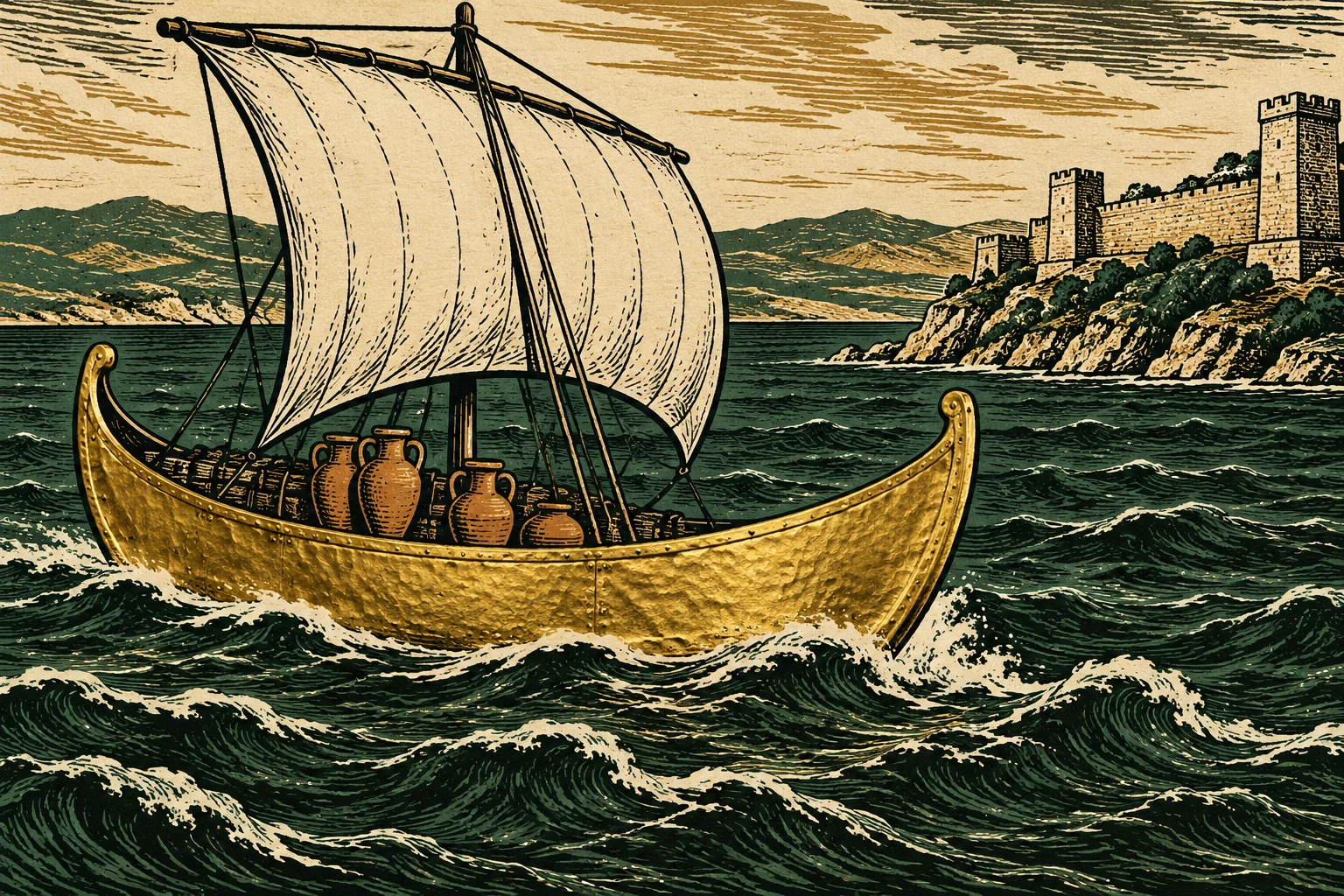
The name was uncommon in the ancient Black Sea region. Its appearance at both ports led researchers to consider whether the merchant traveled between Crimea and the eastern Black Sea coast, possibly supplying troops associated with the Fifth Macedonian Legion.
The legion provides another connection. Units associated with it operated in the Black Sea region, and stamped roof tiles found at Apsaros document its presence there in the second century A.D. That evidence places soldiers from the same military organization in the region where the merchant may have traded. It doesn’t establish a business relationship.
Researchers from the University of Warsaw and their Georgian colleagues published their analysis in the journal Zeitschrift für Papyrologie und Epigraphik. The Polish-Georgian expedition has investigated Apsaros since 2014.
The dedication offers a separate clue to religious life at the fortress. Jupiter Dolichenus originated in Doliche, in what is now southeastern Turkey, and became especially popular among Roman military communities. Often depicted standing on a bull with a thunderbolt and a double-headed ax, the god was worshiped as far away as Britain.
A merchant dealing with soldiers might have shared their religious practices, the researchers suggest. But the inscription doesn’t explain the donor’s beliefs or why he made the offering. Thrasymedes could instead have been a soldier or another civilian connected with the garrison.
Archaeologists also recovered a small bronze figurine of an eagle on a bull, imagery associated with Jupiter Dolichenus. Together with the plaque, it suggests a sanctuary may have stood at or near Apsaros. Researchers believe the evidence may date to an early stage of the cult’s spread, before it became more widespread in the later second century A.D.
Excavations outside the fortress have found installations associated with pottery production and winemaking. Locally made amphorae could carry agricultural goods to other settlements and military posts, though no direct evidence connects Thrasymedes to those industries.
The sanctuary has not been conclusively identified, and the donor’s identity remains unresolved.