
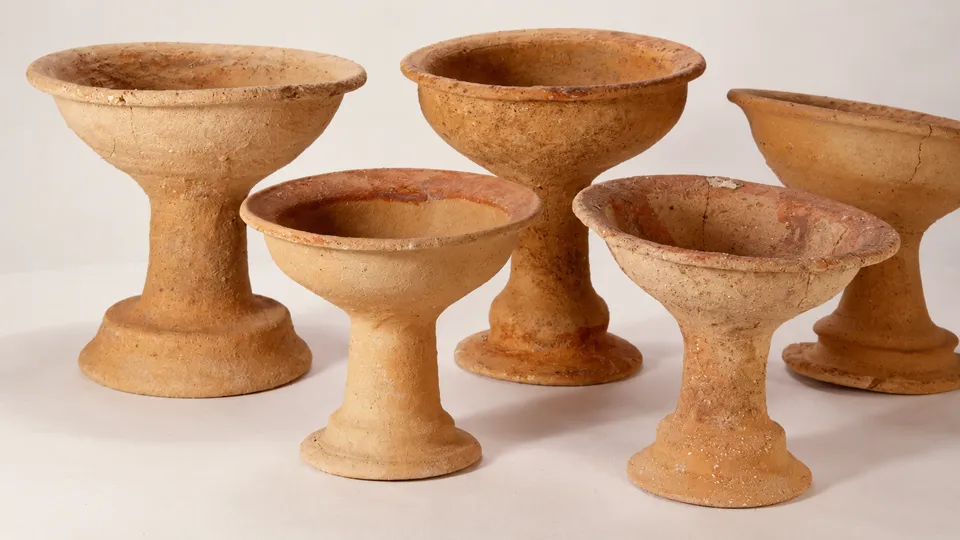
Researchers at the University of Sydney have found a chemical that may point to Indian black pepper in ceramic chalices placed beneath the heads of the dead in a 3,000-year-old communal tomb at Pella, in Jordan, Arkeonews reported on Saturday.
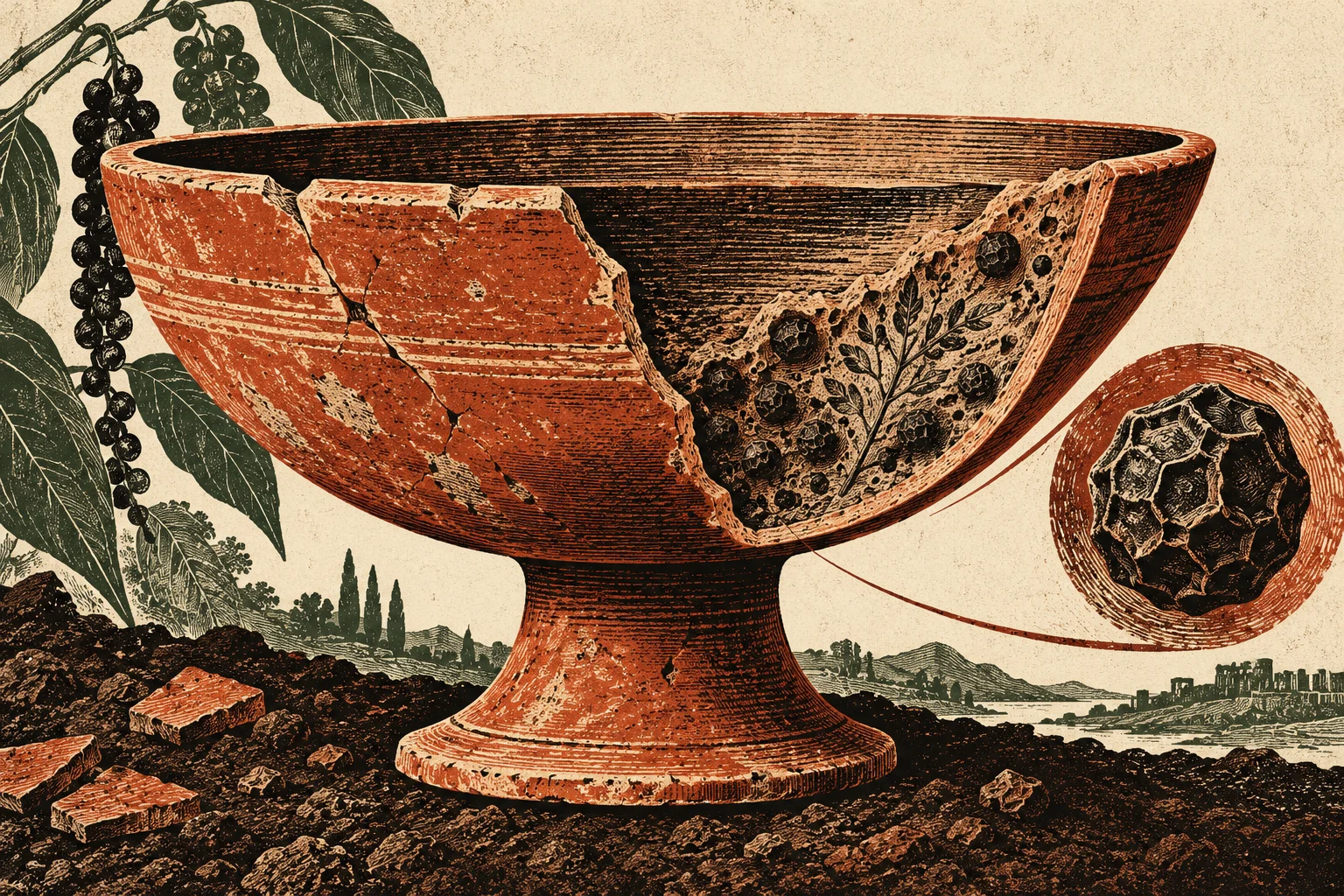
The compound, piperine, turned up in three of the seven chalices the team tested from Tomb 89, a burial dated to roughly 1000 to 900 BC. One lay under the skull of a young woman the researchers call Individual 16. Another was under the head of a young man, Individual 13. The third couldn’t be tied to any particular burial.
Black pepper, native to the Western Ghats of India, is one of the richest natural sources of piperine. The researchers said the compound by itself can’t prove the spice was there.
The study, published in the Journal of Archaeological Science: Reports, lists P. Sheaves as lead author, with K.-Y. Peng, S. Bourke and B. Crossett. The team ran the residues through liquid chromatography-mass spectrometry, which picks up organic compounds trapped in old pottery. The chalices were dug up nearly four decades ago, but their porous walls still held traces of what had been in them.
Archaeologists found the tomb in 1987 in Jordan’s northern Jordan Valley. It had not been disturbed. Inside were the remains of at least 82 people and more than 200 funerary objects, among them 21 chalices, an unusually large number for a burial of the period.
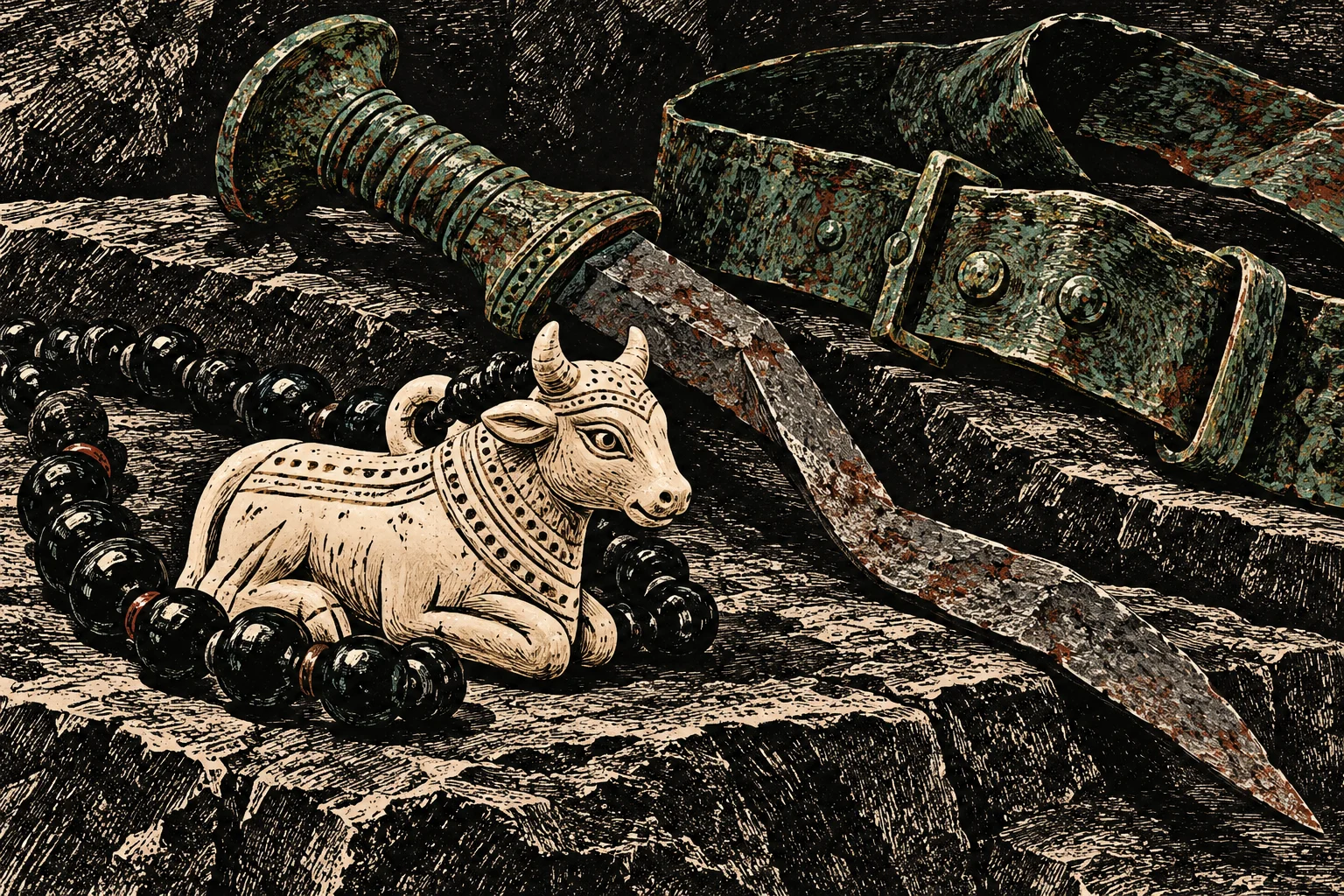
Some of the dead went into the ground with goods from far away. The young woman wore a carved ivory bull calf, once part of a furniture fitting and later reused as a chest ornament, in the Syro-Phoenician carving tradition. Black glass beads found with it suggest Mediterranean trade of the kind run by Phoenician merchants. A young man, Individual 8, was buried with an iron-bladed dagger with a bronze hilt and a bronze belt, both damaged on purpose before burial. The dagger shows Aegean links. The belt closely resembles examples from Phrygia, in Anatolia, and the researchers describe it as the only known Phrygian-style bronze belt from the early Iron Age Levant.
All 21 chalices had burn marks on their rims or inside their bowls, a sign they were used to heat oils and other substances. Vessels like them show up in temples and household shrines across the ancient Levant. In tombs they’re rare.
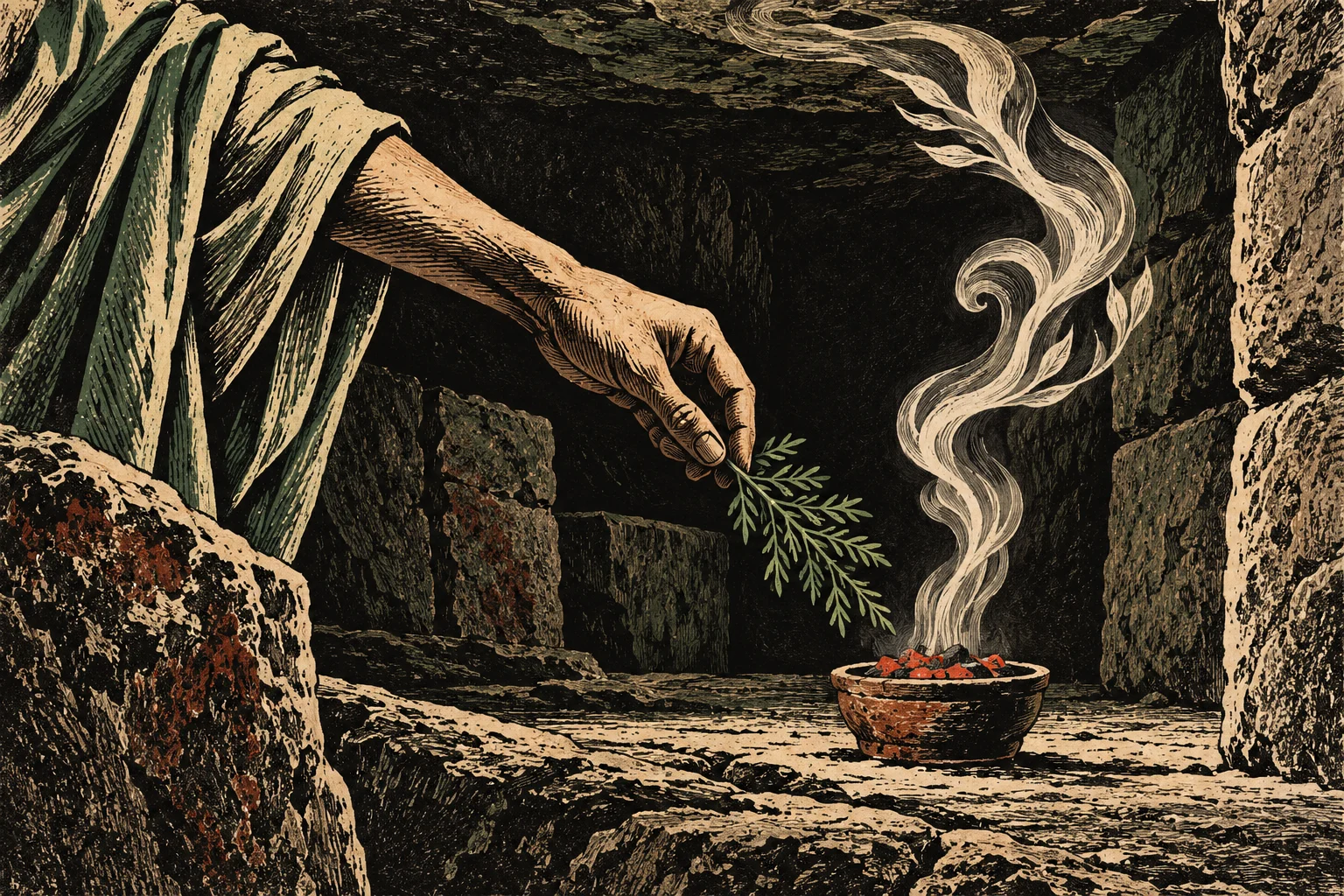
Wormwood may have been one of the things burned. Every one of the seven tested chalices held a compound found in some regional species of Artemisia, the wormwood genus, and five held a second compound associated with it. Because some wormwood species are psychoactive, the researchers suggest the plants may have given the funeral rites a psychotropic element, though the evidence doesn’t show that mourners were after hallucinogenic effects, and the species remain unconfirmed.
Another possible ingredient is Ferula tingitana, a local aromatic plant whose resin some Bedouin still burn to ward off the evil eye and keep peace in the home. The comparison doesn’t show an unbroken ritual reaching back three millennia.
The team found no long-chain ketones, which build up with repeated heating. That leaves open the possibility that each chalice was used once, during the funeral, and then left with the dead.
The findings complicate the usual account of the period. Around 1150 BC, Pella was devastated as the Late Bronze Age order collapsed across much of the eastern Mediterranean, and historians have often described the centuries that followed as a time of shrunken cities and little international trade. Besides piperine, the chalices held compounds possibly linked to plants from the Mediterranean, Anatolia, the Caucasus and Iran, though their exact origins are uncertain.
Pepper had reached the Near East before. Peppercorns were found in the nostrils of the mummy of Ramesses II, and work at Megiddo has turned up evidence tied to South Asian foods.
The three chalices with the most distinctive chemical profiles went with people buried with foreign-style objects, which the researchers said may reflect differences in wealth, status or ritual importance.
The researchers call their conclusions preliminary. They tested only seven vessels, and several compounds still have to be checked against reference standards before their sources can be confirmed. They have proposed testing ritual pottery from Pella’s temples and other sites to see whether the Tomb 89 practices were reserved for a few people or were part of a wider religious tradition.