
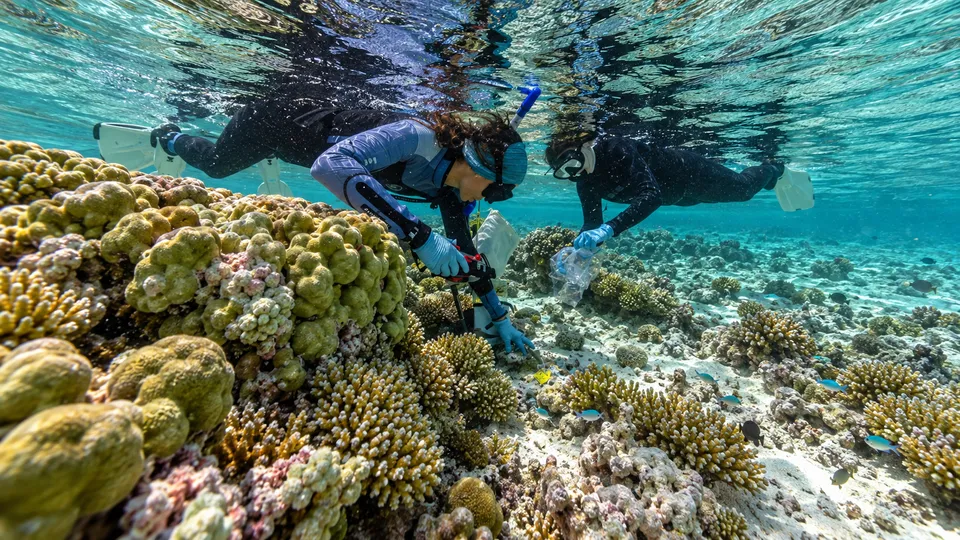
An atoll is a modest piece of geography. It is a ring of broken coral and sand barely above the waterline, made from the reef that surrounds it and kept alive by that reef. Its future comes down to a contest between the sea rising on one side and the reef building on the other. For years that contest has been read as a death sentence for the low islands of the Indian and Pacific Oceans. A new study suggests the outcome depends partly on a creature that no government has ever bothered to count: the rat.
The paper, published on 14 October in Science Advances, comes out of a four-year project funded by the Bertarelli Foundation and led by marine scientists at Lancaster University. The team studied 28 atoll islands in three places: the Seychelles, the Chagos Archipelago, and Tetiaroa, an atoll in French Polynesia. As Bob Berwyn reported for Inside Climate News, in a piece republished by Ars Technica, the researchers measured what they call the islands’ “reef accretion potential”, the capacity of the surrounding reef to produce the material that islands are built from.
The stowaway
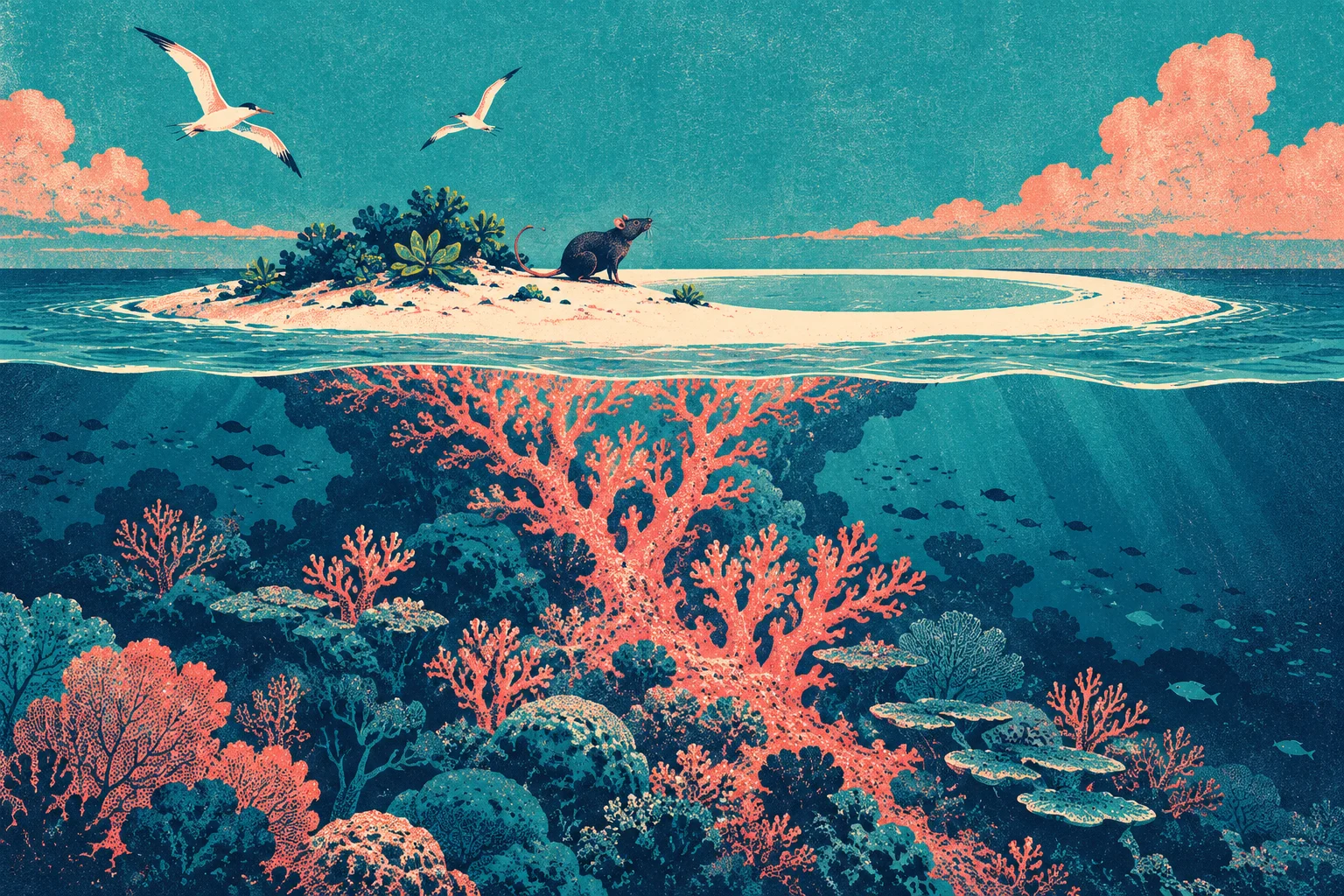
According to the release announcing the findings, invasive rats came to these islands on boats in earlier centuries and devastated the seabird colonies. The loss went further than the birds themselves. Seabirds feed far out at sea and carry what they catch back to land, where they leave it as guano. The guano feeds the plants on the island, washes into the shallows, and feeds the fish and coral offshore. Kill the birds and the flow of nutrients from the open ocean stops.
A reflection, and nothing more: empires leave behind flags, ruins and grievances, but their ships also left rats. These stowaways never appear in any treaty, yet on these islands they may have done more to change the ground than any administrator did.
The arithmetic
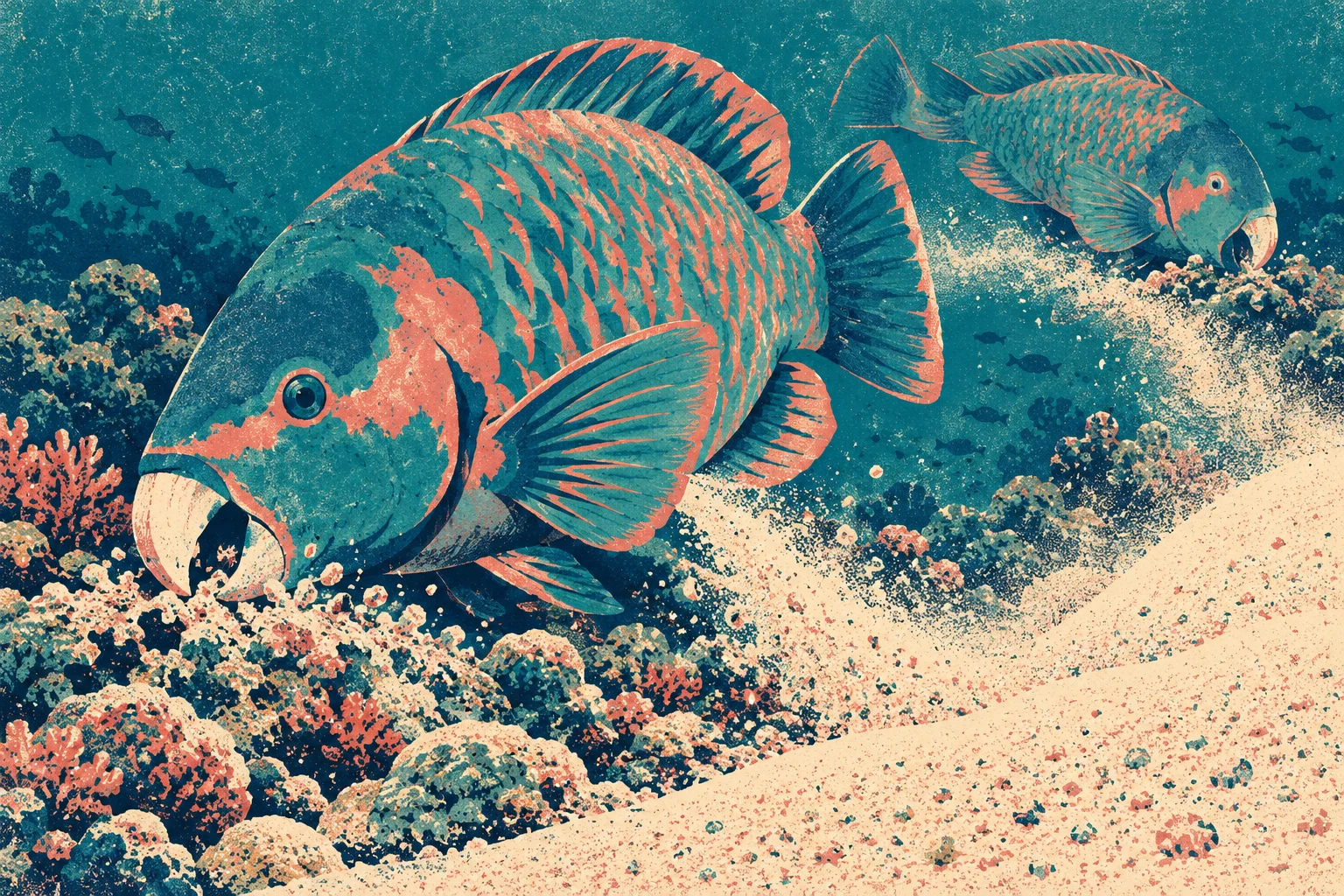
Around rat-free islands with plenty of seabirds, reef accretion potential was about twice that found around rat-infested islands. The release gives the exact ratios: 1.8 times greater on lagoonal reefs and 2.5 times greater on ocean-facing ones. Sediment production, which supplies the sand and rubble that build and repair an island, was estimated to be 2.3 to 2.8 times higher where seabirds were present. The release credits this to a greater biomass of parrotfish and other organisms that make sediment. Chris Perry of the University of Exeter, a co-author, put it in plain volume: for an island of roughly 14 hectares, it means “~170 cubic metres more sediment being produced on the surrounding reefs every year.”
The land side of the chain matters as well. Coconut plantations are thought to cover roughly 60 percent of the forests on Pacific atolls, and coconut palms hold soil poorly compared with native plants. Where native vegetation was abundant, the researchers estimated fine root length to be 4.6 times higher, and those native root systems grew denser still where seabirds were nesting.
Casey Benkwitt, a co-author and restoration scientist with The Nature Conservancy in California, said the higher accretion would be “sufficient to closely keep up with predicted sea-level rises to the end of the century under a 2° Celsius warming scenario.” Without seabird populations, she added, reef growth is less likely to keep pace.
Nick Graham of Lancaster, the lead author, put the remedy in practical terms. Replacing old, abandoned coconut plantations with natural vegetation, and restoring seabird populations by eradicating the invasive rats, he said, “could be key to the survival of these tiny low-lying islands.” He also rejected the old picture of the atoll as a fixed object waiting to drown: “Atoll islands are not static, they are naturally active systems that can change and adapt to their environmental conditions.”
What the coral cannot promise
Graham was also the first to warn against reading the study as a miracle cure for what warming does to low-lying islands. It made no direct before-and-after comparisons of restoration. Its data came from different islands with different numbers of seabirds and different degrees of rat infestation, and the team used an ecosystem energetics framework to smooth out those differences.
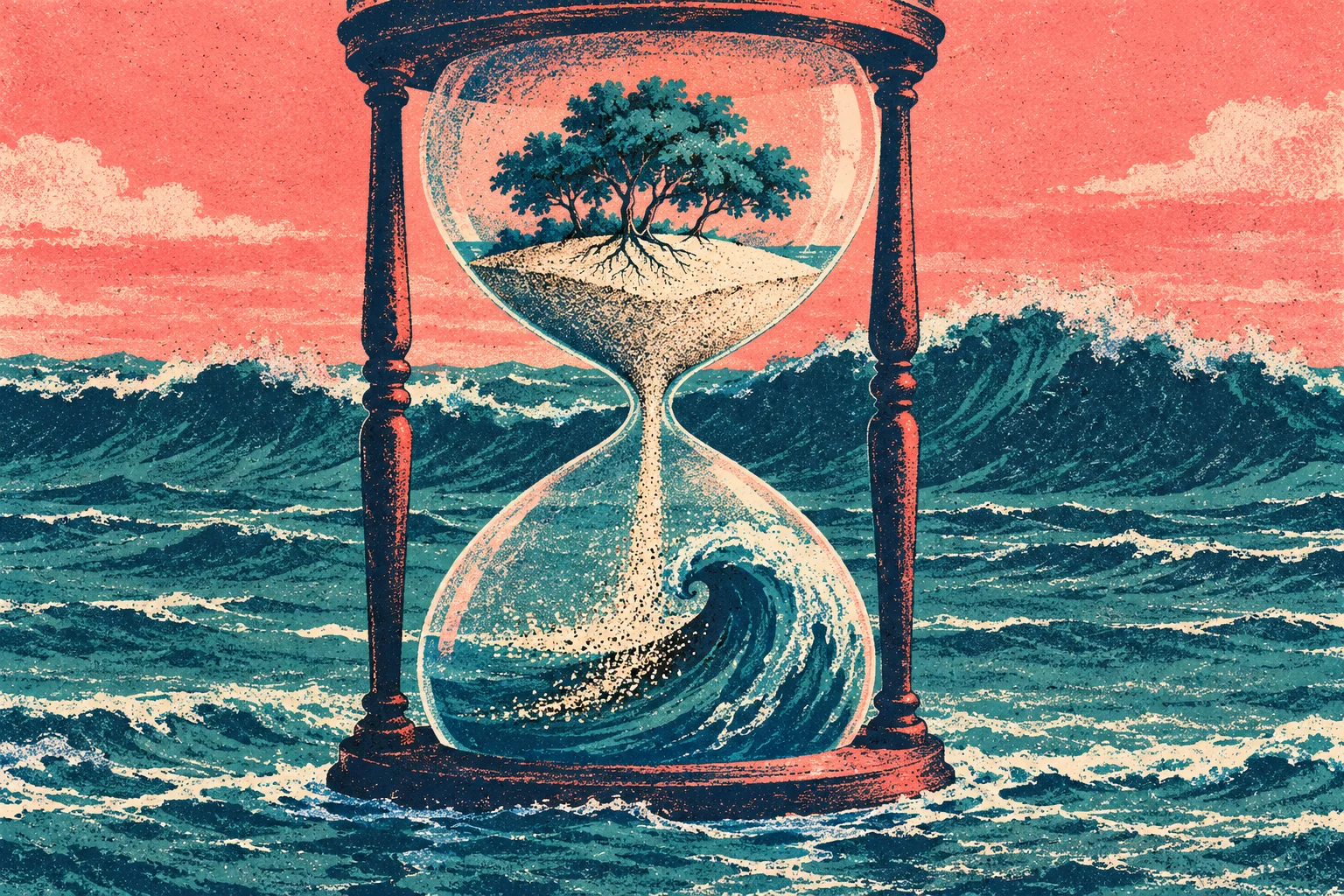
Producing reef material is also different from building an island upward. Warming is changing the waves, winds and currents that decide where the material ends up, and it can be carried away as easily as deposited. The oceans that drive those changes absorbed record heat last year. Most of the islands studied had few or no inhabitants and enough room for native ecosystems to return. On developed atolls, Graham said, restoration can help but will not remove the need for engineering.
The ecologist Hillary Young, writing a Focus commentary in the same journal, described the study as showing a nearly complete loop, “from ocean-foraging seabirds, through native forests and coral reefs, back to the construction and stabilization of the islands on which the birds breed.” Putting numbers on that loop, she wrote, gives “much-needed evidence that the fate of an atoll cannot be understood or managed by treating its land and sea separately.”
Her conclusion went beyond the island. Local conservation can affect how well islands physically withstand rising seas, she wrote, but “rapid reductions in greenhouse-gas emissions remain essential to long-term viability of these systems.”
The Chagos Archipelago is one of the study’s three regions. It also has a human population in exile, ageing islanders who still fear they will never go home while the deal over the islands stalls. Once the rats are gone, the birds can return on their own.