
A rap remix of Marian Anderson’s 1925 recording of “Nobody Knows the Trouble I’ve Seen” won WNYC’s Public Song Project this fall. The New York public radio station’s contest drew a record of more than 200 entries in its first year working with the Internet Archive.
The winning track, “Now You Know,” is by Gabrielle and Dexter-Marie, two young multimedia artists from New York who go by their first names. They put the spiritual over a programmed drumbeat and rapped their own lyrics on top. They heard about the contest from a flyer at the Central Library in Brooklyn and recorded at home with simple editing software and portable microphones, according to a post on the Internet Archive’s blog by Chris Freeland published on Tuesday.
“It just takes that effort of doing it and believing in yourself,” Dexter-Marie said. “That’s the biggest thing I learned about with this project.”
Turning “Nobody Knows” into “Now You Know” draws attention to what Black women have struggled through over time, Dexter-Marie said, and building on a Black woman’s work meant a lot to the duo. “I feel like that’s such a beautiful way to pay homage and pay respect to something that you already appreciate,” Dexter-Marie said on the air.
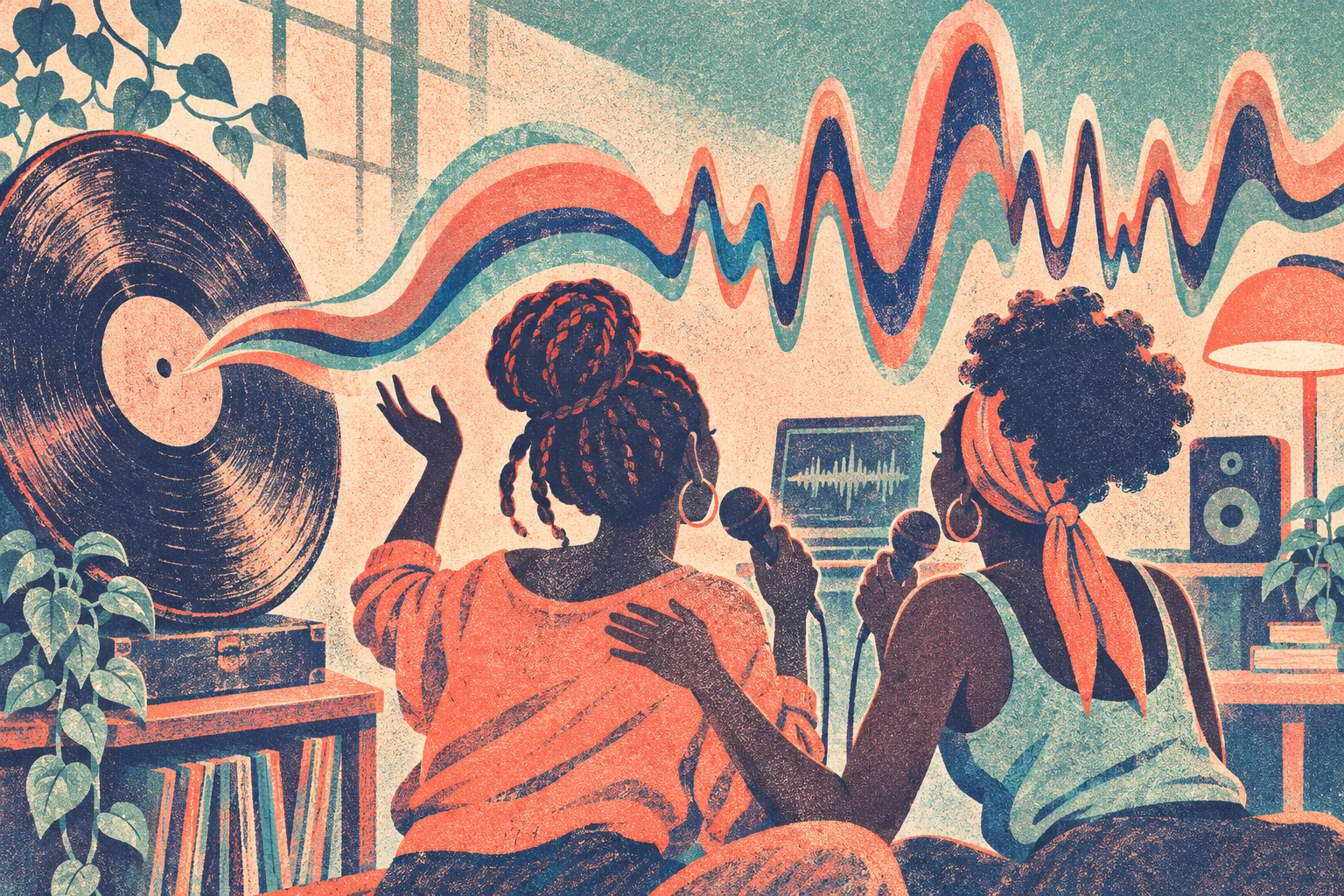
Gabrielle, in an interview on WNYC with Simon Close, the station producer who hosts the project, said the song brought back hard times. “It reminds me of the times where I’d be in really dark places and I could not do anything but sing,” Gabrielle said. “That’s where the spiritual aspect of it comes from. It’s like, ‘Why am I singing when I can’t do anything else? Why am I choosing to make music?’”
Sammy Mellman, a music teacher in Montclair, N.J., took second place with “The Old Ball Game,” his rewrite of the 1908 standard “Take Me Out to the Ballgame.” He wrote it after hearing someone in the crowd at Yankee Stadium yell hateful, xenophobic things at another person. One line asks: “Can America the beautiful live up her name if can’t get along at the old ball game?”
Third place went to Lila Bloom and Devon Yesberger, New York musicians who covered “Blue Skies.” Close said the judges liked how funky vocals and dissonant chords made the old song sound current. The Internet Archive dates the song to 1927. WNYC’s radio special credits it to Irving Berlin, 1926.
The contest is in its fourth year. Close said the partnership with the archive widened its reach.
“We’ve gotten some real experienced pros who make music their professional lives, and also people who came across the project and just like to be creative or have some emotional attachment to the song that they chose to cover,” Close said. “This year we had way more submissions from different parts of the country and, more thrilling, from all over the world.”
Entrants could draw on music, recordings, films or literature whose copyrights have expired. To mark the 250th anniversary of American independence, this year’s prompts asked about U.S. history and national identity. According to WNYC’s contest page, entries had to adapt works published in 1930 or earlier and were due May 10, the Internet Archive’s 30th birthday. Archive staff reviewed submissions with WNYC and a panel of judges that included The Public Domain Review.

Every entry is now kept in a collection on the Internet Archive, though not all of the songs are licensed for reuse. WNYC announced the winners in October in a radio special, An Odyssey in the Public Domain, with the actor Nick Offerman as the Bard and the archive’s founder, Brewster Kahle, as the Librarian. Gabrielle and Dexter-Marie showed a video about their song on stage at the archive’s Oct. 21 celebration in San Francisco.
Outside the contest, the project has put on concerts at Lincoln Center, the Brooklyn Public Library and Joe’s Pub at the Public Theater. Close said he also wants people to know what their local libraries lend, recording equipment and instruments included.
“There’s a way of thinking of preservation as passive, but when you transform that can be part of an active preservation,” Close said. “You are bringing it more to the present and sometimes in a way that’s almost more accessible than pulling a recording off a shelf and dropping the needle on it to start playing.”