

Here is the traditional business model of a professional services firm, simplified only slightly. You hire a lot of smart 22-year-olds. You have them do tedious things: research, spreadsheets, checking invoices against ledgers, footnotes. They make mistakes, and someone more senior catches the mistakes and explains them, sometimes politely. After about a decade of this, the ones who stuck around have developed something called “judgment,” which is the thing clients actually pay for. Some of them become partners. The tedious work was never really the product. It was tuition, and the clients paid it.
Now the tedious work is being done by AI, which is cheaper and doesn’t need to be taken out for drinks. That’s good for margins. It’s less obviously good for the tuition system. If nobody junior ever does the research, where does the next generation of judgment come from?
PwC’s answer is a certificate. As Business Insider’s Erica Sweeney reports, the firm is rolling out a Critical Thinking and Judgment certificate program in December to its more than 85,000 employees and partners in the US and Mexico, and across its Acceleration Centers, which support business operations. Everyone is expected to complete it. It takes about five hours.
Margaret Burke, PwC US’s firmwide talent acquisition and development leader, who designed the program with chief people and inclusion officer Yolanda Seals-Coffield, describes the problem in roughly the terms I just used:
In the past, employees would have built judgment through their work by researching, analyzing, and learning from mistakes. But AI is taking on more of these day-to-day tasks and changing how we formulate our judgment and develop critical thinking, which is essential to our work.
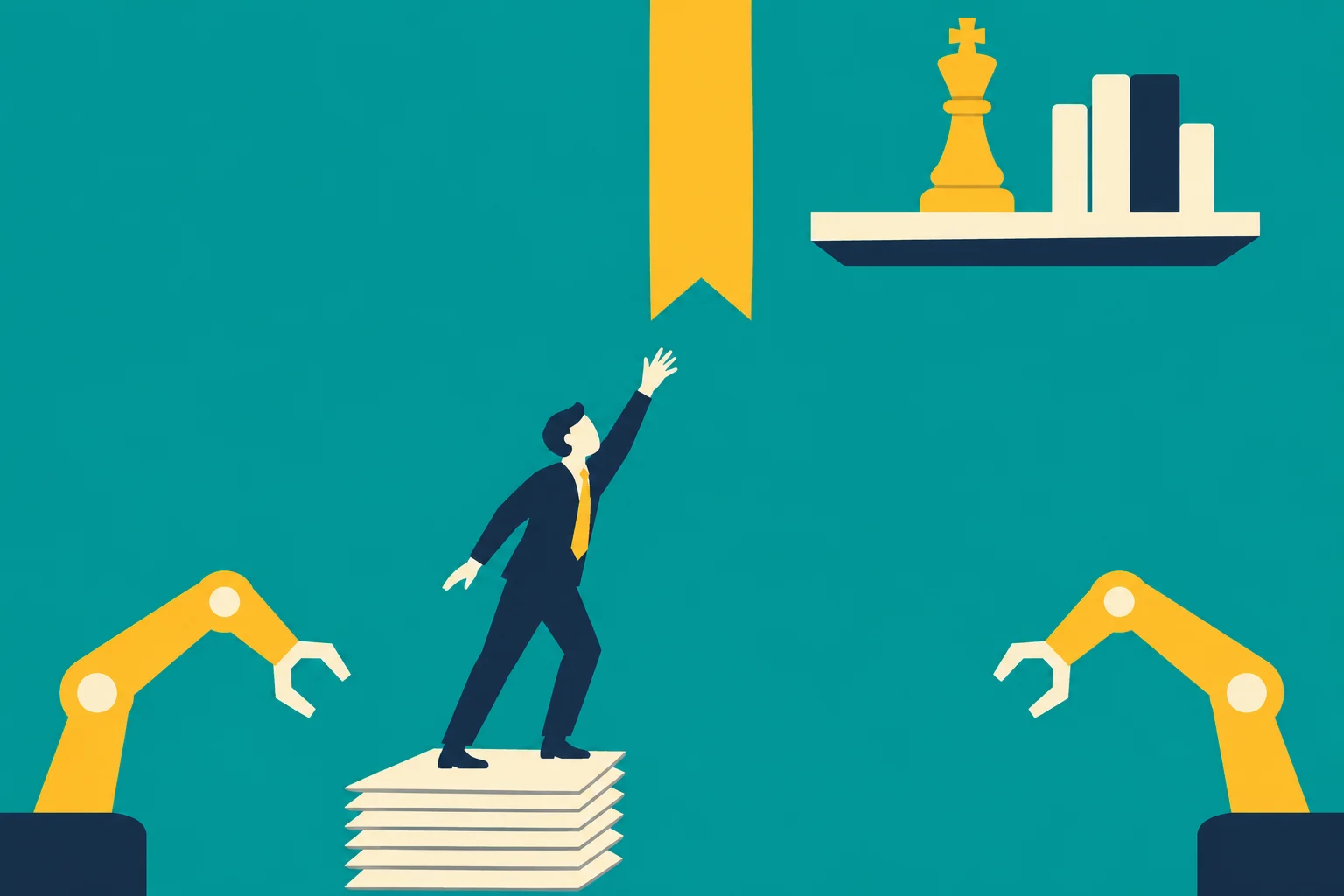
So that’s a fairly candid admission. The apprenticeship had a hidden curriculum, and the automation is quietly deleting it. Burke says PwC started work on the replacement in August and has been “moving at pace to meet the moment.” The firm announced the program on Nov. 9, according to HR Dive, which said the program starts in 2027 and that professors affiliated with the Wharton School and Harvard contributed to it. Business Insider has the December launch. Either way, it’s quick.
What you actually do
First comes an online diagnostic, which sorts you into a thinking style: questioner, analyst, visionary, connector or pragmatist. (I’d like to think a true critical thinker would push back on being assigned to one of five boxes by a quiz, but presumably the quiz anticipates that and files you under “questioner.”) Then you take role-specific modules on PwC’s proprietary framework, which comes down to a loop: clarify what the AI’s output is meant to be, challenge it, correct the errors, repeat as needed, and only then communicate the result. There are masterclass videos with professors, internal experts and tech people. There are personalized simulations, team exercises and on-the-job practice with feedback from your leaders between modules, and a final simulation at the end. There is also an AI coach, available to everyone, to help you apply critical thinking to your everyday work.
Yes, it is an AI that helps you think critically about AI. I don’t actually think that’s a contradiction. If your framework says to challenge the machine’s output, the coach is just one more output to challenge. Still, it’s funny.
This all came out of a broader exercise in which PwC listed 15 AI technical skills and 15 human skills it considers essential in an AI-enabled workplace, adaptability and intellectual curiosity among them. When the firm went back through its training, critical thinking and judgment were the two human skills that jumped out. “We decided that every time we were teaching the AI skills, we had to be teaching the human skills that go alongside it,” Burke said.
How it gets graded
The certificate will count in year-end performance metrics, and here’s my favourite detail. What counts is “not their score, just whether or not they completed the certification.” A test of critical thinking where the result doesn’t matter and only finishing does is, in a sense, a very good test of critical thinking. A sufficiently sharp employee will figure out the optimal effort level quickly.
That’s a little unfair. Burke says PwC will judge how people actually apply the skills “through ongoing observation and performance feedback,” which is how judgment has always been assessed at firms like this: a senior person watches you and decides whether you have it. The certificate gives everyone a shared vocabulary and a checklist. The watching continues as before. Disney told its employees something similar: let the chatbot do the drafting, but the thinking is still yours.
Some arithmetic. At 85,000 people times five hours, you get 425,000 person-hours, at a firm whose whole business is selling hours. Burke says feedback has been positive, and that about 3,000 employees and partners signed up for early access. That’s around 3.5% of the people who will eventually have to do it, which seems decent for voluntary training. PwC says the investment will total more than $100 million, university funding included. From early 2027 it plans to offer its framework to universities and help selected institutions build student materials, under what it calls a Student Human Skills Initiative. MarketScale reports that staff are meant to finish by June 2027.

Why an audit firm cares
The real incentive is pretty plain. An accounting firm sells trust. Its signature is supposed to mean a competent human looked at the thing and stands behind it. When the thing was partly written by a model that occasionally invents sources, that signature is only worth as much as the human’s willingness to check. Inc. noted that the AI-detection company GPTZero has said it found hallucinated citations in reports from all of the Big Four, including four reports published by PwC Middle East. A framework whose main steps are “challenge” and “correct” is, among other things, a way to tell clients and regulators that someone is now officially in charge of checking the footnotes.
It’s also a hedge on the talent pipeline. If AI really does take over much of the junior work, and AI labs’ own staff expect it to handle a lot of theirs, firms will still need partners in 2040 who learned judgment somehow. The old way was ten years of grinding. The new way, for now, is five hours plus an AI coach plus your boss watching. Burke says she wants people to “confidently challenge assumptions, evaluate information, identify gaps, and make informed decisions.”
The first assumption worth challenging is whether five hours can do what ten years used to. The certificate does at least teach you how you’d go about checking.