
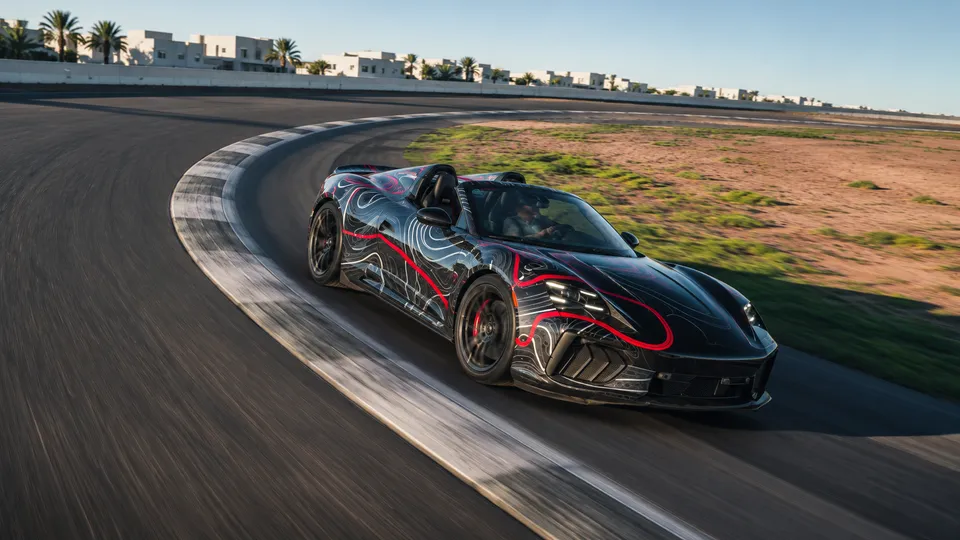
Porsche’s electric 718 Boxster prototype carries its battery behind the two-seat cabin rather than beneath the floor. That preserves the low seating position normally sacrificed to a skateboard battery pack, which raises occupants by roughly 3 inches, or 76 mm. In a prototype drive for Ars Technica, Tim Stevens found himself at eye level with a Tesla Model Y’s door handle in Los Angeles traffic. The production car is due to be fully revealed in 2027.
The packaging also separates this car from most electric convertibles—largely because there are few electric convertibles from which to separate it. A single motor drives the rear wheels. Porsche’s target is 0–62 mph (100 km/h) in under 3.0 seconds, quick enough to make it the fastest-accelerating Boxster yet, but the quoted curb weight is a much less roadster-like 3,300–3,700 lb, approximately 1,500–1,700 kg.
A battery where the engine used to sit
The layout, front to rear, is: front luggage compartment → low two-seat cabin → battery pack → shallow rear luggage compartment. The folding roof stows above the battery. The single motor supplies the rear axle, while the battery’s position produces a stated 40:60 front-to-rear weight distribution. That matches the rearward bias of the previous combustion-powered 718, which Porsche withdrew in 2025 because of EU cybersecurity regulations.
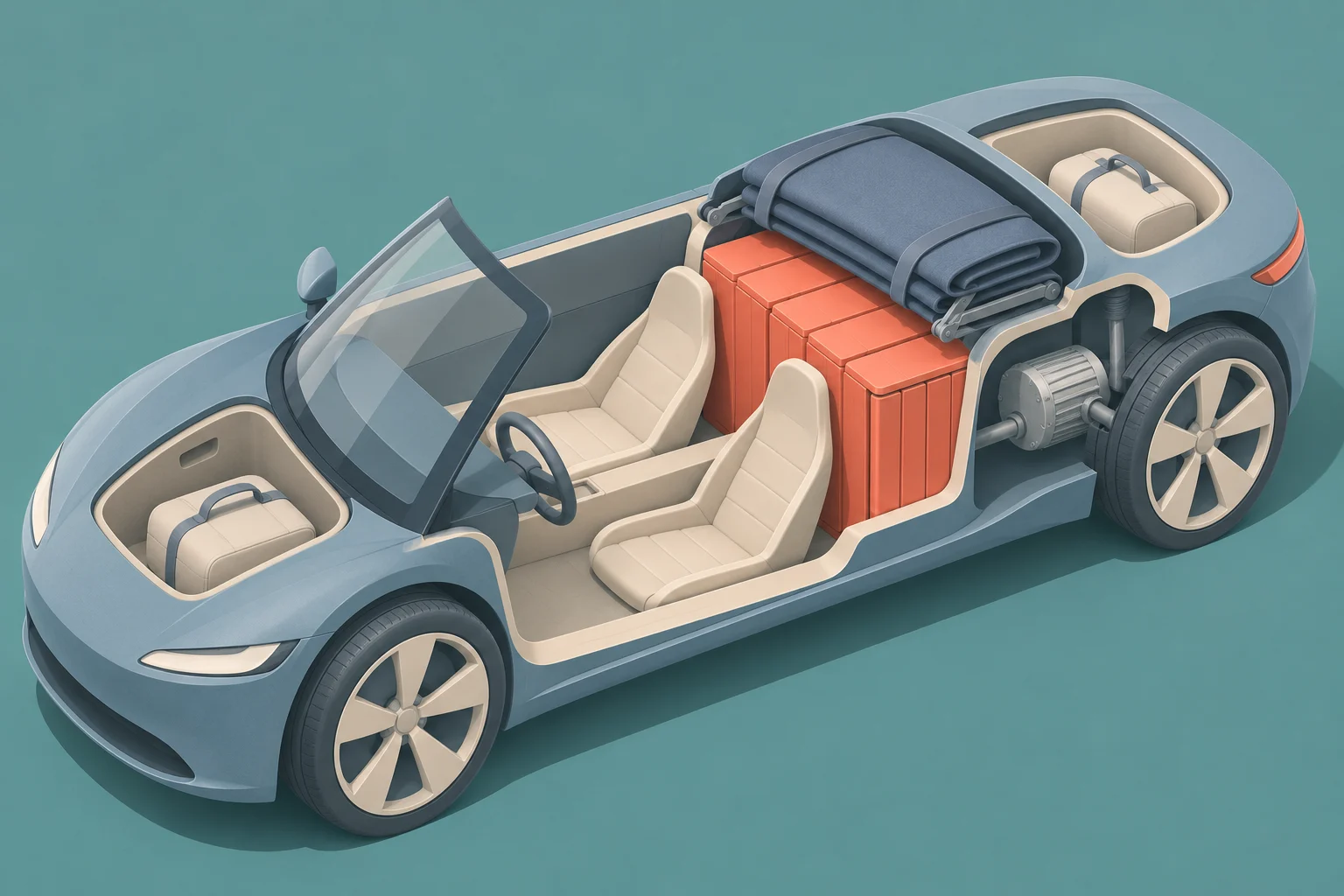
Putting cells behind the seats is not new. Tesla used the arrangement in the original 2008 Roadster, partly because it allowed a Lotus chassis designed for a mid-mounted combustion engine to be reused. Porsche’s reason is packaging rather than chassis reuse: keeping the driver low while retaining the old car’s weight balance. The same platform underpins the Audi Concept C.
Porsche has not disclosed battery capacity, cell chemistry, rated range or charging speed. It has disclosed an 800 V electrical architecture, also used by the electric Macan. Voltage alone does not determine charging time; current, battery capacity, temperature and the charging curve matter too. Stevens cites the Macan’s 270 kW peak charging rate as a reasonable benchmark to hope for, not as a confirmed Boxster specification.
The Boxster also shares a motor with the Macan. In the Macan Turbo, that unit produces about 500 hp (370 kW) at the rear wheels, but Porsche has not said whether the roadster’s version will be tuned above or below that figure. The nearly doubled base output relative to the old 718 is therefore clearer than the final number: there is no production power rating yet.
More power, more 911 and more mass
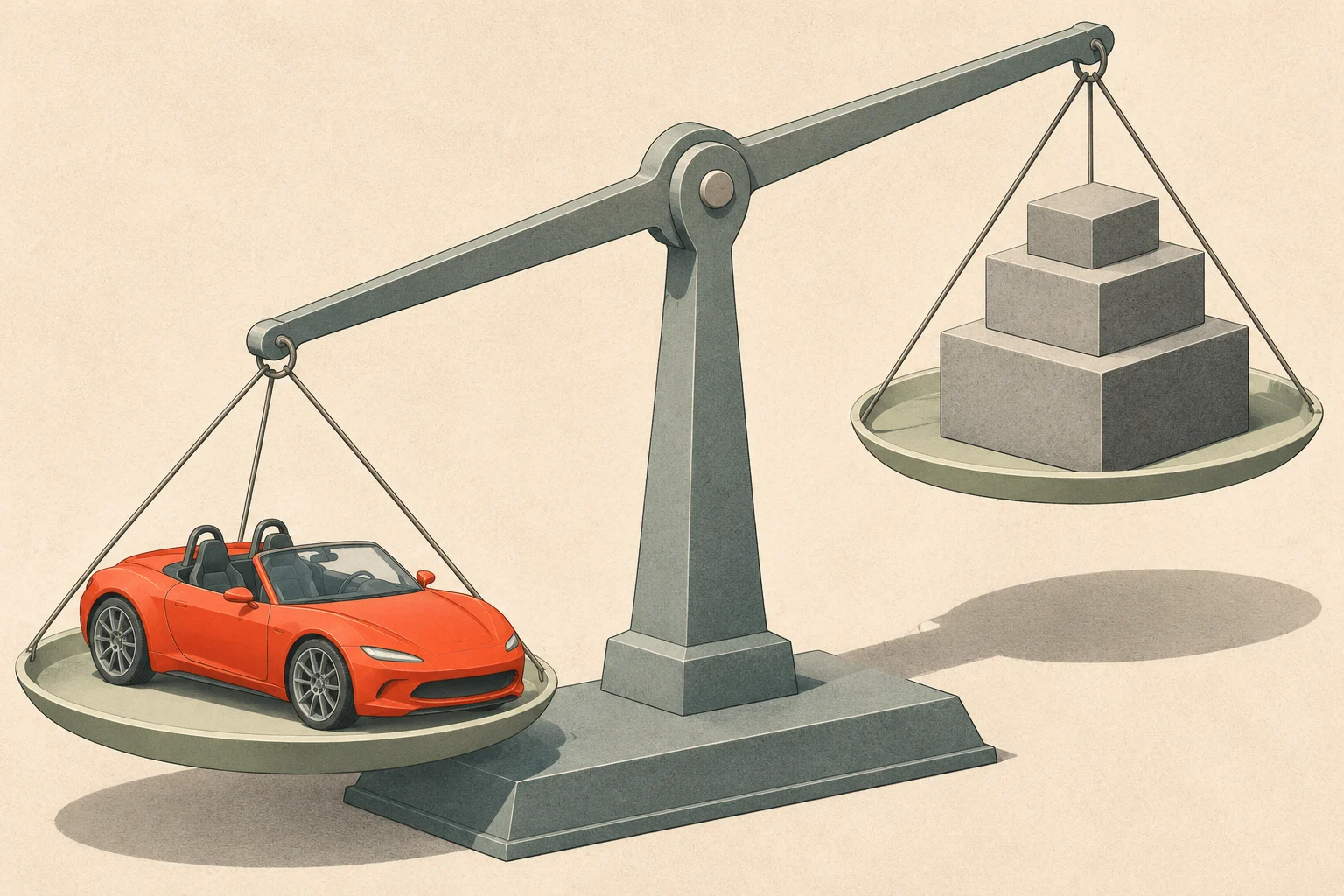
The reported weight range overlaps that of the current 911 and is at least several hundred pounds above the outgoing Boxster’s. The wheelbase has grown as well, making this the largest and heaviest 718. Those figures establish the central compromise: the battery layout protects seat height and weight distribution, but it does not avoid the mass associated with an electric roadster.
Porsche borrows suspension, steering and chassis hardware from the current 911. Stevens found the prototype less immediately eager than the latest combustion Boxster or Cayman, with its extra size and mass apparent on the road, but substantially quicker and still responsive in corners. On the tight circuit at the Los Angeles Porsche Experience Center, he judged its handling more aggressive than the 911’s. Those are prototype-drive impressions, not instrumented handling results.
The reviewer also found throttle response sharper than in combustion cars whose turbochargers and emissions controls delay torque delivery. His comparison extended to the latest 911 GTS, which uses an electrically assisted turbocharger, a battery and an electric motor to reduce that delay. In Normal mode, the Boxster prototype’s adaptive suspension absorbed highway expansion joints and broken pavement without the harshness that might accompany its performance brief.
E-Shift turns motor torque into simulated gears
Porsche’s optional E-Shift system follows the Hyundai Ioniq 5 N in adding synthetic engine noise and gearchanges. Its sound was sampled from the 981-generation Boxster GTS, which Porsche’s engineers selected as the best-sounding 718. The simulation reproduces that car’s 3.4 L flat-six and seven-speed dual-clutch transmission. Steering-wheel paddles request simulated shifts, or the system can change the imaginary gears automatically.
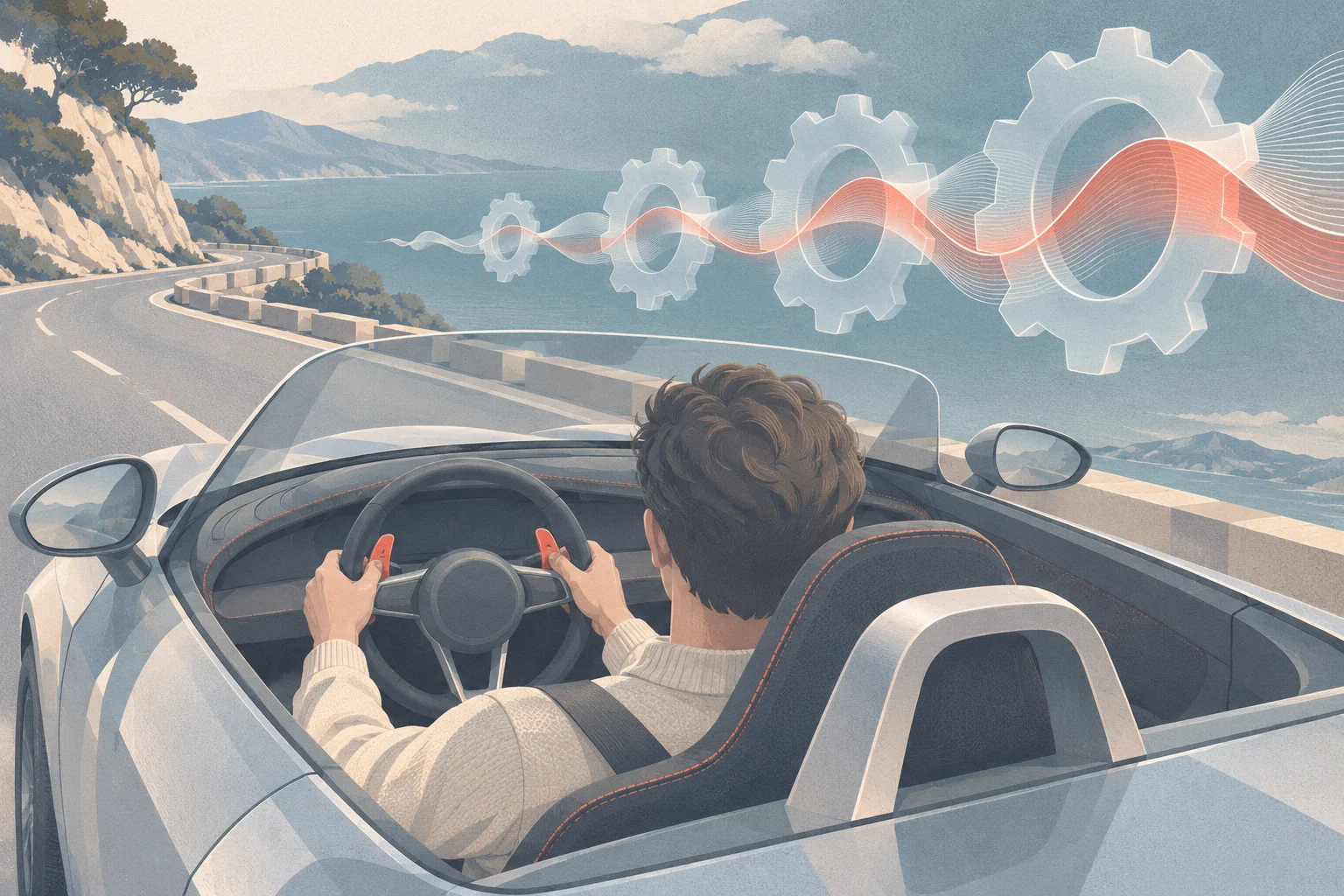
The hardware effect goes beyond speakers. With E-Shift and launch control enabled, the car pulses its electric motor to create vibration while imitating an engine against a rev limiter. Releasing the brake starts the sub-3-second launch. In manual mode, reaching the artificial limiter interrupts acceleration until the driver requests another simulated gear. The mechanical powertrain still has one motor driving the rear wheels; the seven ratios exist in software.
Stevens reports one practical benefit: the changing sound gave him another cue for judging cornering speed. The sound is audible outside as well as inside the car. Pressing the blue steering-wheel button disables the system, so the noise and synthesized shifting are optional rather than permanent features of the powertrain.
Convertible packaging, incomplete specifications
The fabric roof folds in approximately 10 seconds. The front compartment and the wide but shallow rear trunk can each accommodate roughly a carry-on suitcase or a couple of backpacks. There is effectively no storage space behind the seats. Even so, Stevens found the prototype more comfortable and practical for ordinary use than its predecessor, while offering the still-unusual combination of an electric powertrain and a fully opening roof.
The result he describes sits between a Boxster and a 911 Carrera: smaller-car eagerness has diminished, while power, refinement and straight-line performance have increased. Whether buyers accept that exchange will depend on specifications Porsche has not released. The useful checks are usable battery capacity, certified range, peak and sustained charging power, final motor output and measured production curb weight. For a car whose layout is dictated by where its mass sits, that last number deserves particular attention.