

Kirsten Davies, the Defense Department’s chief information officer, was appointed on Thursday as the United States’ cybersecurity chief, replacing Sean Cairncross after widespread outages disrupted air travel, banking and national security systems, Al Jazeera reported. Cairncross was reportedly sacked.
More precisely, Davies is taking the job temporarily. Both the Guardian and the New York Times described her as the acting national cyber director. The Guardian said Cairncross had overseen cybersecurity policy and strategy across the federal government.
That is a broad coordination job, rather than a universal remote control for every government computer. A national cyber director can set priorities and push agencies toward a common strategy. Replacing the director does not, by itself, repair a bank’s systems, identify an aircraft-network fault or determine whether any particular failure was caused by hostile activity.
The scale of the preceding disruption was nevertheless considerable. The Next Web, citing Semafor, said the failures involved Microsoft, US banks and the National Security Agency, as well as a nationwide ground stop that disrupted more than 18,000 flights. That is the sort of number that turns an otherwise technical failure into a very immediate political problem.
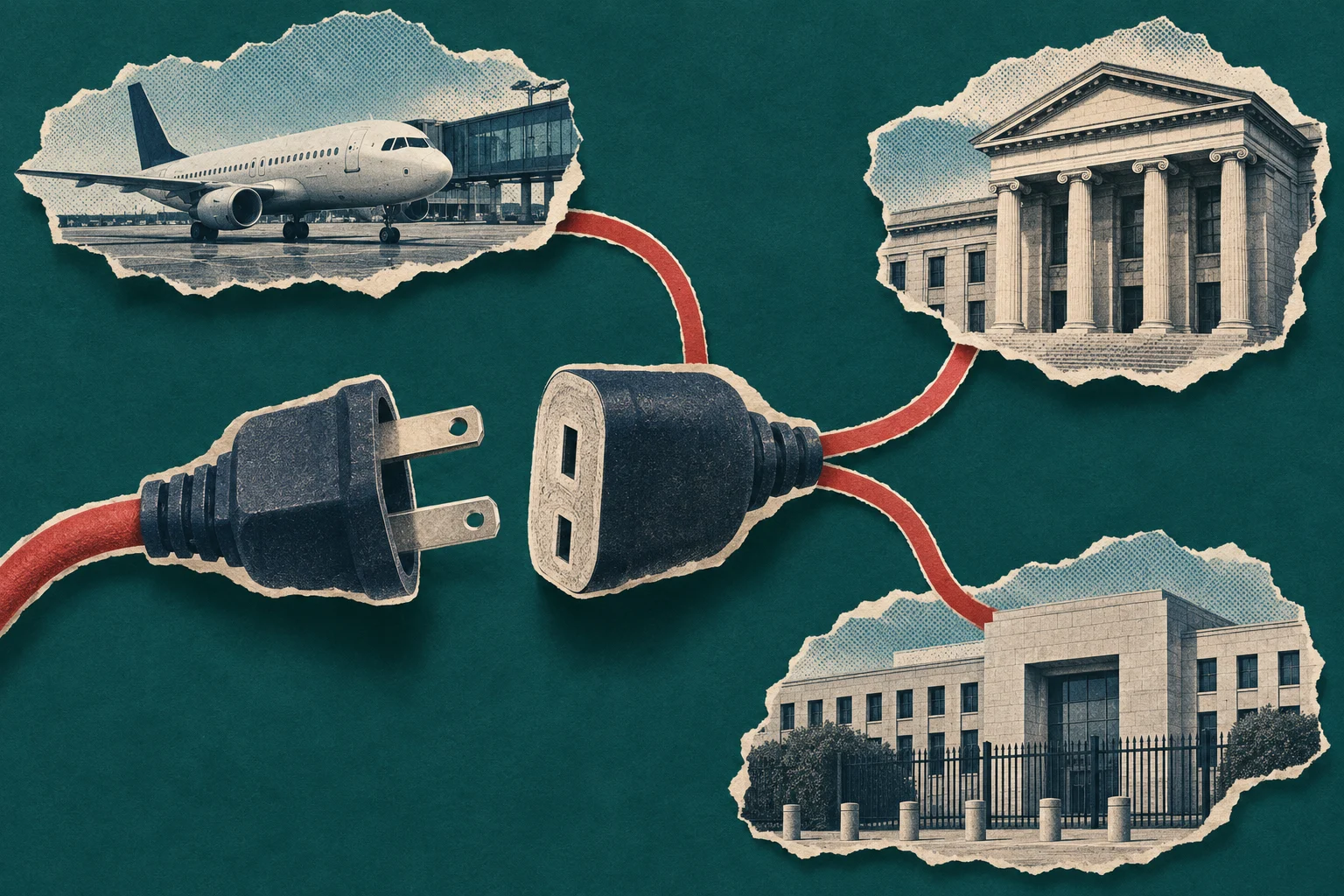
The public sequence is clear: outages occurred, Cairncross departed and Davies was appointed. That sequence alone does not establish what caused the failures, whether they were connected or whether different cyber leadership could have prevented them. Those remain separate questions.
Fox News reported that President Donald Trump backed Cairncross’s firing over concerns that he lacked the cybersecurity credentials for the position. That account puts the emphasis on suitability for the job, rather than presenting a technical finding about responsibility for the outages.
Davies’s own opening formulation was considerably more expansive. She said the US has the opportunity to “dominate the cyber landscape for generations to come.”
Cyber dominance for generations is a strategy outline with a great deal left to fill in. The nearer-term work is less poetic: establish what failed, assign responsibility for fixing it and coordinate agencies whose systems perform very different functions. Davies’s Pentagon technology background is relevant experience, but the appointment itself supplies no public repair schedule.
An acting appointment also leaves the administration with another decision. It can assess Davies in the role while considering a permanent director, even as the office continues its government-wide policy work.
The White House has changed the name at the top of the organisation chart. The appointment does not announce what caused the failures underneath it.