
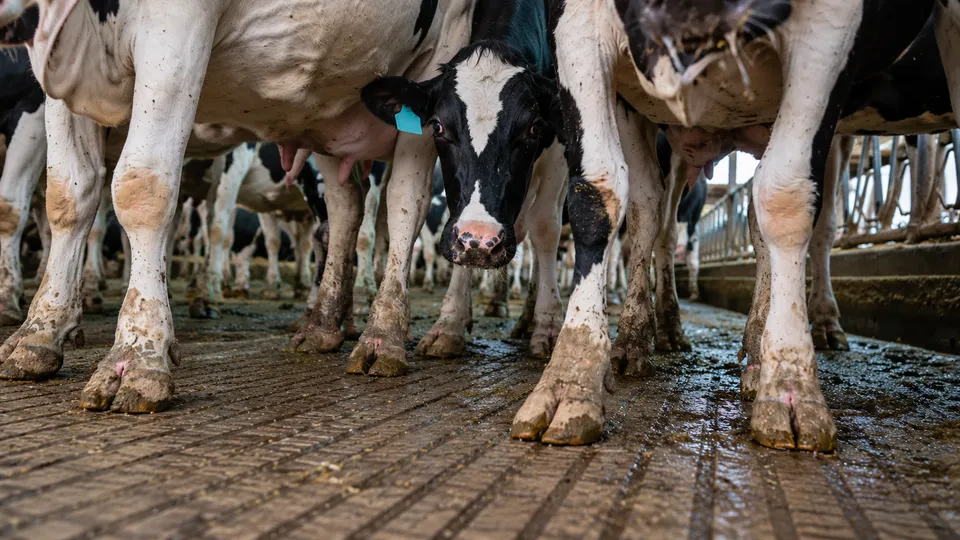
The American Academy of Pediatrics renewed its call on Monday for a ban on selling raw milk and raw dairy products, and it named bird flu as a new danger on top of the bacteria long known to travel in unpasteurized milk.
The policy statement, written by the academy’s committees on infectious diseases and on nutrition, says pregnant people, breastfeeding parents, infants, children, teenagers and young adults should consume only pasteurized dairy, whether it comes from cows, goats or sheep. It was published online on Oct. 5 ahead of the November issue of Pediatrics and presented the same day at the group’s national conference in San Diego. It also asks pediatricians to press state lawmakers to support a ban. Raw milk can still be sold legally in at least 27 states.
“Nearly half of illnesses caused by raw dairy consumption occur in people under age 20,” Dr. Adam J. Ratner, the lead author, said in a statement released by the academy. Many of those cases involve children under 5, he said, and pasteurization cuts the risk without giving up nutrition.
Dr. Mark R. Corkins, a co-author, said that “parents may choose raw milk because they have heard it is healthier or more natural, but the scientific evidence tells a different story.” For infants, children and pregnant people, he said, pasteurized products “are clearly the safest choice.” The academy said claims of better health benefits from raw milk aren’t supported by scientific evidence.
The new part is H5N1. The virus can pass from infected dairy cattle into their milk, reach high concentrations there and stay detectable in refrigerated raw milk for up to five weeks, according to the statement. During the 2024 outbreak in U.S. dairy herds, infectious virus turned up in nearly one-quarter of raw milk samples from affected areas. No human case has been confirmed from drinking raw milk. The academy still called the virus “a credible, emerging threat,” and trade coverage of the update led with that risk.
The older threats are Listeria, E. coli, Salmonella, Campylobacter and Brucella. Listeriosis is estimated to be 12 to 14 times as common during pregnancy as in the general population, and it can cause miscarriage, stillbirth, premature delivery or severe illness in a newborn.
The statement updates guidance the academy issued in 2014 and reaffirmed in 2025. Federal rules bar selling raw milk across state lines, but states have loosened their own laws in recent years, and outbreaks tied to raw milk have increased over the past two decades, according to the academy. Nearly half of the people sickened in those outbreaks are children.
U.S. dairies began briefly heating milk to kill pathogens early in the 20th century, and the practice contributed to a sharp drop in infant illness and death, Beth Mole wrote in Ars Technica. Ms. Mole wrote that Health Secretary Robert F. Kennedy Jr. has been among the advocates trying to reverse that, and that the academy has spent much of the past year defending routine childhood vaccines while he has run the department.
The group is also under pressure in Texas. In January, Attorney General Ken Paxton opened an investigation into what his office called “the multi-level, multi-industry scheme that has illegally incentivized medical providers to recommend childhood vaccines that are not proven to be safe or necessary.” In August, his office sent a civil investigative demand to the academy itself.
The New York Times reported this week that Mr. Paxton’s Consumer Protection Division had demanded 10 years of vaccine purchase records from a pediatrician with a small practice in Central Texas. She told The Times she had spent nearly $15,000 in legal fees responding, and that the only gift she had received from a vaccine maker was a $40 batch of cookies a company representative brought to her office. Mr. Paxton is running for the U.S. Senate.