
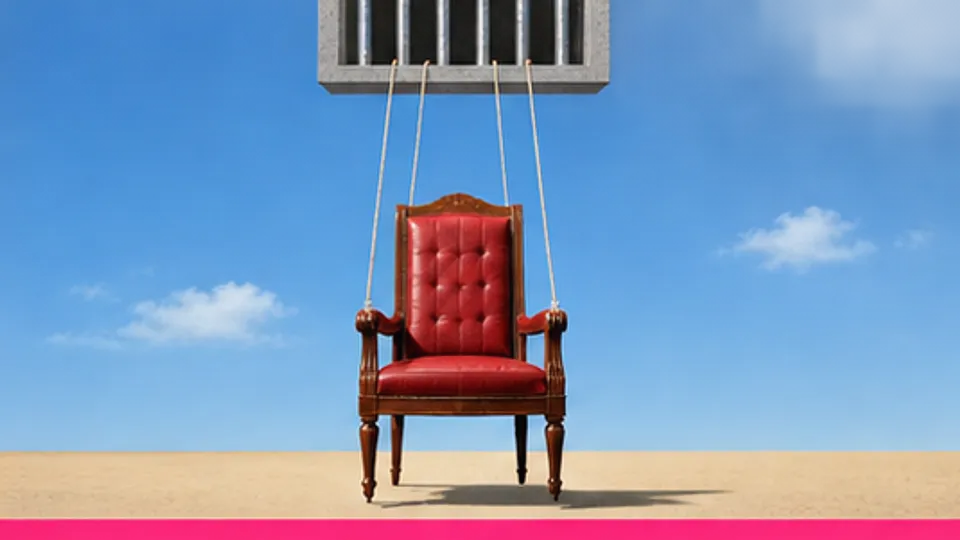
The scene, as Al Jazeera described it this week, is worth picturing before we get to the mechanics of it. On Wednesday, Sohail Afridi, the chief minister of Pakistan’s Khyber Pakhtunkhwa province, sat at the head of a long table in Peshawar and opened the 59th meeting of his cabinet. He was dressed in black, hands clasped, leaning forward. When he got to the sharpest lines of his address, his voice dropped and slowed rather than rising. This is a man giving the performance of calm authority, which is interesting, because the reason he has the job at all is that his actual boss is in a prison cell about 150 kilometres away.
Afridi is 37, one of the youngest people ever to run Khyber Pakhtunkhwa and the first chief minister from the province’s tribal districts. He has held the job since 15 October 2025, according to the chief minister’s official biography. His route there was short: elected to the provincial assembly with 31,669 votes against 7,549 for his nearest rival, made a special assistant in the previous administration, promoted to higher education minister, and then — when his predecessor Ali Amin Gandapur resigned on 8 October 2025, reportedly on Imran Khan’s instructions — elevated to the top job. From backbencher to running a province of roughly 40 million people in about two years. The career ladder in Pakistan Tehreek-e-Insaf is short right now, because so many of the people who used to stand on it have been arrested, disqualified or induced to leave.
The only lever the party has left
Here is the basic situation. Imran Khan, the PTI’s founder and still, by acclamation, its leader, has been in prison since August 2023, convicted in cases his party insists are politically motivated. The PTI is in opposition at the national level. Its one big institutional asset is the government of Khyber Pakhtunkhwa, the province where it remains electorally dominant. If you are a party whose leader is locked up and whose national ambitions are blocked, the provincial government you do control stops being a boring administrative assignment and becomes something else: a platform, a stage, a loudhailer. Al Jazeera reports that Afridi is now taking on a national role for the PTI — less manager of provincial roads and schools, more public face of the campaign to free Imran Khan.
Which creates an odd chain of command. Ordinarily a chief minister serves at the pleasure of his party, his assembly, his governor, the constitution — a whole web of principals who can, in principle, remove the agent. Afridi has helpfully clarified that he recognizes exactly one principal. Dismissing rumours of his possible removal as baseless over the weekend, he told reporters, per The News, that only Imran Khan could decide his political future. It is a striking thing for a sitting chief minister to say out loud: the constitutional officers of Khyber Pakhtunkhwa may think they have opinions about who runs the province, but the actual performance review happens in Adiala jail.
Khan, for his part, seems aware of what he has in Afridi, and said so when the appointment happened. “Sohail Afridi has been one of my long-standing and loyal companions from the Insaf Students Federation (ISF),” he wrote in a message posted to his account on X, adding that he trusted Afridi would bring “lasting and revolutionary progress” to the province. Note the ordering. The loyalty credential comes first — a student-wing companion, known and trusted. The governing comes second. That is probably the job description, in that order.
Can it work? The optimistic version, for the PTI, is that a young chief minister with tribal-district roots runs an energetic government, hammers the release-Khan message nationally and keeps the party’s base mobilized through a long legal siege. The pessimistic version is that a province with genuine governance problems — militancy on its western flank, strained finances, a federal government it is feuding with — is being run as a campaign subsidiary. Both versions can be true at once. Afridi’s job, visibly, is to make sure that they are.
Anyway. The 59th cabinet meeting of the Khyber Pakhtunkhwa government went ahead in Peshawar, chaired by a 37-year-old whose mandate was issued from a cell. Pakistan’s courts will decide whether Imran Khan ever leaves prison. In the meantime his party has answered a related question — who runs the one thing Khan still controls — with a man who is at pains to say the answer is still Khan.