
Oura, the maker of a popular smart ring, delayed its expected initial public offering on Tuesday, a last-minute retreat that came as Apple, Google, Meta and OpenAI all pushed new artificial intelligence devices meant to be worn and carried everywhere.
The company blamed “uncertainty in the IPO market,” even while signaling strong demand for its rings. Some analysts didn’t buy it. “I really believe that there’s something else that’s causing them to pull out of the IPO, and I don’t think it’s the market,” Anshel Sag, a principal analyst at Moor Insights & Strategy, told CNBC. “Them jumping out of this IPO is kind of weird.”
Elsewhere the category kept moving. Meta showed off its Tamagotchi-like Muse Charm on Sept. 23, and the personal agent app it houses quickly topped Apple’s free iOS chart. OpenAI rolled out a personal assistant called Dots this week and is building consumer devices with the iPhone designer Jony Ive, though its first offering does not appear to be a wearable, according to Bloomberg. Apple’s Watch Series 12, introduced in early September, comes with AI features that will listen to the wearer’s conversations.
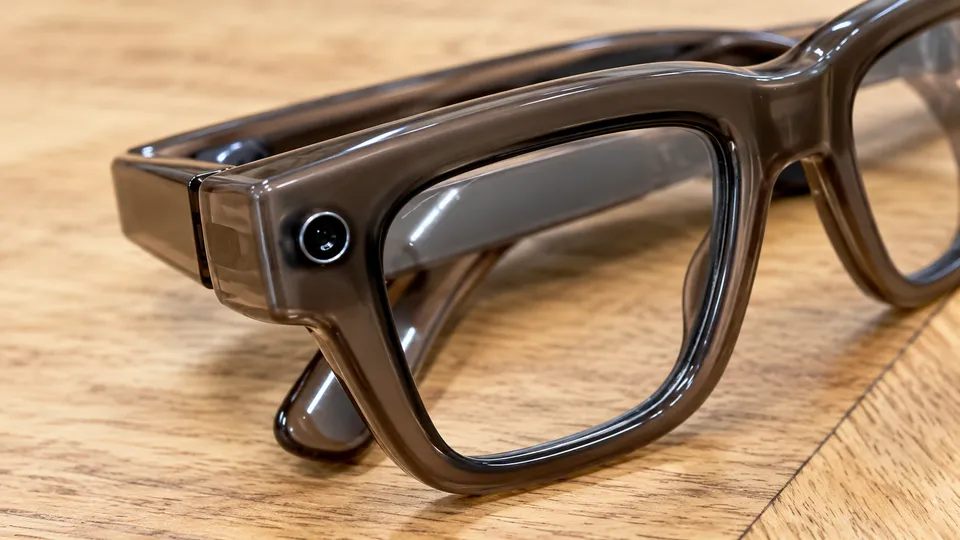
The gadgets are arriving with baggage. Bella Nowroozi, a 24-year-old master’s student, was on a date at the mall two years ago when she noticed a blinking light on her companion’s glasses and recognized the frames as Meta’s Ray-Ban smart glasses. She told him to delete the recordings. “I was honestly pretty shocked,” she told CNBC. “I was also scared to go on dates after that as openly as I did before.”
Meta’s camera-equipped glasses have been dubbed “pervert glasses” on social media. One user said a man photographed her on a date without permission. Another said a Facebook Marketplace buyer took unauthorized videos of her and her children. An ad campaign showing Kylie Jenner filming her daily life drew complaints that the footage looked like surveillance, and two Dutch retailers halted sales of the glasses amid a national debate over covert recording. Meta did not respond to CNBC’s request for comment.
Gil Luria, a DA Davidson analyst, said the resistance will be hard to overcome. “It’s done for at this moment,” he said. “We’re going to have to revisit this 10 years from now.” When he gave the glasses to his twin teenage sons last year, they were “super excited.” Now, he said, they “wouldn’t be caught dead in them.” Last month Meta introduced a camera-free version.
The backlash lands as the fight over AI safety becomes an election issue ahead of November’s midterms, and as data centers have become the visual symbol of the opposition. Always-on devices, to many, are an extension of the same surveillance. Vandals have attacked Flock Safety’s license plate scanners, and cities have ended contracts with the company after community outcry. Gyms have banned smart glasses. In February, the judge in Meta’s social media addiction trial in Los Angeles threatened to hold anyone using AI glasses during testimony by Mark Zuckerberg, the chief executive, in contempt of court. Several people escorting Mr. Zuckerberg into court were wearing the Ray-Bans.
“Their value add has to overcome the perception of AI being a technology that people are opposed,” Mr. Sag said. “It needs to be more helpful and useful than people’s apprehensions about it.”
Usefulness may be the deeper problem. Health features sell: sleep readings, accident detection, AirPods that now work as hearing aids, said Avi Greengart, founder of the research firm Techsponential. But the flashier inventions have stumbled. Rabbit’s r1 assistant had few uses a phone didn’t already cover and ran into technical and hardware problems. The Humane AI Pin, panned by reviewers, was discontinued last year.
“If you force someone to spend $700 on a device that overheats, has a user interface that doesn’t work in sunlight, battery life that is poor, unless what it does is magical, that’s not going to work,” Mr. Greengart said.
Ms. Nowroozi’s sister owns a pair of the Meta glasses, but she is holding off on buying into the wave herself. “I can’t really think of how this would really be different from what a phone could do,” she said.