
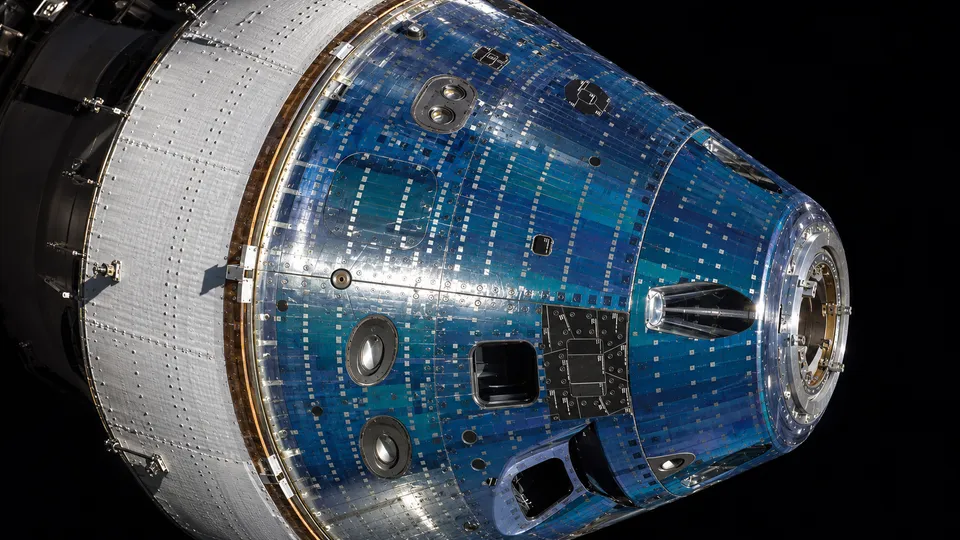
NASA removed the lunar landing from Artemis III earlier this year and replaced it with a rendezvous-and-docking demonstration in low-Earth orbit. The target is now a launch in summer or autumn 2027. That leaves Lockheed Martin preparing its Orion crew capsule to work with two lunar landers, SpaceX’s Starship and Blue Origin’s Blue Moon, on a schedule its programme manager says already had zero margin.
As Eric Berger reports at Ars Technica, the changes give the lander companies more flexibility but increase Orion’s burden. The capsule must accommodate flight orientations outside its original design basis, higher acceleration and a longer stay in low-Earth orbit. In the wider architecture, Blue Moon’s rendezvous with Orion moves to low lunar orbit. Kirk Shireman, Lockheed’s Human Spaceflight Exploration and Orion programme manager, is responsible for turning those changes into flight hardware and procedures.
Docking is several integration problems at once
A docking system has to establish a mechanical connection through hooks, connectors and pins while two independently controlled spacecraft converge. The landers’ thrusters add another interaction: hot or abrasive exhaust can damage nearby surfaces. Orion’s laser system must also interpret Starship or Blue Moon correctly; reflections from their surfaces could produce misleading readings. These are vehicle-specific problems, so completing work for one lander does not complete it for the other.
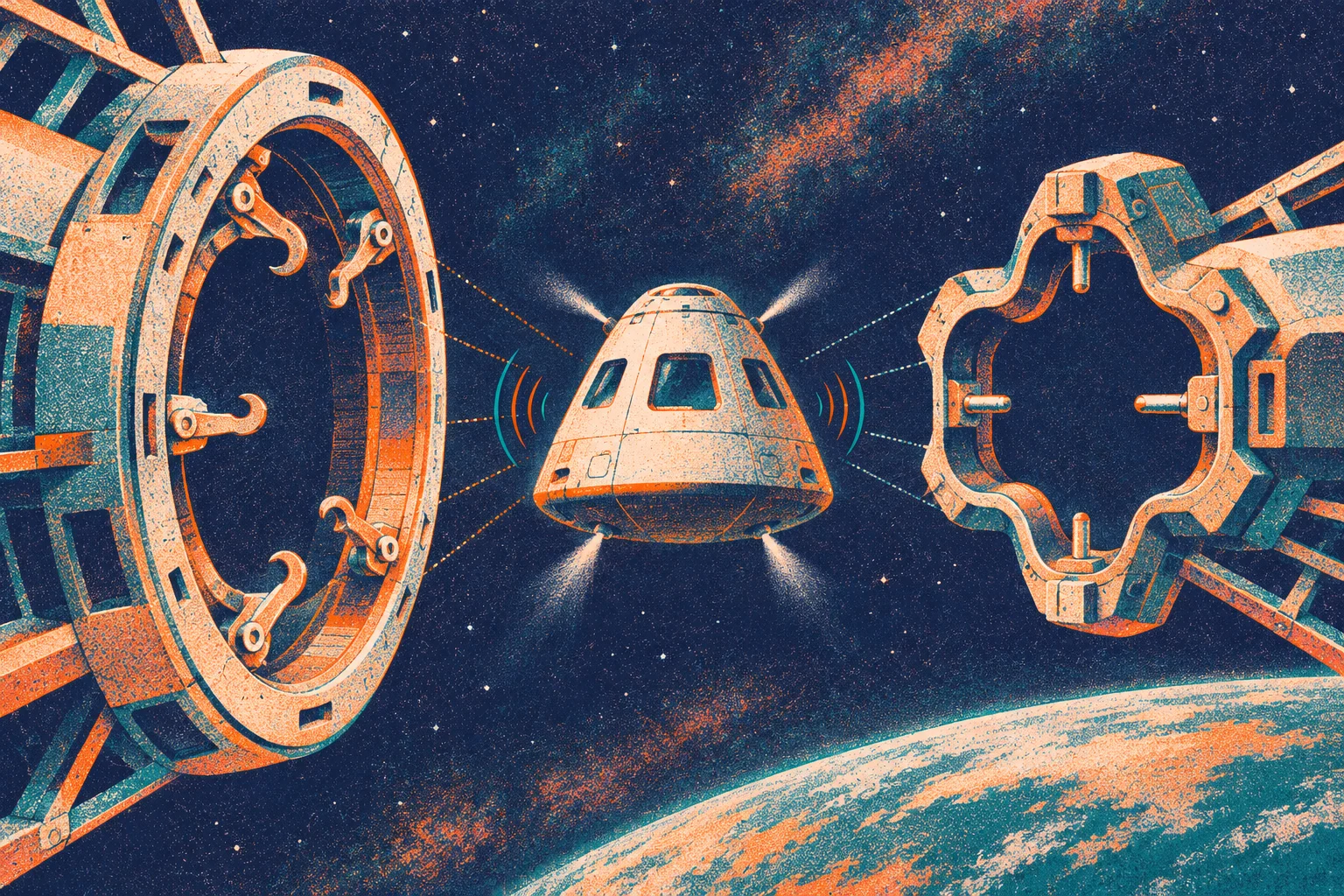
Shireman said this integration was always planned, but not for Artemis III and not simultaneously for both landers. “We were going to do that work, but not on Artemis III, and not for both of the landers,” he said. “It was going to be spaced out, so all that work gets crunched into this time frame.”
The operational flow now looks like this: one Orion spacecraft → separate docking integration with Starship and Blue Moon → mechanical, exhaust and sensor checks for each interface → a low-Earth-orbit demonstration in 2027 → additional exposure to orbital debris while Orion waits in that orbit The schedule absorbs the duplicated work. It does not remove any of the interfaces.
Low orbit trades a lunar trajectory for debris exposure
Shireman explicitly expects greater risk from MMOD—micrometeoroids and orbital debris—because the demonstration keeps Orion near Earth. “There’s going to be a higher risk from an MMOD standpoint,” he said. “It’ll be higher risk than flying out to the Moon.” The account gives no probability, exposure duration or expected number of impacts, so the comparison establishes the direction of the risk, not its size.

Lockheed is running three shifts to preserve the Artemis III schedule. Shireman described the daily effort as “hand-to-hand combat”: engineers are trying to save a shift or half a shift at a time. That is a labour and sequencing measure, not evidence that the technical margin has been restored. A three-shift operation can shorten elapsed work only where tasks can be staffed or performed in parallel; integrated tests and failures still impose their own delays.
Shireman supports the urgency that NASA chief Jared Isaacman has brought to the competition with China over the Moon. He also worked at NASA during the Challenger and Columbia accidents, and framed the limit plainly: “We also have a responsibility to not go too fast and cut too many corners and make sure that we are not taking undue risks.” The unresolved numbers are therefore not only whether Orion launches in 2027, but how much debris exposure the longer orbit adds and how much schedule margin remains after both docking campaigns finish.