
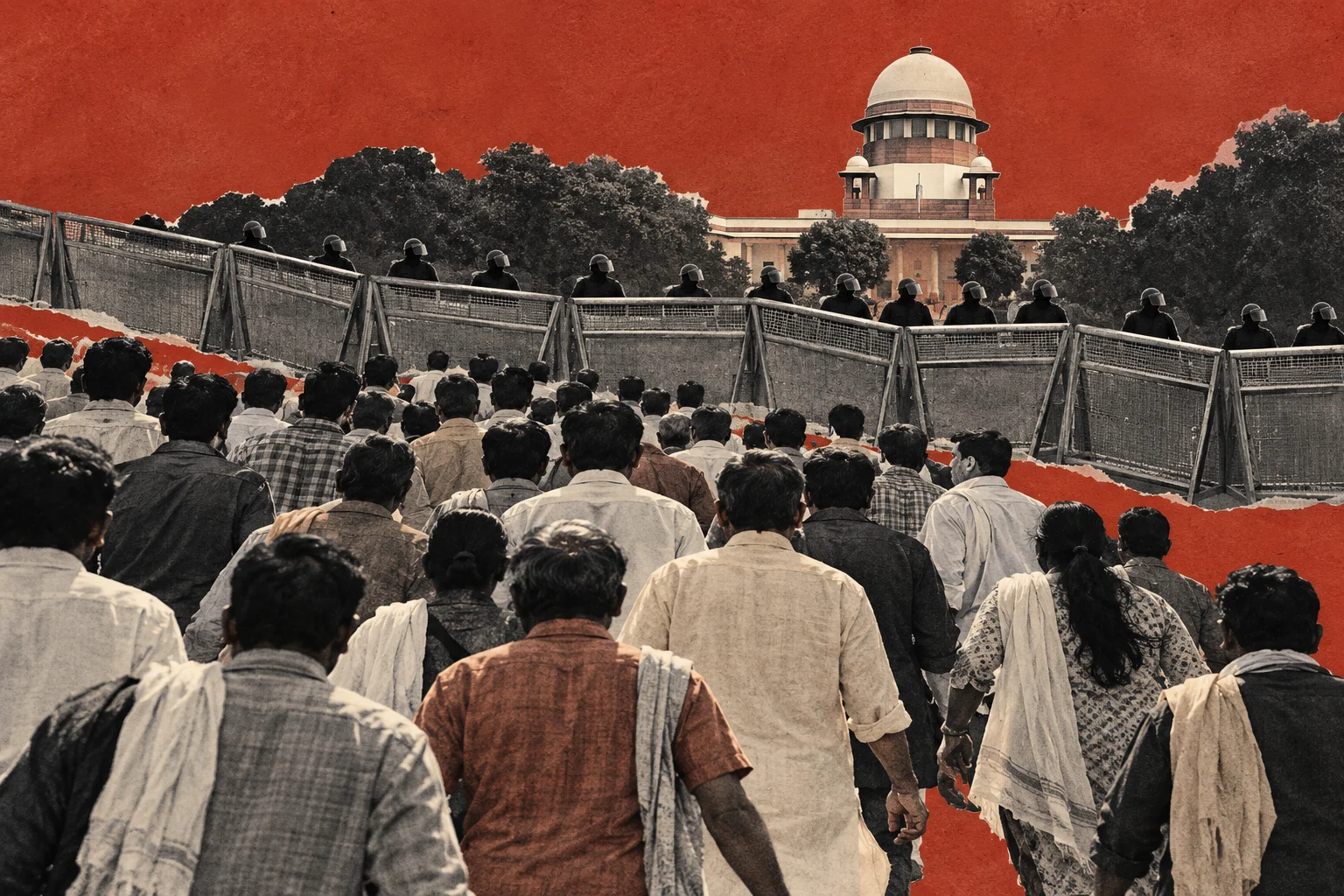
Opposition supporters marched to India’s Supreme Court in New Delhi on Monday to demand the resignation of Chief Election Commissioner Gyanesh Kumar over a revision of the voter rolls that critics say struck more than 133 million names.
Before the march, authorities shut about half a dozen Delhi Metro stations and warned of traffic disruptions. Thousands of police officers and other security personnel stood behind heavy metal barricades across central Delhi for a third straight day, Al Jazeera reported.
Estimates of the crowd varied. Al Jazeera’s first report put it at hundreds of opposition supporters, while a wire report carried by the Bangkok Post said thousands marched. Yashraj Sharma, an Al Jazeera reporter, said marchers chanted slogans against Prime Minister Narendra Modi and Mr. Kumar.
Rahul Gandhi, who leads the Congress party and is the opposition leader in the Lok Sabha, called the march. Indian news media reported that he had also petitioned the Supreme Court against the Election Commission on behalf of opposition leaders. He aimed a post on X at Home Minister Amit Shah, whose ministry controls the Delhi police.
“Bring as much police as you want — 10 thousand, 20 thousand, 40 thousand, go ahead,” Mr. Gandhi said. “We are not the ones to get scared. We are not the ones to back down.”
The weekend went badly for protesters. Police detained thousands of people when security forces stopped a march by a youth-led movement, the Cockroach Janta Party, which has millions of followers on social media and has protested almost daily this month. It has said it will keep going until Mr. Kumar resigns. On Oct. 2, police detained more than 700 people at one of its rallies.
Reporters were caught up too. Reporters Without Borders said at least 16 journalists had been “brutally” detained, some while plainly showing press cards. “Covering events of public interest is not a crime. It is their job,” the group said. Police did not answer questions at a news conference on Sunday.
John Brittas, a member of Parliament from the Communist Party of India (Marxist), said the police had “manhandled, dragged, assaulted” him on Sunday. “It is an assault on democratic freedoms and the rule of law,” he said.
The fight is over the Special Intensive Revision of the electoral rolls, which began in Bihar last year before state elections there. Opposition parties and the youth movement say the deletions help Mr. Modi’s Bharatiya Janata Party, and critics say Muslims and other minorities have been hit hardest. The figure of 133 million removed names comes from media reports. Seven states are due to vote next year.
The Election Commission denies any wrongdoing and says the revision was meant to clear out duplicate, dead and fraudulent entries. A senior BJP minister accused Congress on Monday of trying to undermine legitimate electoral processes, according to wire reports.
The streets have been only one front. Opposition parties have sought Mr. Kumar’s removal over leaked commission emails, and on Oct. 6 Mr. Gandhi was briefly detained with other lawmakers as they marched from Parliament to the commission’s headquarters.
Students, activists and nearly every opposition party have joined the protests, which are among the most serious political challenges Mr. Modi has faced in 12 years in power.