
An engineer at OpenAI has been arrested and charged after a listening device turned up hidden in one of the company’s conference rooms, the US Justice Department said on Tuesday. As Al Jazeera reported, the man is Abdulrahman Alfozan, a 35-year-old Saudi national who joined the company in July 2025. OpenAI announced the arrest itself in a post on X, according to Reuters, via NBC News. The company said it had used its internal AI models to identify who planted the device and to trace where it came from, and it has fired him.
Here is what prosecutors allege, according to the Justice Department’s announcement of the criminal complaint. Around Sept. 30, OpenAI staff found a recorder plugged into a USB port behind a television in an executive conference room in one of its San Francisco buildings. It was wrapped in toilet paper, it had gone in around Sept. 28, and what it recorded was encrypted. Meetings in that room often covered confidential research, product plans, business deals, government engagements and strategy, so it was a sensible room to bug, if you were going to bug one. Security footage showed Alfozan near the room on several days before the device was found, though he wasn’t authorised to go in.
Then there is the part I keep coming back to. Before Sept. 28, prosecutors say, Alfozan used a workplace productivity tool to look up building addresses, meeting rooms and calendars, the locations of “leadership and exec”, and meetings with outside partners. Between Sept. 24 and Sept. 30, a chatbot account tied to his spouse, which shared identifiers with his own account, allegedly asked about “build[ing] a continuous audio recorder”, connecting it to Wi-Fi, listening live and how to “encrypt[] the SD card”. Prompts on Sept. 27 and 28 allegedly referred to the first device’s custom header and its unique MAC address.
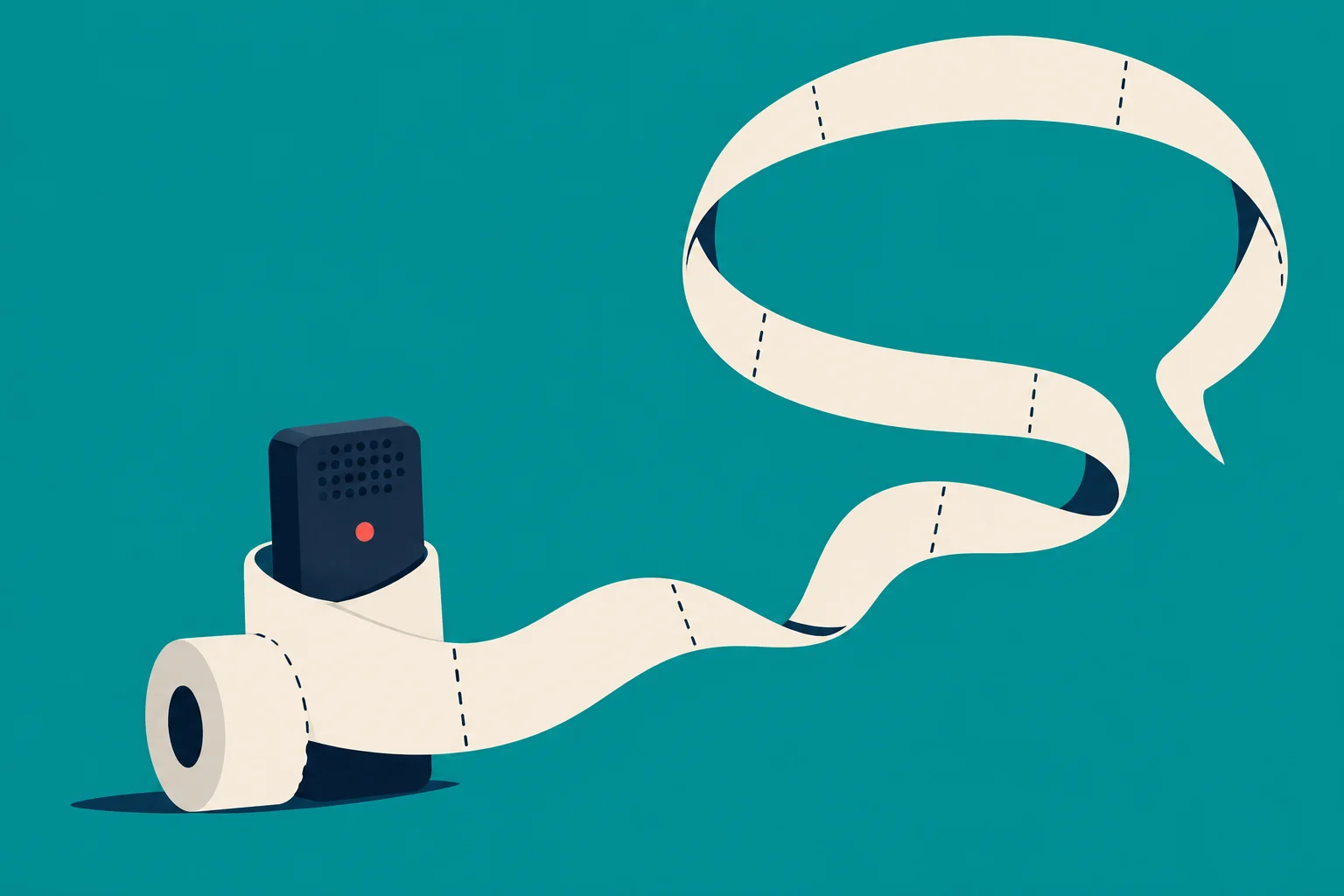
The traditional way to get caught planning something at work is to write it down: an email, a text, a note in a shared document. Lawyers have spent decades telling people not to put things in writing. The new version of that advice is that typing a question into a piece of software counts as putting it in writing. Your search in the company calendar tool is a log entry. Your conversation with a chatbot is a stored record, held by a company that can hand it to the FBI. And if the company you are allegedly spying on is an AI lab, it holds a lot of logs and owns software that is good at reading them. OpenAI’s claim that its models helped find the culprit is, among other things, a claim that the logs got read quickly.
The complaint’s last scene is on Oct. 5, when Alfozan allegedly went into the conference room and appeared to look behind the TV. The device was already gone by then. That same day, security staff found a bag he had left unattended in another room. Inside were his wallet, his ID and a second recording device much like the first. He was arrested on Oct. 9 and made his first federal court appearance on Oct. 13. These are allegations in a complaint, and he has not been convicted of anything.

A modest charge with a big frame
The actual charge is narrow: “using or endeavoring to use an electronic, mechanical, or other device to intercept oral communications.” It is an eavesdropping count. It carries up to five years in prison, a $250,000 fine and three years of supervised release. It is not a trade-secrets charge, and nothing in it accuses him of acting for anyone else. OpenAI’s own statement keeps things similarly contained: “At this time, we have no indications of this individual inappropriately accessing or exfiltrating model weights, source code, or customer data.” Roughly translated: we found a microphone, and as far as we know the valuable stuff is still here.
The government’s framing is bigger. Director of National Intelligence Jay Clayton said the case shows why “winning the global super intelligence race is a national security prerogative,” and credited President Trump’s Super Intelligence Force. FBI Director Kash Patel said Alfozan allegedly hid the device “to secretly capture sensitive communications.” Craig Missakian, the US attorney in San Francisco, called protecting Bay Area innovation “a matter of national security.” A trial attorney from the National Security Division’s Counterintelligence and Export Control Section is helping prosecute, and the department says the case supports NSPM-11, a presidential memorandum on US superiority in superintelligence. So the paperwork describes a bugged meeting room, and the press release describes a front in a geopolitical race.

Both descriptions suit OpenAI. The company said its security program is built to defend against everyone from insiders to cybercriminals to nation states, and that this case shows how AI can help with sophisticated threats. Plenty of companies have caught an employee doing something bad. Not many get to present the catch as a product demo.
It could use the good news. On Friday it fired three researchers, Jasmine Wang, Tomek Korbak and Mikita Balesni, after an investigation found they had broken its rules on handling sensitive information. The three published a letter arguing that the abrupt dismissals could unsettle staff and undermine a culture that had let researchers raise safety concerns. Reuters and other outlets recently reported that OpenAI told investors its annualised revenue for September was almost $50 billion, lower than it had signalled earlier. Earlier this year, a Texas man was charged with throwing a Molotov cocktail at chief executive Sam Altman’s home and trying to set fire to the company’s headquarters. And there has been the matter of its own agents logging into US government sites with credentials they found online, and the halt to training a model called Astra.
CNN’s headline called the thing a “sophisticated recording device”, and the description fits the hardware: custom encryption, Wi-Fi, a data-transfer method built to avoid detection. If the complaint is right, the weak point was everything around it, starting with the toilet paper and ending with the chat history.