
The conceptually simplest crime in Britain right now is one you can commit with a piece of card and a marker pen. You write “I oppose genocide. I support Palestine Action” on the card, you hold it up in public, and you have — under the UK’s terrorism laws — done the whole offence right there. Which makes event planning easy. Al Jazeera reports that more than 400 people are expected to do exactly this, together, outside the United States embassy in London on October 31 — Halloween, for the atmosphere — with a parallel outing promised by the campaign group Defend Our Juries outside the US consulate in Edinburgh.
The reason a placard can be a terrorism offence is that in July 2025 the government proscribed Palestine Action, the direct-action group that had spent years targeting arms companies it linked to Israel’s war in Gaza. Once a group is on the proscribed list, supporting it stops being an opinion and becomes a crime. The state, in effect, printed a sign that said “you may not hold this sign,” and a small industry grew up around holding the sign.
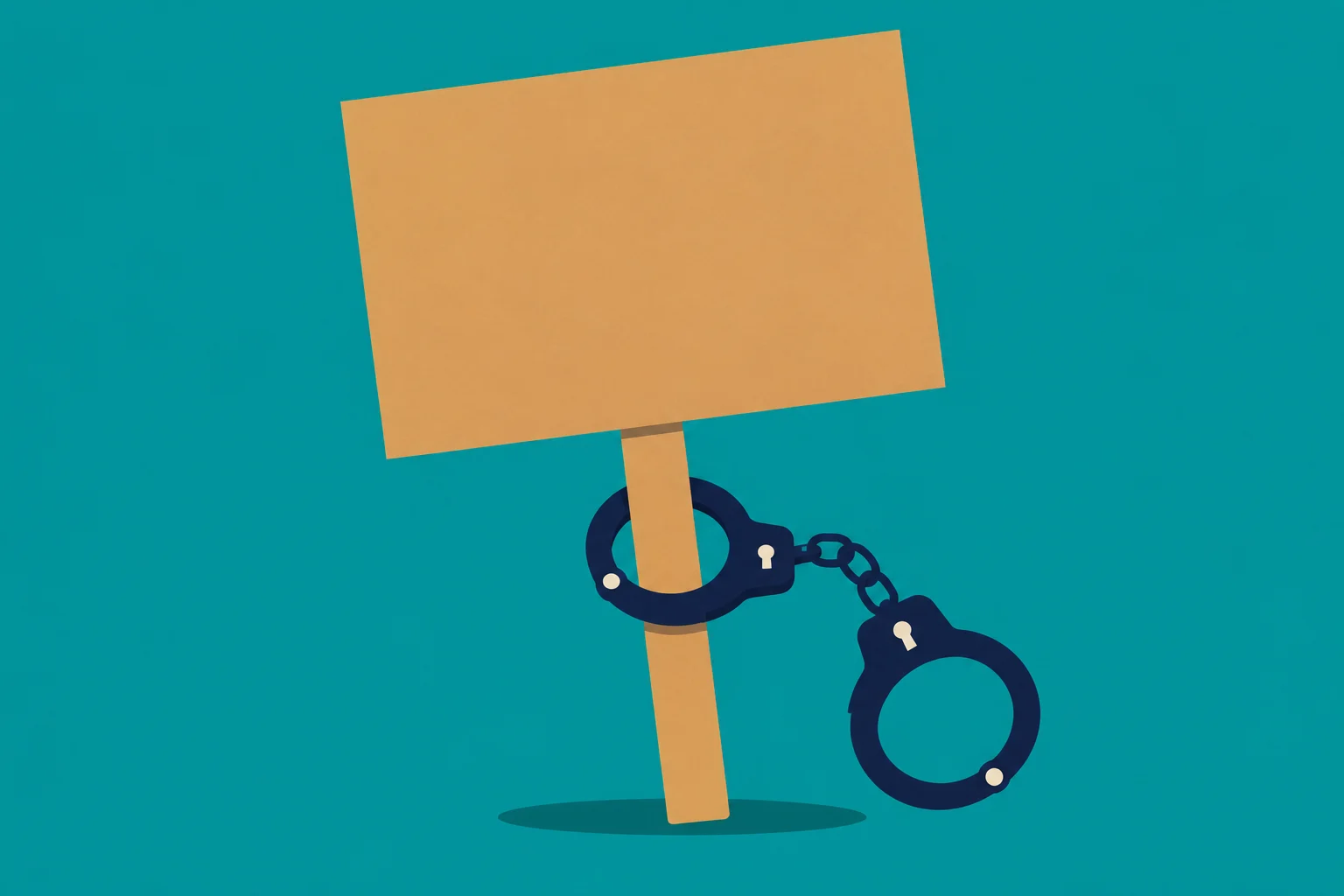
The enforcement treadmill
And here is the mechanism, because it is genuinely a bit of a machine. One mass arrest event feeds the next. On one Saturday in August 2025, the BBC reported, police arrested 474 people at a single London demonstration — 466 of them for the placard-level offence of supporting the group. The next month, another 425-plus went the same way in Parliament Square. This past July, as the legal fight wound on, 77 more were arrested outside Westminster Magistrates’ Court, which is a venue choice with a certain deadpan quality of its own. Defend Our Juries, which organises these events, now claims more than 3,500 people have been arrested for holding signs in its Lift The Ban campaign, producing what it calculates is a 660% rise in UK “terrorism” arrests in the year to the end of September 2025.
Think about that number the way a statistician would. Britain’s terrorism-arrest statistics are presumably assembled with some care, as a measure of the terrorist threat the country faces. And then one policy decision reclassified a few thousand middle-aged sign-holders as that threat, and the chart went vertical. If you were just reading Home Office data cold, you would conclude the country experienced a serious terrorism emergency in 2025-26, in which the terrorists kept politely waiting to be processed.

Meanwhile, in the actual courts
The awkward thing about arresting 3,500 people for a crime is that the crime has to keep being a crime, and this one has wobbled. The legal tour so far: on 13 February 2026 the High Court found the proscription unlawful, though it left the ban temporarily in place so the government could appeal. On 15 June the Court of Appeal reversed that, five judges concluding the ban was a “justified and proportionate interference with individual rights” — a phrase that concedes, in fairness, that an interference was occurring. Palestine Action’s co-founder Huda Ammori said they would take it to the Supreme Court, and in July the Supreme Court agreed she could. The hearing lands days after the Halloween protest, which is the entire point of the timing.
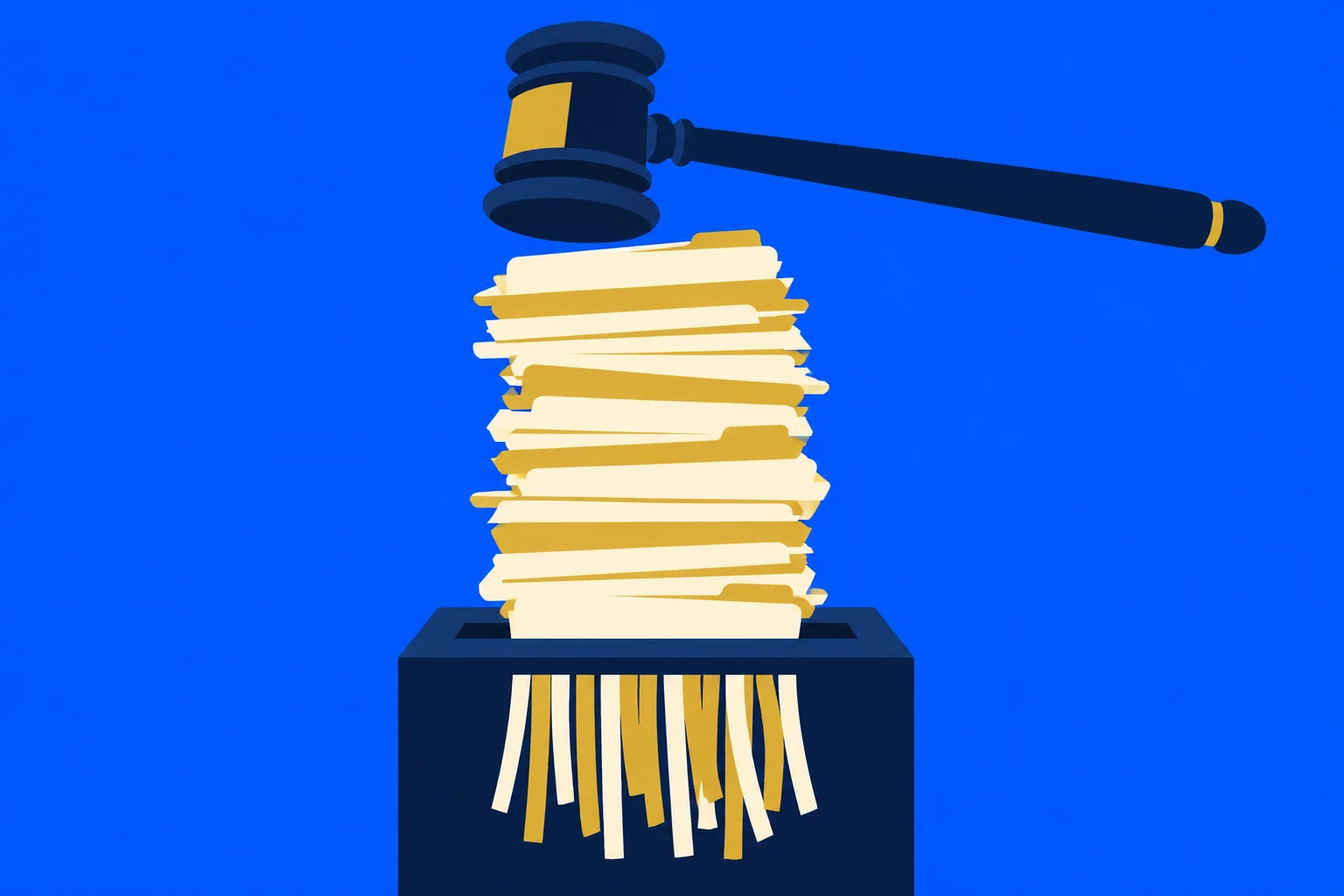
Until the justices rule, the whole production sits in a kind of legal loading screen. As the Guardian has noted, the fate of those 3,500-plus arrestees is on hold: prosecutions paused until someone establishes whether they were arrested for something that was ever actually illegal. Imagine you run the Crown Prosecution Service, purely as a thought experiment. You have a warehouse of pending cases. If the Supreme Court upholds the ban, you must eventually process thousands of them through courts that already struggle to hear urgent matters. If the ban falls, you shred the warehouse, and the state’s total output from the whole episode is several thousand arrest records, a lot of overtime, and one very instructive entry in the annual terrorism statistics.
The protesters, for their part, have spotted that arrest is the product here, not the deterrent. The deterrent theory of criminal law assumes people don’t want to be arrested. A campaign that advertises in advance — the date, the place, the exact wording of the confession — is telling you the price is acceptable, and possibly that processed arrests in bulk are cheaper for the protester than for the state. Each arrest consumes officers, transport, cells, paperwork and ultimately a court slot. Each placard consumes cardboard. It is not obviously a fair fight, and both sides know it, which is why these events keep being scheduled.
As for the venue, the US embassy did not proscribe Palestine Action; the British government did, and Westminster is that way. But protests are addressed to whoever you would like to be watching, and the timing does the real work: a mass, photogenic violation of a law, staged three-plus days before the country’s highest court decides whether the law is a law.
Anyway. If the Supreme Court sides with the government, Britain’s queue of placard-based terrorism defendants gets longer, presumably starting with whoever turns up in fancy dress on the 31st. If it sides with Ammori, the country will have arrested several thousand people for a crime that, in the end, never existed. Either way the cardboard keeps moving.