
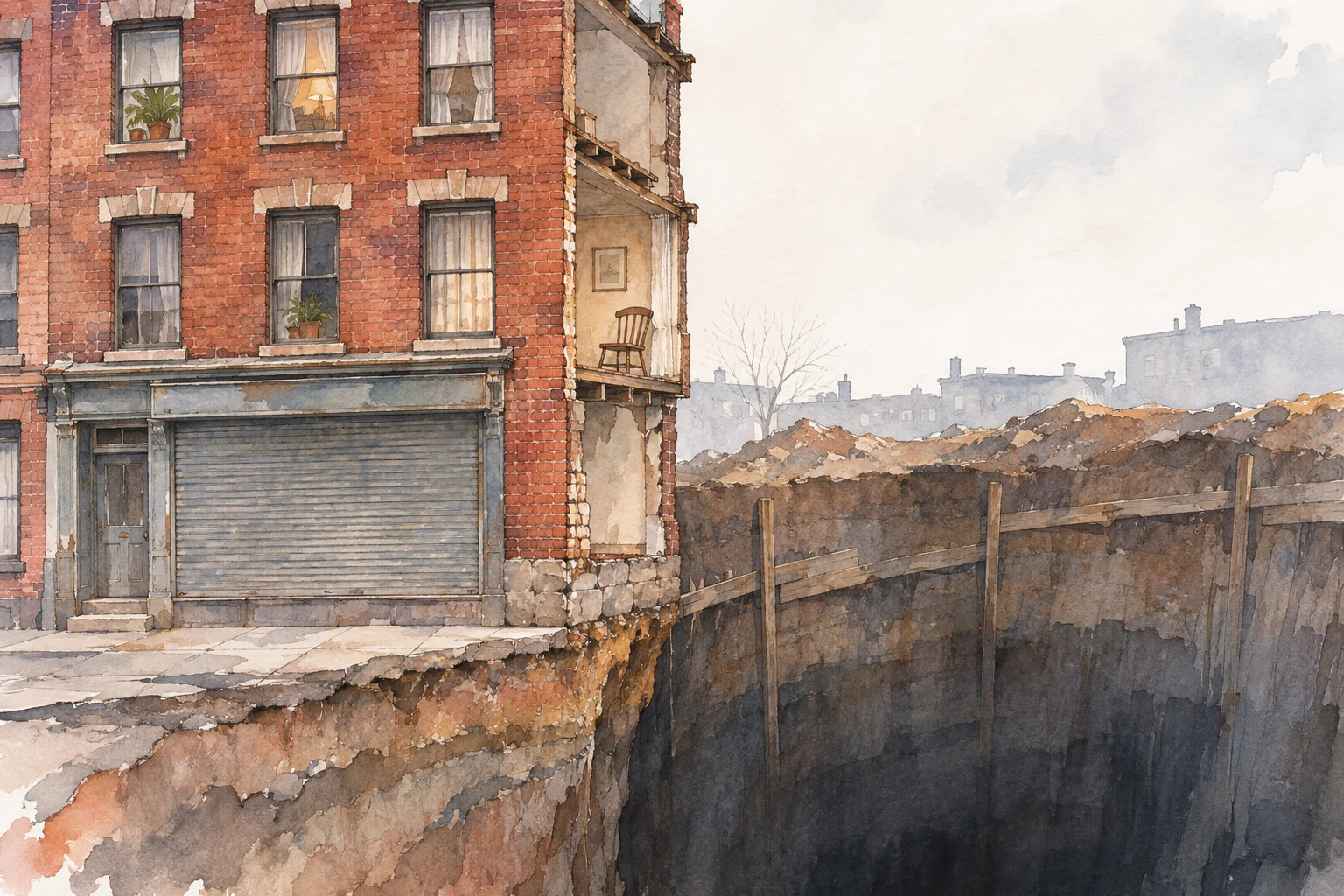
At the corner of Flatbush and Bedford avenues in Brooklyn stood a three-storey building of the most ordinary New York kind, with a shop at street level and apartments above it. Next door was a hole where workers were digging. Shortly after 4pm on Wednesday, 11 November, the building went into the hole.
At least two people were killed. As Al Jazeera reported, more than a dozen were hurt, and firefighters went on searching the rubble for anyone still alive. The neighbourhood is Flatbush, where most residents are Black and Afro-Caribbean. These are people whose lives in the city are usually measured by the rent and the commute, and rarely by the strength of the wall next to them.
The count
The numbers changed as the night went on, the way they always do after a collapse. Early reports gave one death. By Wednesday night Lillian Bonsignore, the Fire Department commissioner, had put the number of patients at 19. Two of them had died and four were in critical condition. One firefighter with minor injuries was included in that total. Al Jazeera reported that 12 people were stable. Gothamist reported that seven of the injured were children. A pregnant woman was pulled from the site, and Fox 5 New York reported that a toddler was among those recovered.
Then came the sentence that hangs over every rescue of this kind, spoken by the commissioner herself:
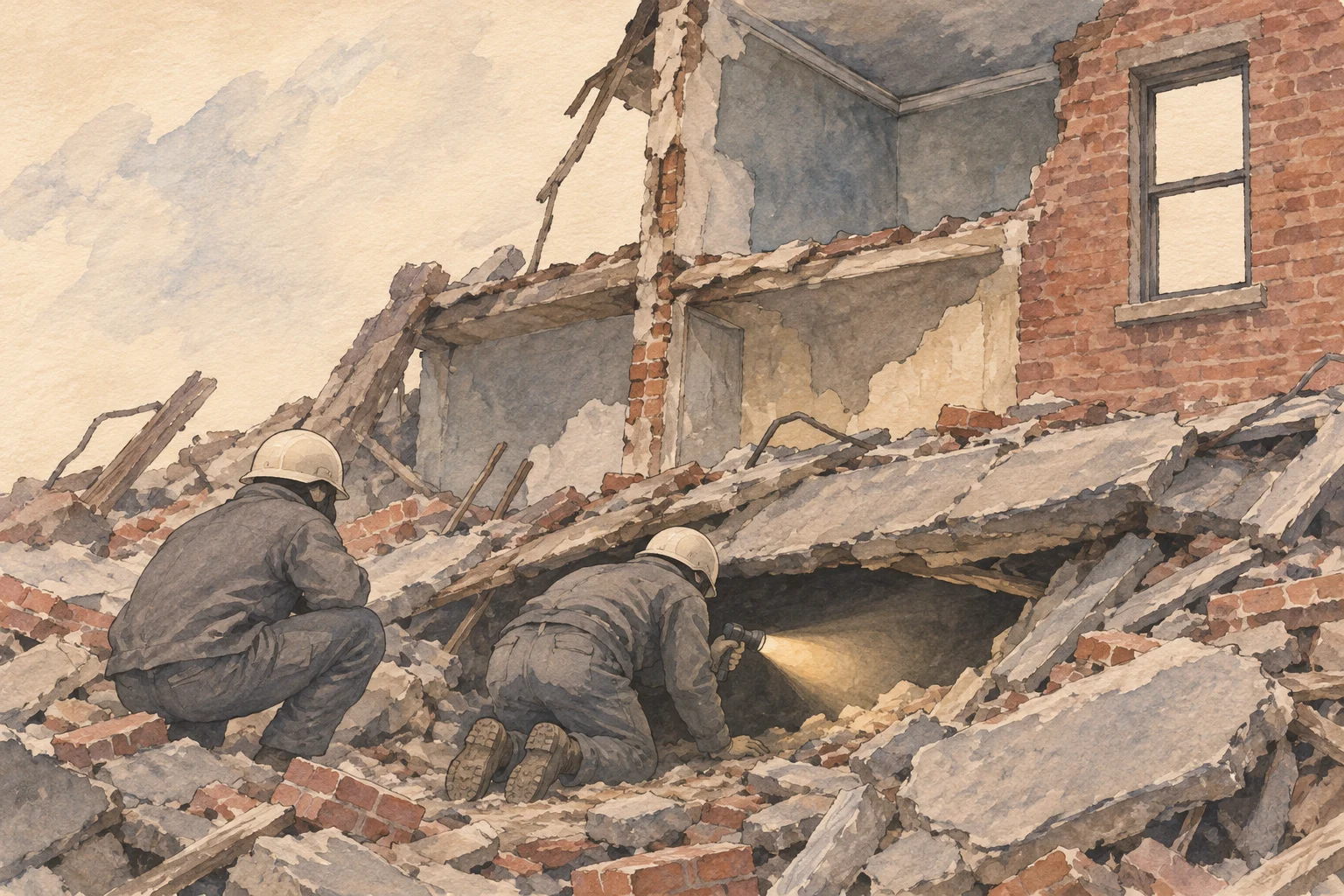
We do not know how many people are still in the collapse zone.
The hole next door
The addresses tell the story. ABC7 New York reported that the building at 1321 Flatbush Avenue fell into an open construction site at 2625 Bedford Avenue, where excavation was under way at the time. Part of the corner building at 1323 Flatbush Avenue appeared to have been sliced off, leaving its apartments open to the street, although that building was still standing. According to Bonsignore, both residents and construction workers were trapped when it came down.
John Esposito, an FDNY chief, said a crew coming back from another emergency nearby began searching straight away, according to CNN. He said the workers next door had been “digging down.” That phrase leaves a great deal unsaid.
What follows is reflection, not reporting. A city like New York lives wall to wall with its own renewal. Every new foundation is dug a few feet from an old one, and the old building, with its shop and its families, can only trust that someone has done the sums. Officially, the cause is still unknown. City officials said the Department of Buildings and its law enforcement partners will lead the investigation, and buildings inspectors are checking the structural stability of neighbouring properties. Whoever signed off on what was dug at 2625 Bedford Avenue, and how, will now be the question.
Slowness
Mayor Zohran Mamdani spent the evening posting on X and asking people to keep away from the area. At a news conference at about 8pm he said the first responders had arrived one minute after the first emergency call. Speed was the first part of the city’s account. The second part was the opposite.
Bonsignore warned that working too fast on unstable piles of debris “can have a detrimental consequence.” She called it a “prolonged operation.” Rescue crews and an FDNY drone looking for further victims were moving through the wreckage inch by inch. “The units are performing dangerous and heroic work,” she said. NYPD officers patrolled the site and EMS crews worked alongside the rescuers.
New York City Emergency Management opened a help centre for those affected at the Flatbush YMCA. Several times this autumn, buildings have come down on the people inside them, in Athens and in Peshawar, each for its own reasons. In Brooklyn on Wednesday night the building at 1323 Flatbush Avenue was still standing. Its rooms faced the avenue with one wall gone, and nobody yet knew how many people lay in the rubble next to it.