
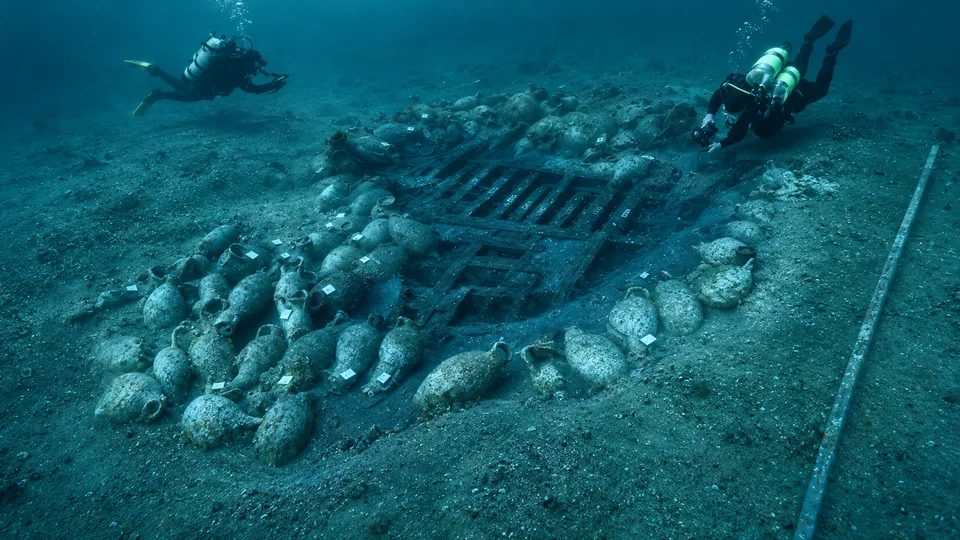
A swimmer off Mallorca in July found wood sticking out of the sand at two metres’ depth, about 100 metres from shore. Five months and two inspections later, the Consell de Mallorca, the island’s governing council, says the timber belongs to a ship from the island’s Islamic period, roughly 902 to 1229 AD, and that no confirmed wreck from that 327-year span has ever been documented in Balearic waters before, according to Última Hora, which broke the story on November 18, and the Majorca Daily Bulletin.
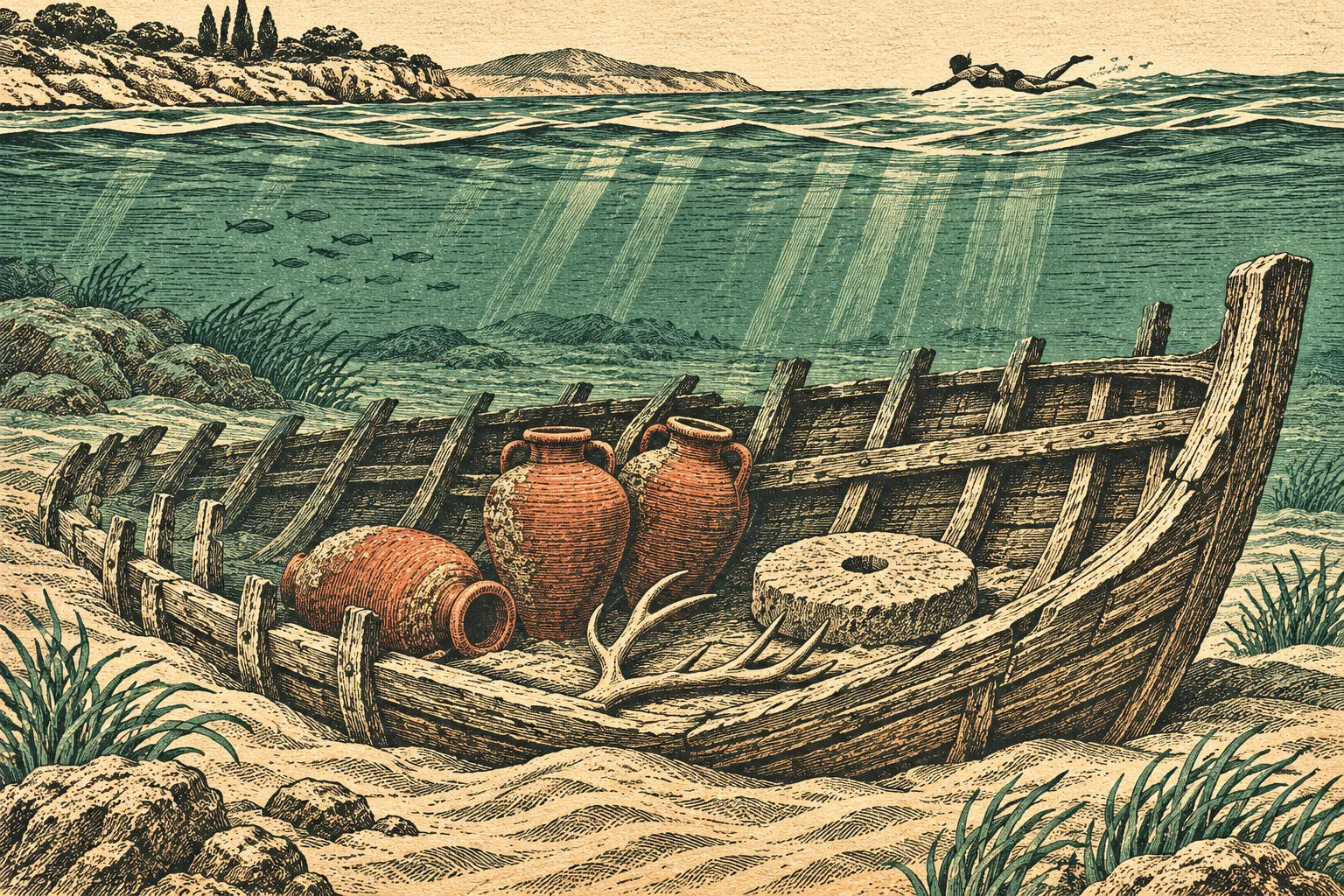
The dating is preliminary. The Consell has run two inspections, the first documenting only partially buried structural timber, the second, at the end of August, recovering ceramics and other cargo that let archaeologists propose the Islamic-period chronology. No radiocarbon or other absolute dating has been reported yet. What is confirmed: a small hull, with a significant share of its transverse and longitudinal structural members intact, carrying millstones, large storage jars (tinajas), assorted ceramic sherds, and a quantity of deer antlers, as reported by arkeonews.net and confirmed in a follow-up Última Hora report on the cargo.
Why 327 years of shipping left no trace until now
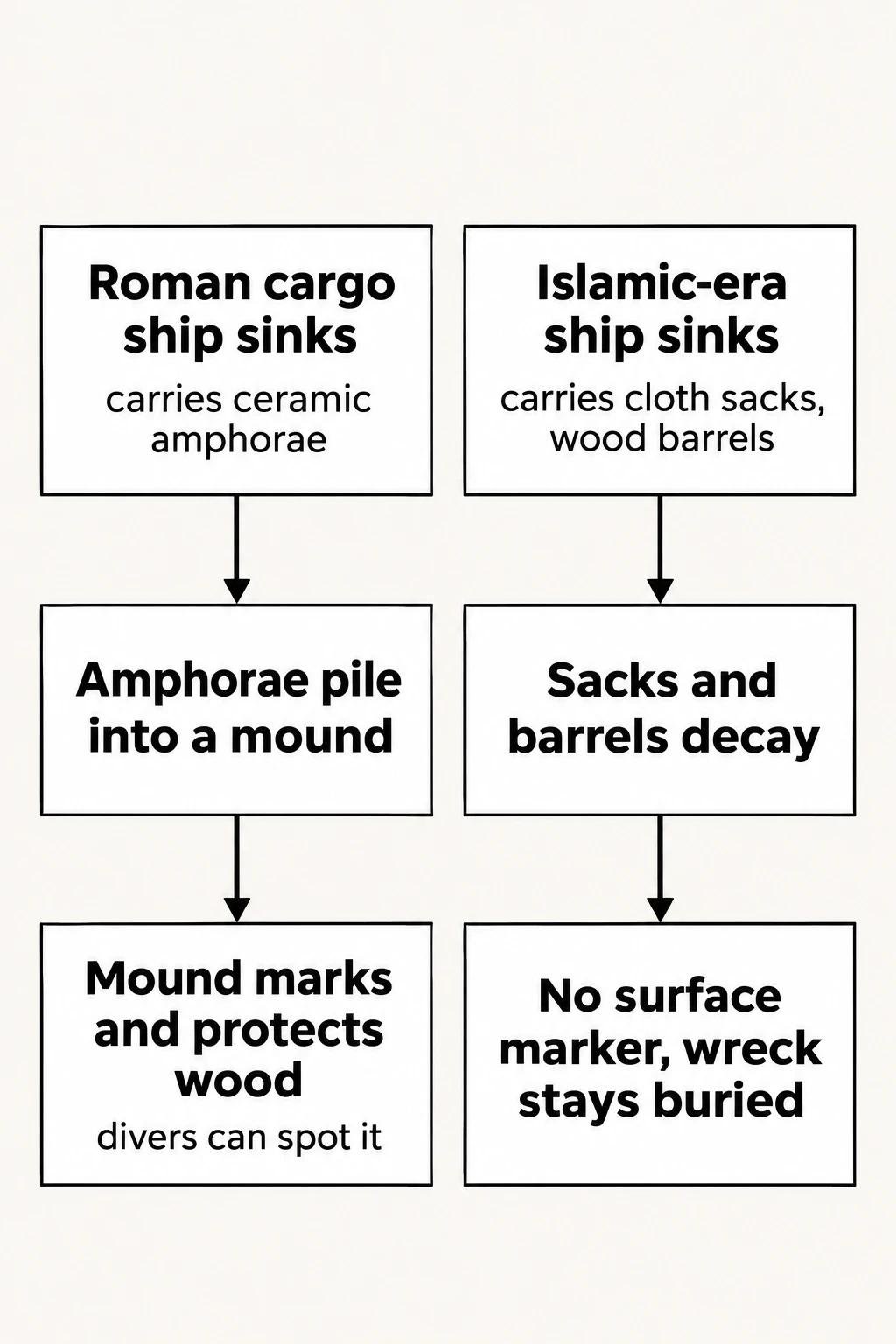
Mallorca came under Muslim rule in 902 and stayed in the Islamic world until James I’s conquest in 1229, a run long enough that the island should, in principle, have scattered wreck sites across its sea floor the way the Roman period did. It hasn’t. Sebastià Munar, the underwater archaeologist on the inspection team, gives a materials explanation: Roman cargo ships typically carried hundreds of ceramic amphorae, which piled into durable mounds on the sea floor that both protected the wood underneath and gave divers an obvious marker to find. Later Mediterranean trade, Munar told Última Hora, shifted toward cloth sacks and wooden barrels for bulk goods, materials that rot away and leave no mound, no marker, nothing for a diver to notice. “No es que haya algo espectacular, lo espectacular es que sea un pecio islámico,” he said, that the remarkable thing isn’t anything spectacular in the find itself, it’s that it is an Islamic-period wreck at all. “No hay otros barcos islámicos en Balears,” there are no other Islamic-era ships known in the Balearics.
| From | To | How |
|---|---|---|
| Roman cargo ship sinks (carries ceramic amphorae) | Amphorae pile into a mound | |
| Amphorae pile into a mound | Mound marks and protects wood (divers can spot it) | |
| Islamic-era ship sinks (carries cloth sacks, wood barrels) | Sacks and barrels decay | |
| Sacks and barrels decay | No surface marker, wreck stays buried |
Based on Sebastià Munar, via Última Hora
That asymmetry means the absence of Islamic-era wrecks was never good evidence that there was little Islamic-era shipping. It only shows that whatever sank didn’t carry the kind of cargo that survives or advertises itself. One find doesn’t fix the sample size, but it does confirm the gap was a preservation artefact rather than a historical one.
The antlers, and a plausible destination
The deer antlers are the cargo’s odd detail, because Mallorca had no native deer to supply them. The island’s endemic land fauna was built around a dwarf goat, Myotragus balearicus, not deer; fallow deer were introduced under Roman rule and kept in enclosed reserves, then died out on the island after the Byzantine period, according to radiocarbon, isotope and preliminary DNA work cited by Xataka. Whatever antlers were aboard this ship had to come from somewhere else.
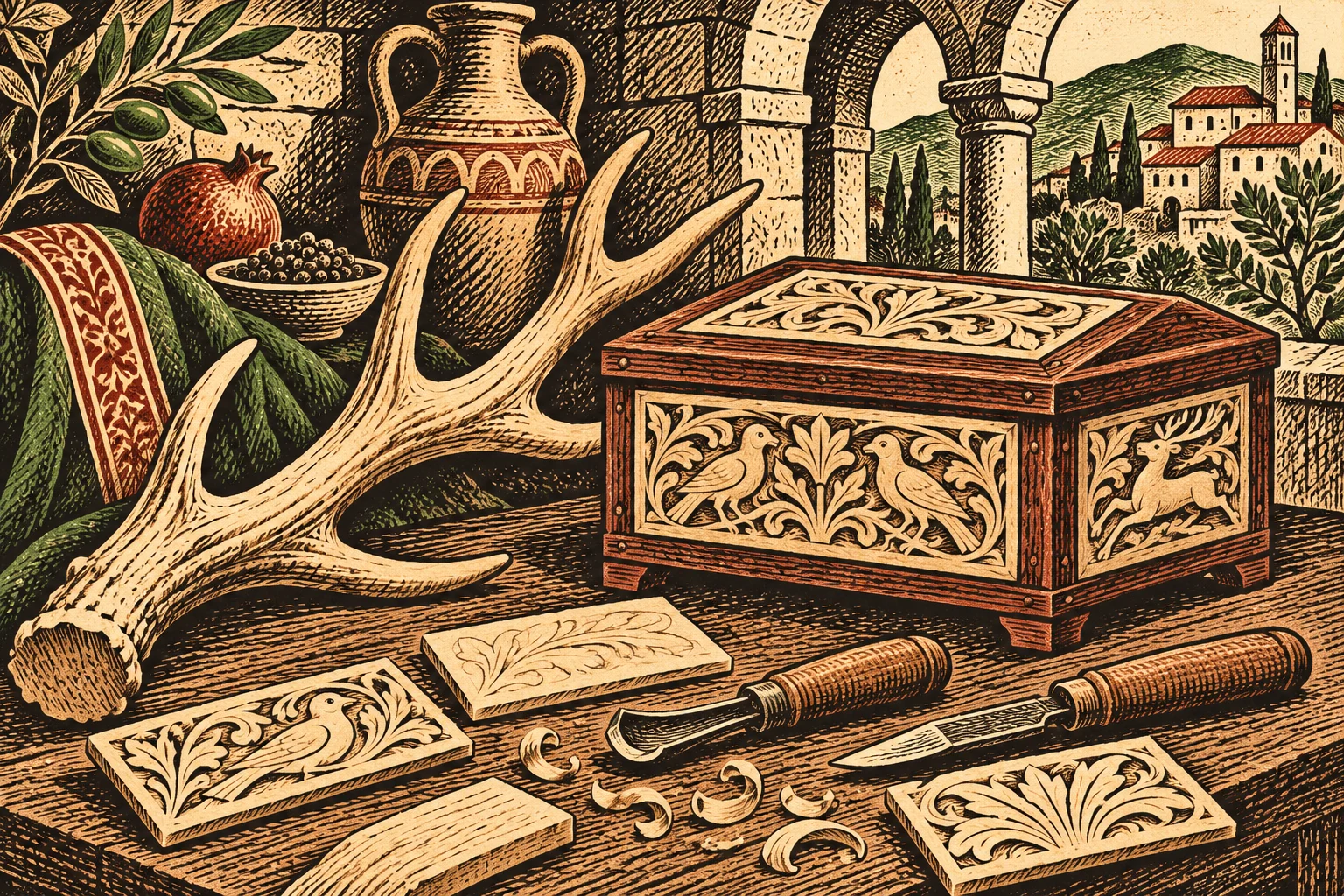
Xataka points to a documented parallel on the Iberian mainland: a workshop inside the castle at Jijona, in Alicante province, where archaeologists have found half-carved antlers and more than 100 finished plaques meant to line small boxes and chests. A reconstructed box made from those plaques sits in the Alicante archaeological museum, dated to the late twelfth or first half of the thirteenth century, the same window as the Almohad dynasty’s rule over Mallorca from 1203 to 1229, the island’s final Islamic phase. Similar antler-plated boxes have turned up at Alarcos in Ciudad Real and at the castle of Moura in Portugal, suggesting a regional craft in bone and horn box-fittings that the Mallorca cargo could plausibly have been feeding. That is a documented craft tradition with a matching date range, not proof of this ship’s cargo manifest; no workshop link to this specific wreck has been established, and the species and origin of the antlers themselves have not yet been published.
Buried again, on purpose
After the second inspection, the Consell pulled the most exposed ceramics and antlers for study and reburied the rest of the hull under sand, the standard move against two risks: looters, and the wreck’s own exposure to a marine environment it had been sealed against for centuries. Waterlogged wood that has sat anoxic under sediment for hundreds of years degrades quickly once currents and oxygen reach it, and conserving it afterward is slow and expensive. The Consell has also signed a monitoring agreement with the Guardia Civil and the port authority Ports IB and is withholding the site’s coordinates.
That is the opposite path from the one taken with Mallorca’s other recent headline wreck, the Roman-era Ses Fontanelles ship. Found by chance in 2019 after a storm exposed it off Can Pastilla, that vessel, a 12-metre, fourth-century merchantman carrying roughly 300 amphorae of fish sauce, oil and wine, was fully excavated between 2019 and 2022 and then physically raised in 2026, its timbers now sitting in desalination pools for an expected 18 months before conservation at the ARQVAtec laboratory of the National Museum of Underwater Archaeology in Cartagena, according to Infobae. No comparable extraction program has been announced for the Islamic-era wreck; for now, in situ burial is the plan, and the only prior reports suggesting it had already been pulled from the water appear to conflate it with the Ses Fontanelles project.
The open questions are the basic ones: which century of the 327-year Islamic period the ship belongs to, what port it sailed from, where it was headed, and what species the antlers came from. Munar told Última Hora there has been barely any work done yet, just two surface inspections, but that the site “puede dar mucha información,” could yield a lot of information, once the Consell decides whether to excavate further or leave it buried.