
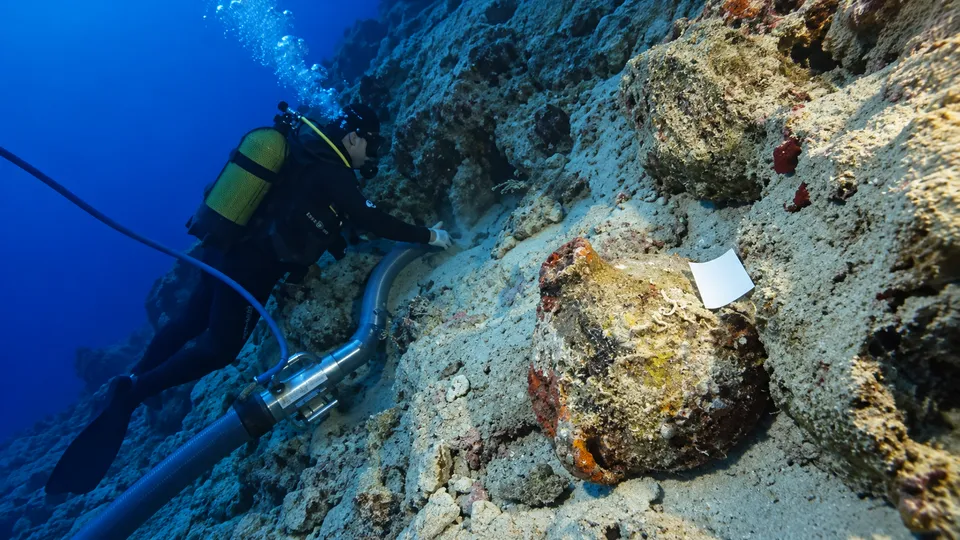
The Mediterranean keeps its accounts at the bottom of the sea. Empires fall, treaties are forgotten, but amphorae — sealed, sunk, patient as ledgers — wait for someone to come and read them. This week, near the island of Kekova off Türkiye’s southern coast, the sea returned one of its oldest entries.
As Arkeonews reported, underwater excavations near Kekova have uncovered amphorae from a shipwreck dating back some 4,700 years, to the Early Bronze Age — cargo that offers remarkable evidence of trade across the Eastern Mediterranean in an age long before the great maritime trading systems. Türkiye’s Minister of Culture and Tourism, Mehmet Nuri Ersoy, announced the findings on October 14. A full Turkish translation of his post was included in the Arkeonews coverage.
In the Blue Homeland, we are bringing to light the traces of the world’s oldest shipwreck — Mehmet Nuri Ersoy, on the Kekova finds
A cargo from the Jordan Valley
The ceramics do the talking. Preliminary clay analyses suggest that some of the amphorae may have come from workshops in the Jordan Valley, tying the cargo to production centres in the ancient Levant. Comparable vessels have been identified in Egypt, at Troy and on Crete — as if the same household pot had cousins scattered across three seas, evidence that such containers circulated through an extensive web of exchange before anyone had thought to call it a trade network.
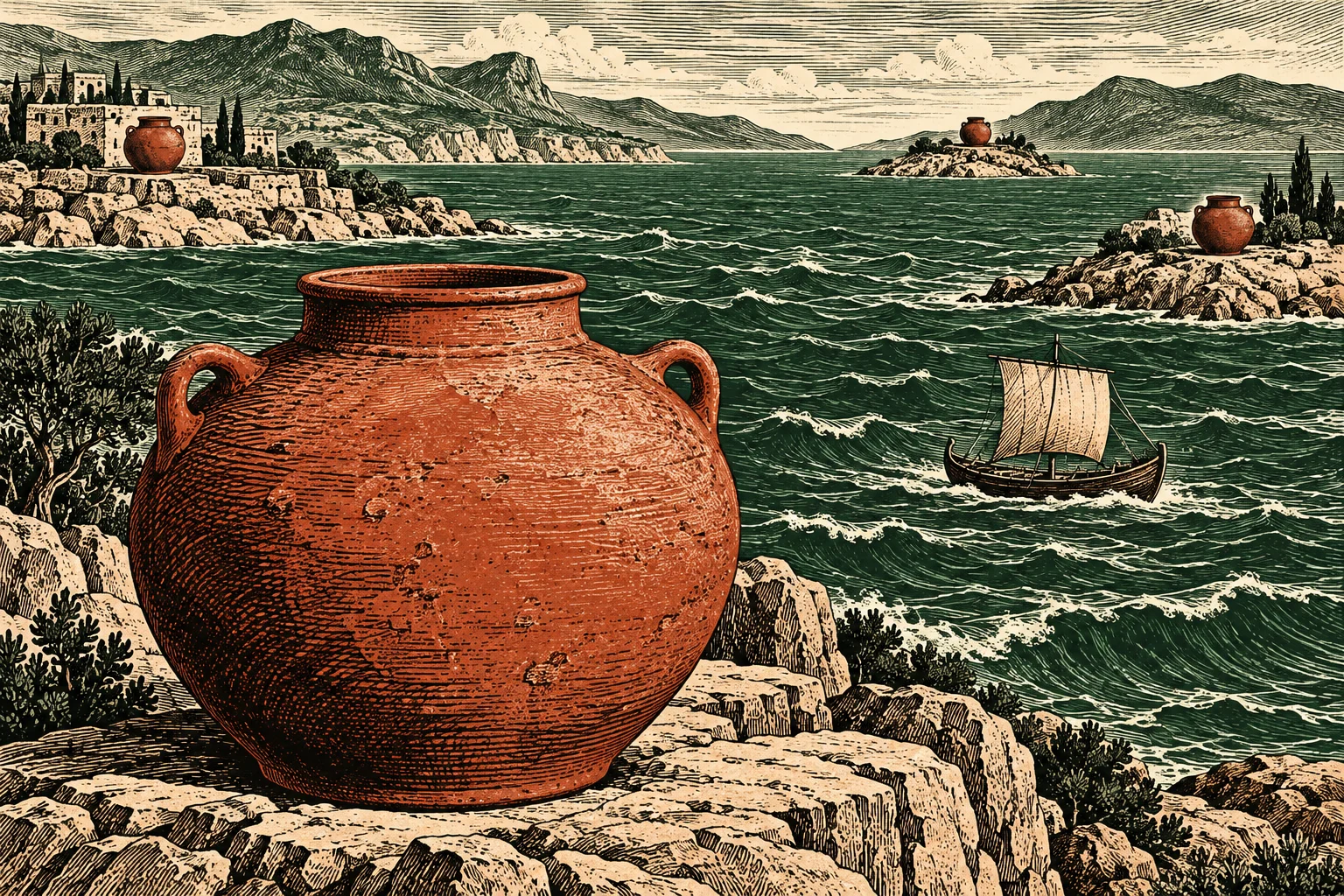
The jars may have carried olive oil, wine or other agricultural goods; their flat bases, side handles and ornamentation resemble Early Bronze Age pottery of the Eastern Mediterranean. The ship itself may have been making its way west from the Levantine coast, perhaps bound for Crete or for Anatolia. Researchers have so far raised two amphorae for close study, one in 2024 and another in 2025, and their clay, their construction and their probable uses differ — suggesting the little vessel carried containers meant for more than one purpose.
Nine marks, two holes
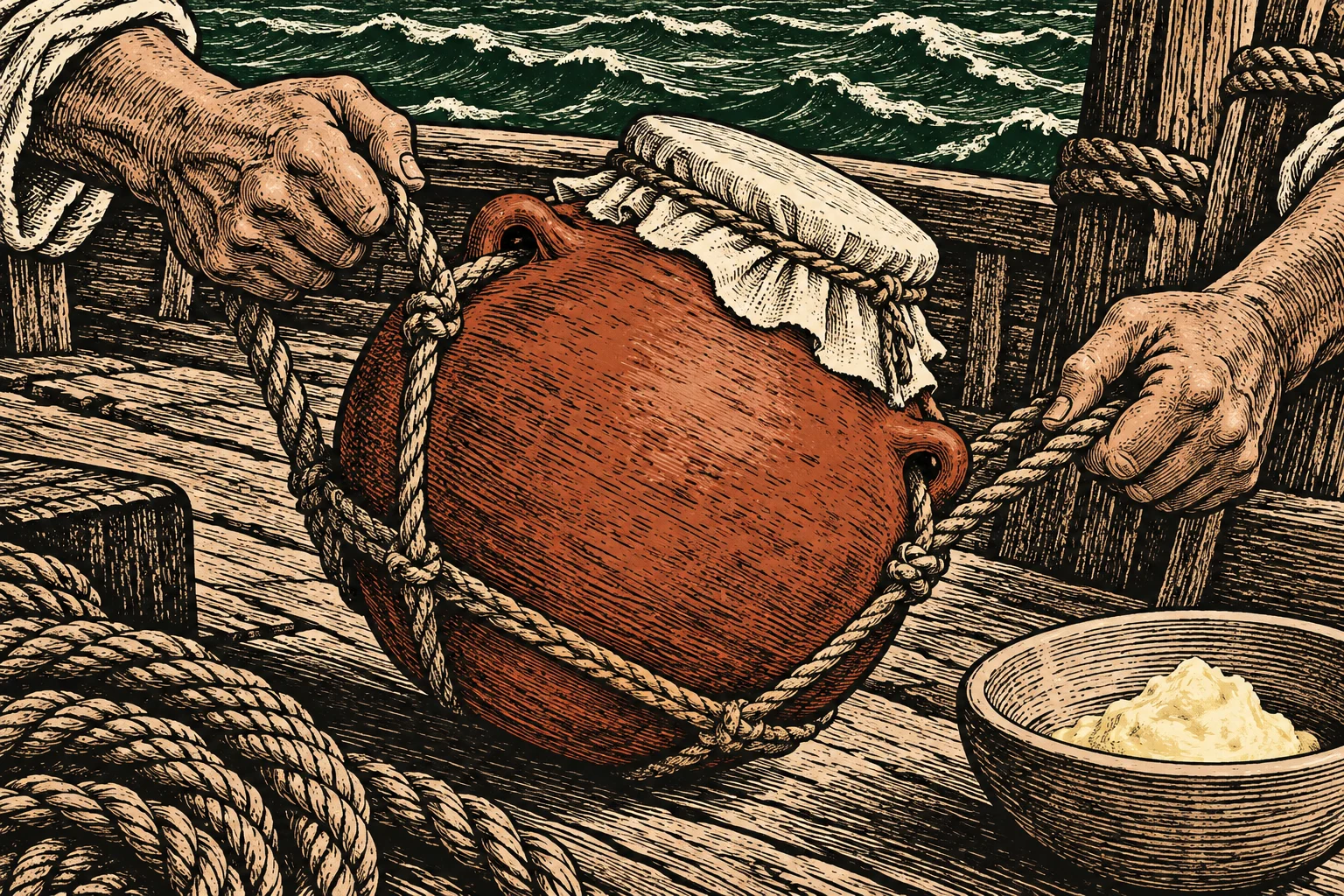
Among the finds stands one amphora unlike the rest: nine distinct markings on its body, and two holes. Minister Ersoy said it may have served as a churn for making cheese or butter — and if archaeologists confirm that reading, the pot becomes a small window onto life aboard. Sailors, it would seem, did not merely eat what they had packed before departure; they processed food on the voyage itself, churning dairy somewhere between one coast and the next. For crews covering long distances, that was not a curiosity. It was logistics.
The recovered ceramics differ in their decoration and manufacture as well. One amphora described in the scientific study of the wreck carries two parallel incised lines near its upper section, with a zigzag pattern running between them — further proof that this was no uniform factory shipment but a working cargo, assembled from varied hands.
Anchors and older shadows
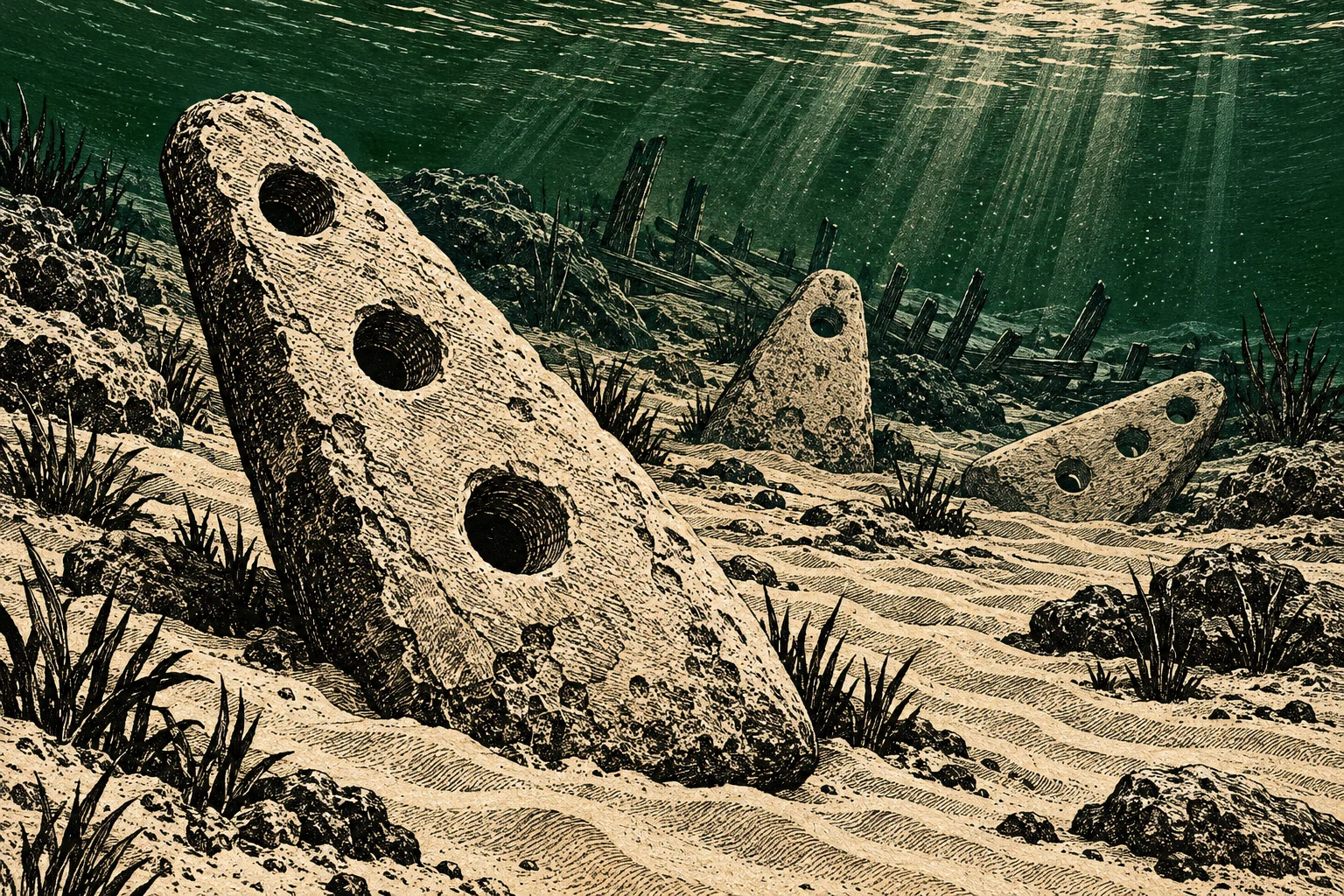
Around the wreck, divers have identified three stone anchors — two pierced with three holes, one with a single hole. Whether any of them actually belonged to this ship, nobody can yet say. They resemble anchors known from Bronze Age contexts in Anatolia, Cyprus, Crete and the Levant, and those resemblances may help scholars seat the Kekova wreck within the wider story of early seafaring. The seabed there shifts between sand and rock, and further excavation may yet surrender more of the vessel and what it carried. On the evidence available, researchers propose that a small ship went down while travelling from east to west.
The name of this coast already carries two famous wrecks, Uluburun and Cape Gelidonya, but both are latecomers beside this one — ships of a richer, later age, hauling metals and luxury goods. The Kekova cargo predates them by centuries, and pushes the archaeological record of organised maritime trade along Türkiye’s southern shore deep into the Early Bronze Age: communities on opposite shores of the sea were exchanging goods over considerable distances nearly 5,000 years ago, before the great empires had risen to tax the traffic.
The wreck was first documented in 2024 by researchers from Akdeniz University, and the ongoing investigations are led by the underwater archaeologist Hakan Öniz, whose preliminary report, “Preliminary Report on the Early Bronze Age Shipwreck in the Kekova Region of Antalya,” written with Cagri Öztosun, appeared this year in the Journal of Maritime Archaeology. The digging continues. Somewhere under the sand and the rock lie the rest of the answers — what the crew ate, where the clay was fired, and what port was still expecting them when the sea closed over the deck.