
Giant-breed dogs lose chemical regulation at a class of self-copying genes about 35% faster each year than toy-breed dogs do, in the clearest molecular account yet for why big dogs die younger than small ones. It is one of five October findings that never got their own headline, as Ars Technica rounded up: a single antimatter particle held still for months, a tattoo ink visible only under ultraviolet light, a 150-year-old skeleton mystery narrowed to two named Anglo-Saxon monks, and a new diagnosis for the death of Botticelli’s most famous model.
Jumping genes and lifespan
Body size and lifespan usually move together across mammals — mice average two years, bowhead whales can reach 200 — but dogs break that pattern within a single species: the biggest breeds die youngest. That makes them a convenient model for aging generally. A team led by Blaise Mariner and Noah Snyder-Mackler at Arizona State University built 1,640 DNA-methylation profiles, or methylomes, from what the paper in Science lists as 894 companion dogs in the Dog Aging Project (Ars Technica’s summary said 864). DNA methylation is a chemical tag that turns genes up or down without changing the underlying sequence; because it shifts with age rather than staying fixed like the genome, it works as a readable clock.
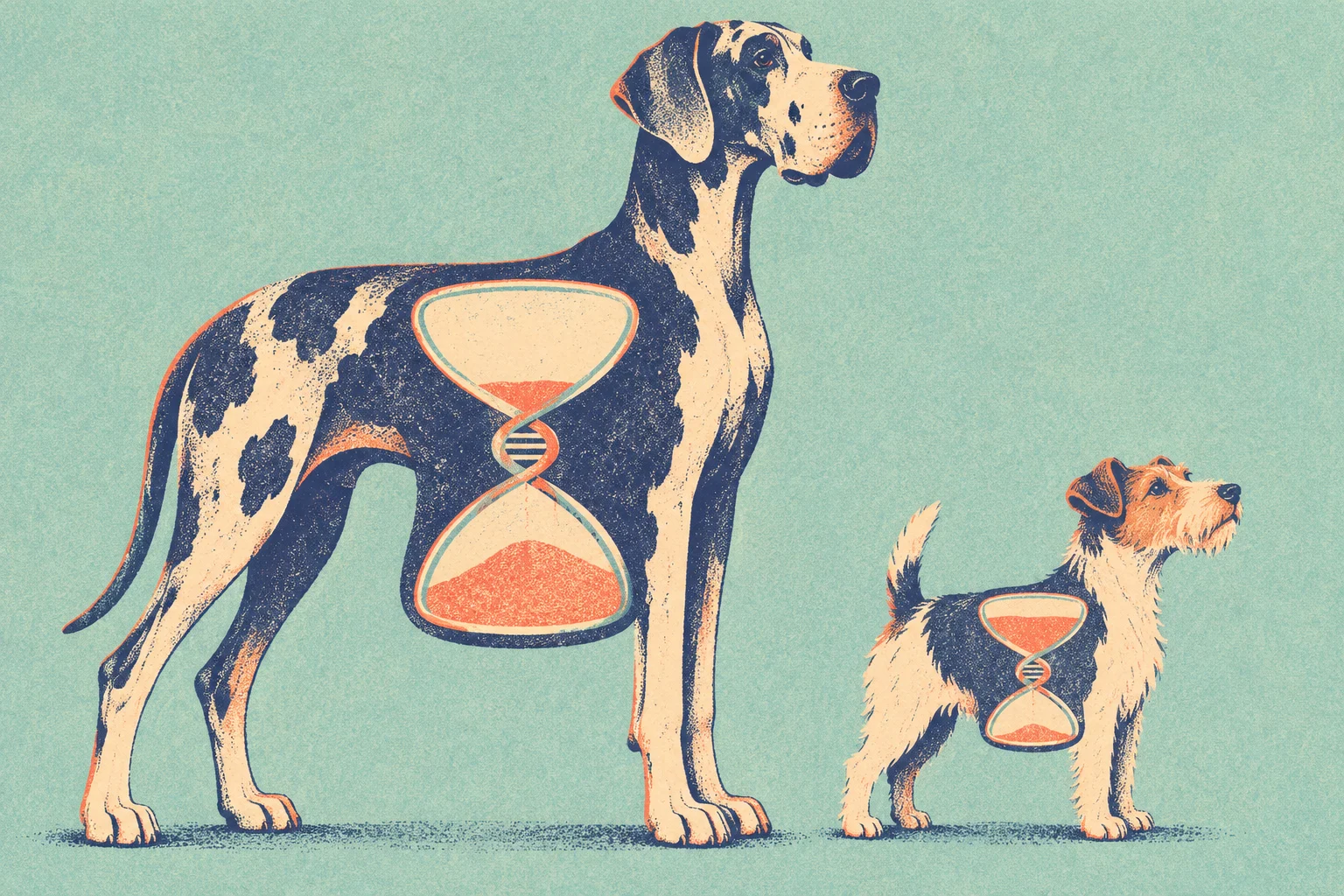
Aging reshaped methylation in a structured way: regions near gene promoters gained it with age, while introns and transposable elements — sequences that copy themselves and reinsert elsewhere, nicknamed jumping genes — mostly lost it. One class stood out, LINE1 (long interspersed nuclear element-1): more than 40% of LINE1-linked genome loses methylation with age across all breeds, but giant dogs lose it roughly 35% faster per year than small dogs. Unregulated LINE1 copies can reinsert and damage surrounding DNA, a mechanism tied to cancer and other age-related disease. Dogs whose epigenetic clock ran ahead of their calendar age, independent of breed, also faced higher mortality risk. “This is one of the clearest molecular signatures we’ve seen that aligns with the well-known size-lifespan trade-off in dogs,” said Mariner. “It suggests that faster aging in larger dogs may be driven, at least in part, by reduced control over these jumping genes.” That is a correlation inside one data set, not a demonstrated cause.
A positron that behaves
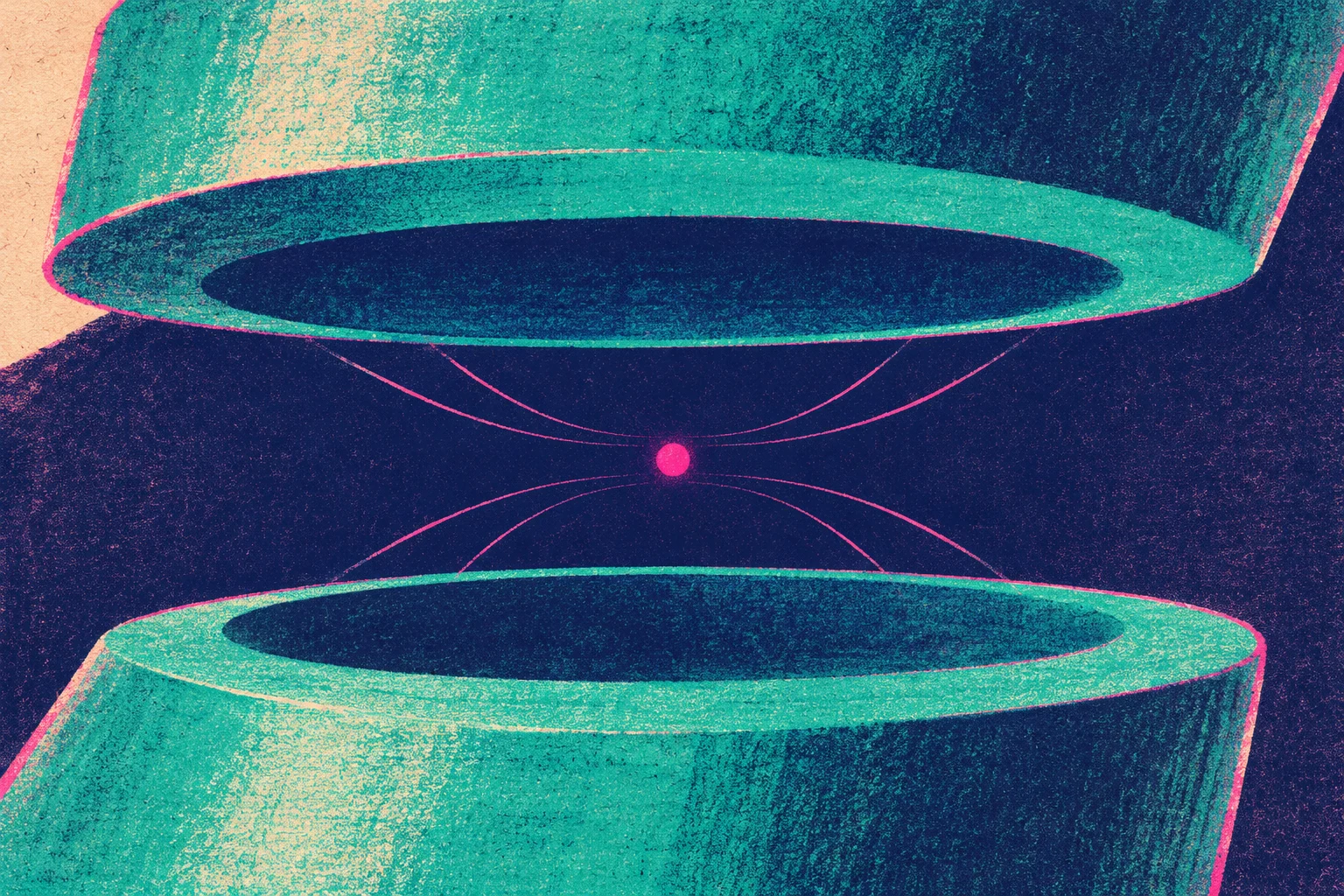
Physicists at Northwestern University kept a single positron — the electron’s antimatter counterpart, identical in mass, opposite in charge — confined in a vacuum trap for months, according to a paper in Physical Review Letters by Thomas Myers, Lincoln Soucy, B. A. D. Sukra, B. Sinha and Gerald Gabrielse. The team harvested the positron from a sodium-22 source, let it briefly pair with a stray electron to form positronium, a hydrogen-like atom with no proton, then stripped the electron back out, leaving a bare positron held by electric and magnetic fields. Cooled to 300 millikelvin, 0.3 degrees above absolute zero, it dropped into its lowest quantum cyclotron energy state and stayed measurably there for months — long enough to drive it between individual quantum levels with tuned microwaves.
That control is a step toward a specific comparison. In 2023 the same group measured the electron’s magnetic moment to 0.13 parts per trillion, the most precise measurement of any property of any elementary particle made to date. The Standard Model predicts the positron’s should match exactly — a matter-antimatter symmetry that, if it holds, leaves open why the observable universe is made almost entirely of matter, since matter and antimatter annihilate on contact and the theory says they should have been produced in equal amounts. A measured difference, Gabrielse told Ars Technica, “would be the biggest discovery in physics in the last century.”
Tattoos invisible until they’re not
A tattoo ink that stays invisible until lit by ultraviolet light, then fades back out on its own, is described in a paper in Matter & Light by Carson Bruns of the University of Colorado Boulder and co-authors. The dyes, grouped under the name PhotoTat, sit inside microscopic spheres of polymethyl methacrylate — the plastic used in dermal fillers — and go in like ordinary tattoo ink. Under 365-nanometre UV light they switch to blue, magenta or yellow within 2 to 3 seconds, according to a breakdown by C&EN; ordinary white or LED light switches them back off. All three colour channels stayed switchable in skin for 1.4 to 2.2 years — longer than any previously published light-switchable ink tested in living tissue.
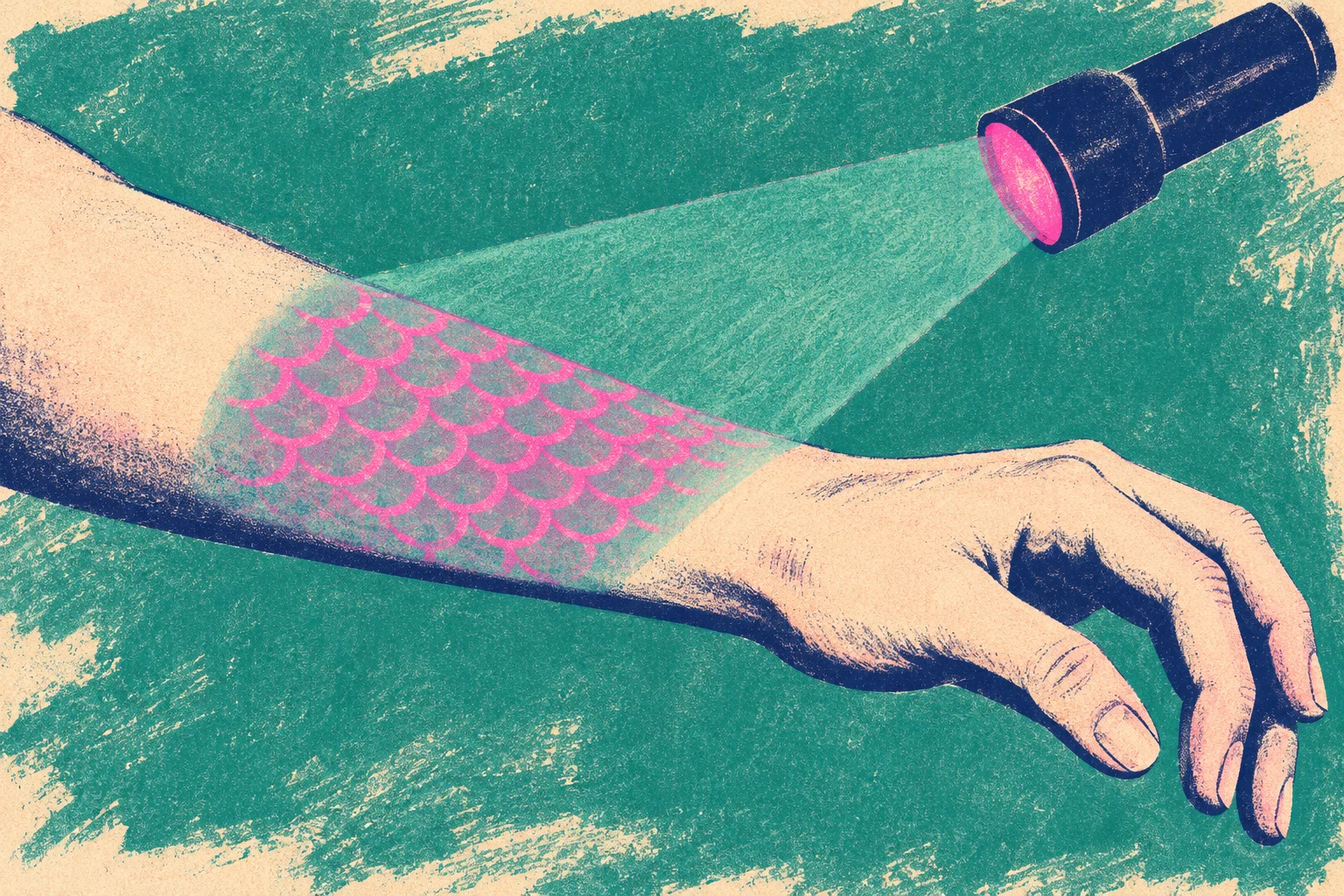
Bruns tested the ink on himself, filling in fish-scale outlines on his legs that turn red, orange or blue under UV. “There’s a stigma, in science and in many cultures, around body art,” he said. “I’m proud to be pushing against that.” The stated target is medical: permanent markers used to guide radiation-therapy beams or mark biopsy sites are visible all the time; an ink that only appears under UV could stay hidden otherwise. “With PhotoTat, we could turn an involuntary medical tattoo into something that’s only visible to the doctor when you go in the clinic,” Bruns said, according to the University of Colorado Boulder. None of this is near a tattoo parlour yet: the blue dye’s durability needs work, and the safety testing required before PhotoTat could go into anyone who isn’t a co-author hasn’t been done.
A monk in a borrowed coffin
A skeleton pulled from a Roman stone sarcophagus at Westminster Abbey in 1869 — carved with a fourth-century inscription to one Valerius Amandinus, yet bearing a Latin cross cut into the lid centuries later — has a tentative new identity. Radiocarbon dating by the Scottish Universities Environmental Research Centre places the burial between AD 987 and 1052, squarely in the late Saxon period, Westminster Abbey said in a statement on research by Warwick Rodwell in the Journal of the British Archaeological Association. The bones belong to a man 35 to 49 years old and about 5 feet 9 inches tall, revising a 19th-century assessment of a “robust young man” of no more than 30, roughly 5 feet 7. Burial in a stone sarcophagus, even a reused one, points to rank; Rodwell’s leading candidate is Aelfwig, abbot of the Benedictine monastery at Westminster from 993 until his death around 1020.
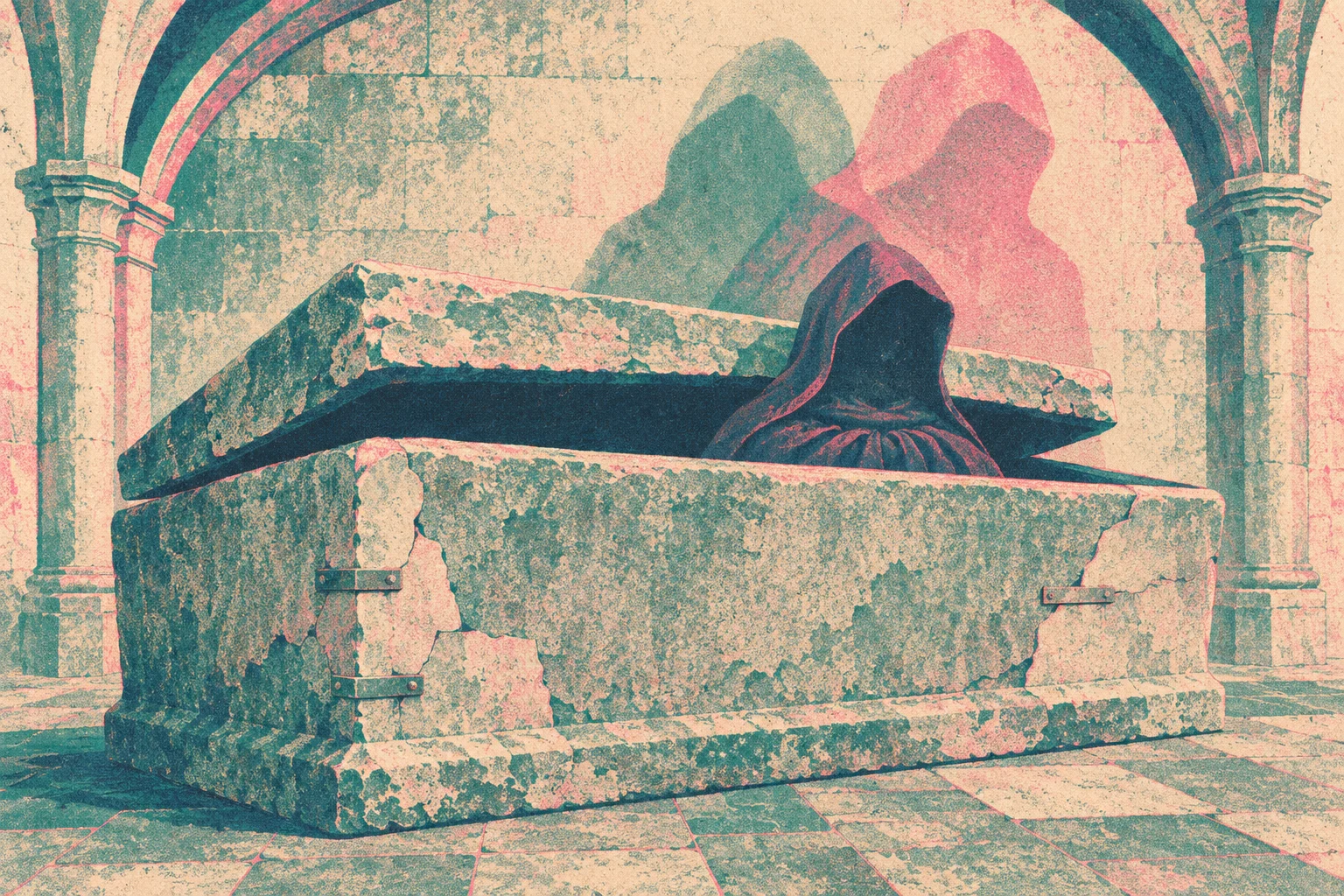
A second candidate stays open: Aelfwig’s successor Wulnoth, who died in 1049. “We have two viable contenders for the occupant of the sarcophagus,” Rodwell said. “We do not know the date of birth of either. But either would fit equally well if we assume the Abbot was in his early twenties when the appointment was made and close to fifty when he died. The fact Aelfwig was already a monk of Westminster might favour him.” The original timber coffin inside the stone case rotted away over the following seven centuries, leaving the bones loose; the sarcophagus now sits on display in the Abbey’s Queen’s Diamond Jubilee Galleries.
A different diagnosis for Botticelli’s Venus
Simonetta Vespucci, the Florentine beauty disputed by some historians to be the model for Botticelli’s Birth of Venus, died in her early twenties after collapsing at a ball, then suffering severe headaches, hallucinations, vomiting and fever, according to letters between Piero Vespucci and Lorenzo de’ Medici cited in research led by Paolo Pozzilli of Queen Mary University of London. Tuberculosis has been the standard diagnosis for five centuries. Pozzilli’s team, writing in Medical Humanities, argues the speed and violence of her final days fit a ruptured pituitary tumour (pituitary apoplexy) better than the slow decline of chronic tuberculosis; a follow-up running facial-recognition software over five Botticelli portraits reportedly found signs of strabismus and eye swelling consistent with a large pituitary mass, Queen Mary University of London said.
The researchers are explicit about the limit: there is no tissue sample from 1476, nothing to examine beyond paintings and letters read through modern clinical reasoning five centuries on. A version of that qualifier applies to all five results. The dog study shows an association between LINE1 methylation and mortality, not a cause. PhotoTat hasn’t been safety-tested outside the lab. The Westminster bones fit two abbots equally well, and Rodwell says so plainly. The number still outstanding is the positron’s: once Gabrielse’s team measures its magnetic moment to the 0.13-parts-per-trillion precision already reached for the electron, the two figures either match, as the Standard Model insists they must, or they don’t.