
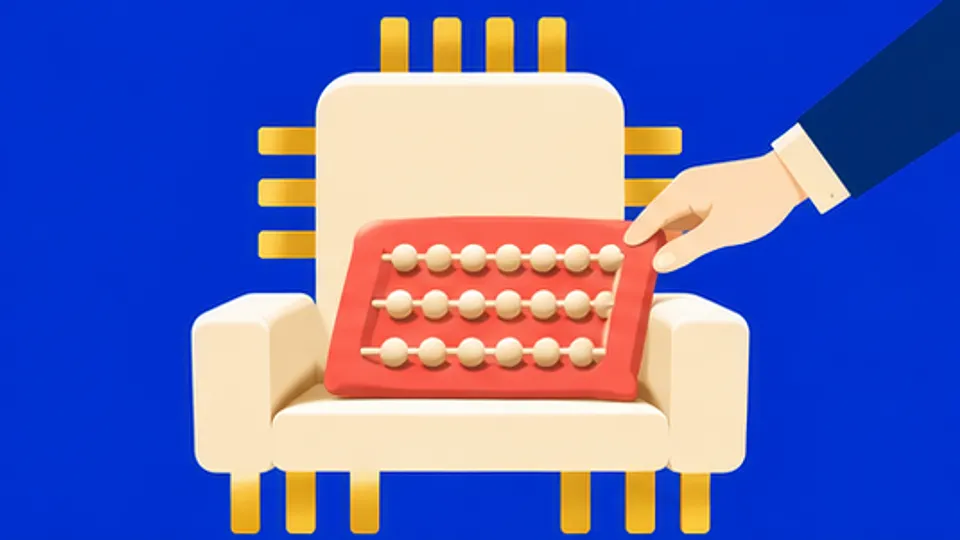
Nvidia named the first chair of its board on Thursday, 33 years after the company was founded, in the same announcement that said its only chief executive, Jensen Huang, had resigned.
The order matters. Mr. Huang, 63, left a company worth about $4 trillion with no second-in-command, no chief operating officer, no named successor and, by his own count, about 60 executives reporting straight to him. The board’s announcement handed the company on an interim basis to Colette Kress, who keeps her job as chief financial officer while she does his.
What forced him out was a week of reporting about his relationships with Alice Huang (no relation), a former executive at a Singapore buyer of Nvidia chips whom some U.S. officials suspect of working for Chinese intelligence, and with an Nvidia vice president who reported to him. Why the company had nothing ready is an older story, and most of it sits in the public record. Mr. Huang said for years that he did not believe in succession planning. A board anchored by directors who had served since 1993 let that stand while Nvidia’s own filings listed the risk. Governance specialists warned in 2024 that an unplanned exit would force rushed choices. On Wednesday night, the board made them.

The last week
The New York Times first reported Mr. Huang’s “close relationship” with Alice Huang on Oct. 29. “Meetings with customers are part of a CEO’s job,” Nvidia’s spokesman, John Rizzo, said then, according to a TechCrunch timeline. Megaspeed, the company she once led, had bought about $4.8 billion of Nvidia equipment in two years, according to reports gathered in that timeline, and was under investigation in the United States and Singapore over whether it helped Chinese companies get around export controls. Megaspeed has said it complied with U.S. law.
On Friday, Nov. 6, the Financial Times cited U.S. officials who described the relationship as romantic. Nvidia’s general counsel, Tim Teter, who is also secretary to the board, went to Mr. Huang’s house to confront him, and Mr. Huang confessed, Bloomberg reported in a reconstruction of his last days as chief executive. Mr. Teter told a reluctant board it had to act, according to that account.
It did, though not against him. On Sunday, Nov. 8, the directors announced an independent investigation, said they had “no reason to believe” that national security or company secrets had been compromised, and used the same statement to express confidence in Mr. Huang and his team. He wrote to employees that day: “I was unfaithful to my wife.” On Tuesday the independent directors retained Joon H. Kim, a former acting U.S. attorney in Manhattan, and his firm, Wachtell, Lipton, Rosen & Katz, to run the inquiry.

On Wednesday, The Times reported a second affair, with Kimberly Powell, Nvidia’s vice president of health care, who reported directly to Mr. Huang. The directors met remotely late into the night. Mr. Huang’s usual take-charge manner was gone, a person familiar with the situation told Bloomberg, and he had started saying things like “whatever” and “I don’t care.” The board accepted his resignation that day, according to the 8-K filing, and Nvidia announced it at 8:47 a.m. Eastern on Thursday, 24/7 Wall St. reported.
The stock opened at about $151, more than 13 percent below Wednesday’s close of $173.73, and recovered to end the day down 4.3 percent, according to CNBC’s live coverage. It had closed at a record $239.24 on Oct. 6. Hours after the announcement, Reuters reported a relationship with another Nvidia employee, who was not named.
One desk, 60 people
Mr. Huang built the company this way and said why in public. “The more direct reports a CEO has, the less layers are in the company. It allows us to keep information fluid,” he told CNBC’s Andrew Ross Sorkin in 2023, as CNBC recounted on Thursday. At Stanford’s business school in March 2024, he said that “a CEO should have the most direct reports by definition,” Business Today reported at the time.
In March, on Lex Fridman’s podcast, he gave the head count and the method.
My direct staff is 60 people. You know, I don’t have one-on-ones with ’em because it’s impossible.
Asked if it was still 60, he said, “More, yeah.” Counts in the press have varied, from more than 50 in Semafor this week to 36 in a Fortune article on Thursday that cited Business Insider. Almost all of them were engineers, he told Mr. Fridman, with experts in memory, CPUs and optics. None was a chief operating officer. According to Tae Kim’s 2024 book, The Nvidia Way, Mr. Huang held to the setup even when newer directors recommended that he hire one.
A few people stood nearer the center than the rest. Lip-Bu Tan, now Intel’s chief executive, told Business Insider before he took that job that “Jensen has three right-hand men.” Mr. Tan named Ian Buck, who created CUDA, the software platform that ties developers to Nvidia chips. Jonah Alben, who runs GPU engineering, was another, and Ms. Kress was the third. Dan Ives, an analyst at Yorkville Ives, told CNBC that she was “more than just a CFO” and that “Jensen didn’t do anything without her.”

Joseph Fuller, a professor at Harvard Business School, told CNBC that a flat company concentrates power at the top rather than spreading it. “He’s the orchestrator. He’s the coordinator. He’s resolving the disputes. He’s allocating the resources,” Mr. Fuller said of Mr. Huang. Siobhan O’Mahony of Boston University wrote in a recent report, quoted by Fortune, that fewer layers mean fewer people “gain the experience necessary to prepare for more senior roles.”
The plan he refused
Mr. Huang’s view of succession goes back at least to April 2009, when he told a Stanford entrepreneurship series that planning around a small, hand-picked group of heirs was, in Stanford’s summary of the talk, “a toxic process.” He wanted everyone trained well enough to run a product line, a region or, someday, the company.
“I’m famous in saying that I don’t believe in succession planning,” he told Mr. Fridman in March, in a stretch of the conversation about mortality. The reason, he said, “isn’t because I’m immortal.” The cure for that anxiety, in his telling, was to pass on “knowledge, information, insight, skills, experience as often and continuously as you can.” Asked whether he feared death, he said he hoped to “die on the job instantaneously.” The full interview, nearly two and a half hours long, is on Mr. Fridman’s YouTube channel.

On Oct. 14, two weeks before The Times’s first report, Mr. Huang recorded an interview with Emily Chang for Bloomberg’s The Circuit. It was released on Thursday, the day he left, Business Insider reported. Asked whether his daughter might succeed him, he said his children would have to earn any such job. Then he stated the rule that ended his own tenure.
Just as I can be fired, the next CEO has to be hired
He said he was “really hoping that the next CEO of the company’s already at the company,” and added, “But 20 years from now, I hope I stay healthy and I hope I continue to earn my keep.” In January, on a podcast with Jodi Shelton, he said, “There will never be one like me, and the reason for that is because I was raised by the company,” according to Fortune.
Two of his children work at Nvidia. Madison Huang is a senior director of product marketing for physical A.I., and Spencer Huang works in robotics product management. A son-in-law, Nico Caprez, is a vice president who manages relationships with data-center operators, Business Today reported.
A board from 1993
Nvidia was founded in 1993 with venture money from Sequoia Capital and Sutter Hill Ventures. Three of its first directors were still on the board this week. Mr. Huang was one. Tench Coxe, a former managing director at Sutter Hill, and Harvey C. Jones, then the chief executive of the chip-design software maker Synopsys, were the others. A. Brooke Seawell joined in 1997. Mark A. Stevens, a longtime Sequoia partner, served from 1993 to 2006 and returned in 2008, according to the 2026 proxy statement.

The board never had a chair. Each year a majority of the independent directors chose a lead director instead, an arrangement the proxy said gave every member “an equal voice in the affairs and management of NVIDIA.” This year’s lead director was Stephen C. Neal, 77, a law-firm chairman emeritus who joined in 2019. He set meeting agendas with Mr. Huang, and management prepared what directors were shown, Fortune reported. That left no one whose job was to run the board when the crisis came.
Semafor’s Liz Hoffman and Andrew Edgecliffe-Johnson tallied the gaps on Monday. Nvidia’s directors had served almost 15 years on average, close to double the S&P 500 norm. None was a current or former S&P 500 chief executive, and none had national security experience. Meta and Microsoft each have four big-company chiefs on their boards. The word “succession” appeared nowhere in Nvidia’s latest annual report, against 25 times in Microsoft’s and 16 in Alphabet’s. “How do you say no to someone with this track record of success?” asked Jill Fisch, a professor at the University of Pennsylvania Carey Law School.
The directors had the means. Mr. Huang held about 870.6 million shares, roughly 3.58 percent of the company, and Nvidia has a single class of stock with one vote a share, so he could not elect or remove directors on his own, Fortune reported. Mark Zuckerberg, by comparison, owns 13.4 percent of Meta and controls about 60 percent of its votes. Jeffrey Sonnenfeld and Steven Tian of Yale, who disclosed that Mr. Huang has attended their chief executive forums, wrote in a Fortune commentary on Wednesday that the problem lay with the board.
What entrenched Jensen was not the capital structure of the company.
Mr. Jones, now 73 and the new chair, sat on the nominating and corporate governance committee, the panel that typically oversees leadership succession, 24/7 Wall St. noted. He has managed a founder transition before. At Synopsys in 1994, he handed the chief executive job to the co-founder Aart de Geus, who held it for roughly 30 years.
Warnings on the record
In August 2024, with Nvidia worth $2.93 trillion and Mr. Huang selling about $14 million of stock nearly every day under a preset plan, Fortune’s Eleanor Pringle asked about succession. Nvidia declined to comment. Nell Minow of ValueEdge Advisors, an Nvidia shareholder, said the board did not need to name anyone but should describe its process, and warned that Mr. Huang could one day simply decide to leave. Aalap Shah of the compensation consultancy Pearl Meyer described what happens otherwise.
When succession planning is not transparent and thoughtfully considered you have to make rash decisions.
Nvidia’s filings conceded the point in general terms, describing the company as “highly dependent on the services of our longstanding executive team” and warning that poor succession planning could “hinder our strategic planning, execution, and long-term success.” In May, the short seller Culper Research published a 40-page report that called Mr. Huang’s ties to Alice Huang “uncomfortably close,” TechCrunch reported. On Nov. 9, Jason Schloetzer, a Georgetown professor who studies chief executive succession, told Fortune, “The board has made a mistake by not having a clearly outlined succession plan that’s been telegraphed to the market for a year or two.”
The forecasts pointed the other way almost to the end. On Wednesday, Mr. Schloetzer told Fortune he did not expect a firing: “It will be more like a ‘stay, with less.’” Polymarket traders put the odds that Mr. Huang would resign or be pushed out by year’s end at 16 percent. The board accepted his resignation that night.
The case for the founder
The strongest defense of the old arrangement is what it produced. Under Mr. Huang, a maker of graphics chips for gamers became a company whose market value peaked at $5.7 trillion in early October, Australia’s ABC News reported. Michael Monaghan of Founder ETFs told Fortune before the resignation that his firm would sell its stake if Mr. Huang left. “We don’t really believe there is such a thing as succession in these massive founder-led companies,” he said. John C. Coffee Jr. of Columbia Law School told Semafor that Mr. Huang may have been at most negligent, and that “negligence doesn’t require that you shoot yourself in the foot by firing a well regarded CEO.”
A former chief executive, quoted without a name in a Fortune stock analysis on Thursday, said the board “was not thinking about shareholders” and should have punished Mr. Huang visibly, with no equity or bonus for a couple of years. On Hacker News, a reader proposed much the same on Wednesday, as reports spread that the board was preparing to act.
The board should punish Huang without punishing the industry and the nation. For example by cutting his salary and stock to 0 for 2 years.
Haseeb Qureshi, a venture investor, wrote on X on Thursday that he shared the industry’s instinct that founders are almost always the best people to run their companies, and then sided with the board.
All the tech people rushing to defend Jensen are off base.
As a VC, I get it. He’s a generational founder, and there’s a deeply-ingrained lesson in tech that founders are almost always the best people to run their companies. I share that intuition.
But the board’s call here was…
Measured against the record, the founder case answers a question the board was no longer asking. No one disputes Mr. Huang’s results. The question by Wednesday was what Nvidia does when he cannot stay, and the arrangement he built had no answer. Mr. Schloetzer had named the likelier trigger: “Boards remove CEOs over candor issues.” The sequence fits. The directors backed Mr. Huang on Nov. 8, when the issue was a customer, and moved within a day of The Times’s report about a subordinate. A person familiar with the matter told CNBC that the board decided the night before the announcement. It was not clear whether any director knew of the relationship with Ms. Powell before it was reported.
A reader on Hacker News, working from the public statements, reached the same conclusion about the timeline.
If you dissect the timeline of the events and various statements, I think the 2nd affair with a subordinate employee K Powell was the reason to fire Jensen Huang -- more so than the allegations of secretly selling to China.
Many other readers in those threads argued that the real cause was chip sales to China in breach of export controls. The record does not show that. Megaspeed says inspections found no violations, the American and Singaporean inquiries are open, and no one has been charged. Whether Alice Huang worked for Beijing is itself unsettled. Attorney General Todd Blanche said on Thursday that the Justice Department had reached no conclusion, and several officials told CNN that the intelligence gathered so far did not prove she was a spy, though some still regarded her as a risk.
Denise Rousseau, a professor at Carnegie Mellon University, told CNBC that fewer layers can strengthen “local leaders” across the company, which may steady a transition. A Hacker News reader argued, the day before the resignation, that Mr. Huang had been unusually restrained about locking in control.
His board setup is ... odd. He isn’t Chairman of the Board (a role over 50% of Fortune 100 CEOs apparently hold).
That is accurate, and it cuts against him as much as for him. The equal-voice board and the single share class are why directors could remove a founder in one night. They are also why the missing plan belongs to the directors rather than to a controlling shareholder, which is the Yale authors’ argument. Two of the directors who could have insisted on one had been on the board for all 33 years.
The interim chief
Ms. Kress, 59, joined Nvidia as finance chief in September 2013 after 13 years at Microsoft, where she was chief financial officer of the Server and Tools division, and three years at Cisco. She was paid about $14.3 million last fiscal year, according to Business Insider, and will lead Tuesday’s earnings call as she always has, now holding both jobs. In her first memo to staff as interim chief, she thanked employees for getting through “an extraordinarily difficult period.” CNBC put the succession question to a panel of specialists on Thursday.

Mr. Ives, who told CNBC before the announcement that Ms. Kress was “the only one internally that has this significant respect,” expects her to serve about a year and the permanent chief to come from outside.
You need someone that’s been on the global stage
On Kalshi, the prediction market, Mr. Buck, 48, had a 42 percent chance of getting the job on Thursday evening and Ms. Kress 13 percent. Tae Kim, the author of The Nvidia Way, wrote on his Substack, “In my view, there are only two choices”: Mr. Buck and Rene Haas, the chief executive of Arm and a former Nvidia executive. Semafor raised Lisa Su of AMD and Hock Tan of Broadcom as outside possibilities. President Trump wrote on Truth Social that Tim Cook, who left Apple in September, should take over. “A Legend replaces a Legend!” he wrote.
The flat structure makes an inside pick harder. If the board elevates one of Mr. Huang’s direct reports, Mr. Schloetzer told Semafor, “you’re going to have 59 people who will all think ‘it should have been me.’”
A horse race with 60 horses has no good solution.
More than 1,600 comments had piled up on a post urging the board to bring Mr. Huang back, Wired reported. Accounts differ on whether the post was on an internal suggestion channel or on LinkedIn, as SFist noted. Intel is the nearest comparison. When Brian Krzanich resigned in 2018 over a past relationship with an employee, Intel had no successor ready and ran on an interim chief for seven months, and a year later its stock trailed the S&P 500 by about 17 points, 24/7 Wall St. calculated. McDonald’s named Chris Kempczinski in the same announcement that removed Steve Easterbrook in 2019, and its shares beat the index over the next year.
What comes next
Nvidia reports third-quarter results on Tuesday, Nov. 17, at about 1:20 p.m. Pacific, with the call at 2 p.m. Ms. Kress has called a company meeting for 9 a.m. Pacific the next day. Mr. Huang’s appearance before Congress began as a Nov. 5 request from three House Republican chairmen, Brian Mast, John Moolenaar and Rick Crawford, for a closed-door briefing on his dealings with Alice Huang.
Chairmen @RepBrianMast, @RepMoolenaar and @RepRickCrawford sent a letter to NVIDIA CEO @JensenHuang requesting that he appear before a joint, closed-door briefing on Huang’s interactions with Megaspeed executive Alice Huang, a publicly reported People’s Republic of China (PRC)…
Mr. Mast said on Thursday that Mr. Huang would testify before Thanksgiving, which falls on Nov. 26, and Senator Tim Scott has asked him to appear before the Senate Banking Committee on Dec. 3. The Wachtell inquiry and a proposed shareholder class action are pending. “He has agreed to come,” Mr. Mast said. “We’re in negotiations for which day.”