
The National Institutes of Health awarded 12 percent fewer grants in the fiscal year that ended Sept. 30 than it did the year before President Trump returned to office, a new analysis from the Association of American Medical Colleges found.
The agency made 56,600 grants in fiscal 2026, a drop of 7,400 from the 64,000 awarded in 2024, CIDRAP reported on Tuesday. The year-over-year decline was much smaller: 58,500 grants went out in fiscal 2025, according to Inside Higher Ed, which wrote about the analysis last week. Money committed to multiyear projects also shrank, to $1.9 billion this year from $2.1 billion the year before.
The decline held across every category the association tracks: research project grants, other research and development awards and grants for training and career development.
The numbers give the fullest accounting yet of how federal research spending has contracted through the first two years of Mr. Trump’s second term. A separate running tally that began as a Harvard epidemiologist’s spreadsheet has grown into a national ledger, charted by NPR, of $177 billion in disrupted federal grants.
“Institutions require a stable and predictable funding environment throughout the year to plan research programs, budget for faculty and staff needs, and decide on the number of incoming graduate students and postdoctoral scholars,” the authors of the analysis wrote. “Whether a result of timing, federal personnel changes, or funding mechanisms, it is disruptive to have large swings in the pace of funding from year to year or in the total number of grants.”

The association also cautioned that “the health of the federally funded research system cannot be judged by whether all funding is obligated by the final deadline alone,” Inside Higher Ed reported.
Separately, fewer than half of American hospitals routinely remind doctors to review whether a patient’s urinary catheter is still needed, even after two decades of warnings about infections, a study published in JAMA Network Open found.
Researchers at the Veterans Affairs Ann Arbor Healthcare System and the University of Michigan analyzed surveys from 1,461 hospitals between 2005 and 2025. Questionnaires went every four years to all VA hospitals and to a random sample of nonfederal hospitals with intensive care units.
In the nonfederal hospitals, regular use of catheter reminders or stop orders rose from 9.1 percent in 2005 to 48.7 percent in 2025, and the share letting nurses remove catheters on their own grew from 11.3 percent in 2009 to 58.3 percent this year. VA hospitals trailed on most measures. Specialists recommend placing the catheters only when necessary, inserting them aseptically, removing them once they are no longer needed and using alternatives where possible.
A third study, presented Tuesday at the annual United European Gastroenterology conference, tied antibiotic use in childhood to higher odds of irritable bowel syndrome in early adulthood.
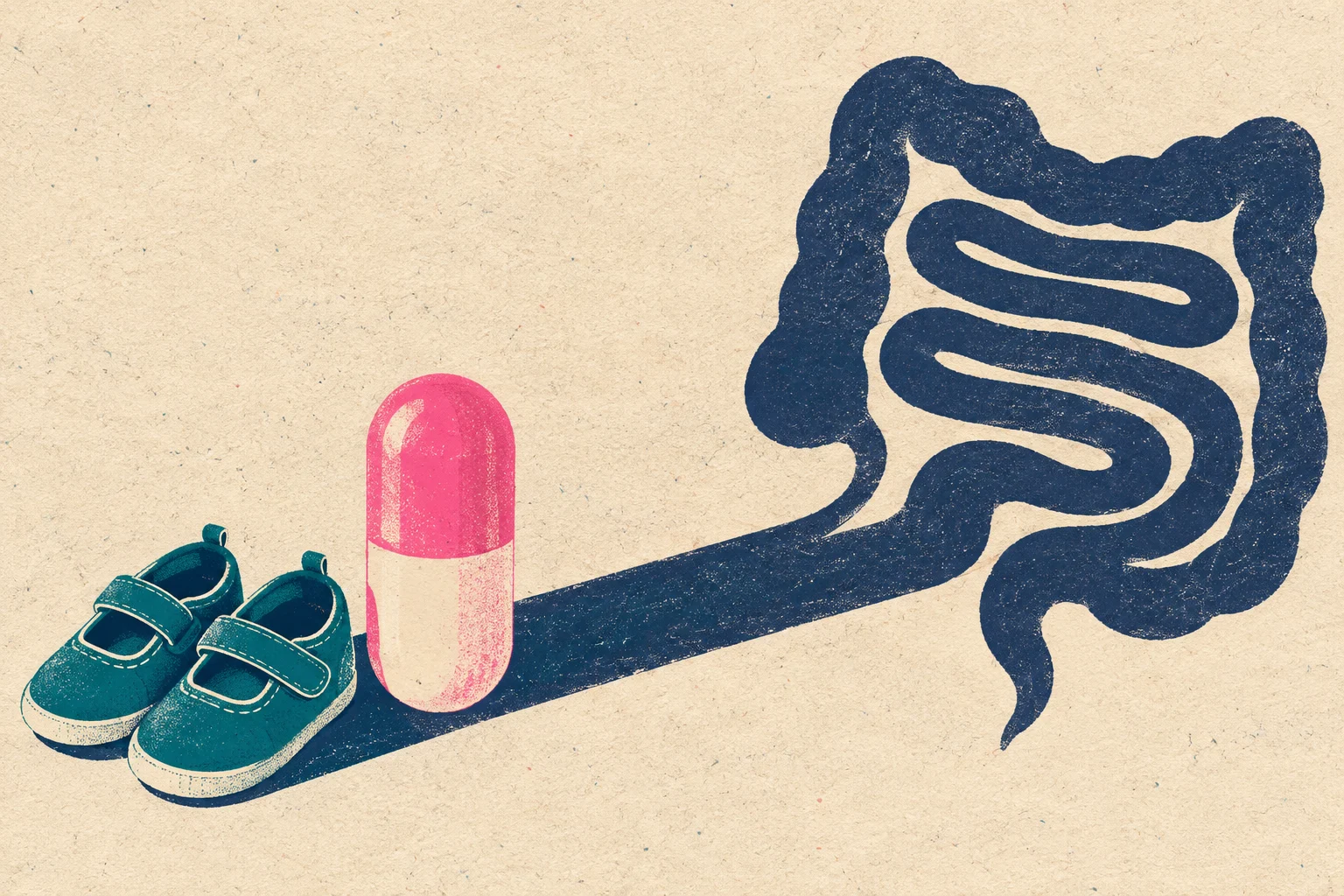
The analysis, by researchers at the University of Gothenburg in Sweden, drew on 2,853 participants in the BAMSE study, which has followed Stockholm children since 1994. Prescription records were tracked from 2005, when the participants were 9 to 11 years old, until their bowel health was assessed at 24. Children and adolescents who received antibiotics had 1.5 times the odds of IBS by that age, after the researchers accounted for sex and socioeconomic status.
By age 24, 10 percent of participants had IBS. Of those, 87.8 percent had received antibiotics, against 80.2 percent of those without the condition. The odds climbed with the number of prescriptions: 1.3 times for those who received two or three, 1.6 with three to five and 1.7 with six or more. Tetracyclines and cephalosporins were linked to higher odds than other classes. The authors said the findings do not prove the drugs cause IBS.
“Larger, long-term studies with repeated assessment of IBS over time could help determine whether antibiotic exposure precedes IBS and whether the timing of exposure or type of antibiotic matters,” Dr. Jessica Sjolund, the lead author, said in a press release issued by the conference. “Looking more closely at infections, other health conditions and psychological and family factors could also help clarify what is contributing to the association.”