
One way to keep people playing a role-playing game is to keep making more role-playing game for them. Another is to give them the equipment and let them make it for one another. BioWare’s Neverwinter Nights took the second approach seriously enough that, more than two decades later, its original campaign is arguably the least interesting explanation for its survival.
As Samuel Axon reports in Ars Technica, the game still supports an unusually active community, even without the canonical status of BioWare’s Baldur’s Gate, Mass Effect or Star Wars: Knights of the Old Republic. Its distinguishing product was a package: a story to play, multiplayer, tools for building adventures and tools for a human dungeon master to run them live. The purchaser could become the person supplying the next adventure.
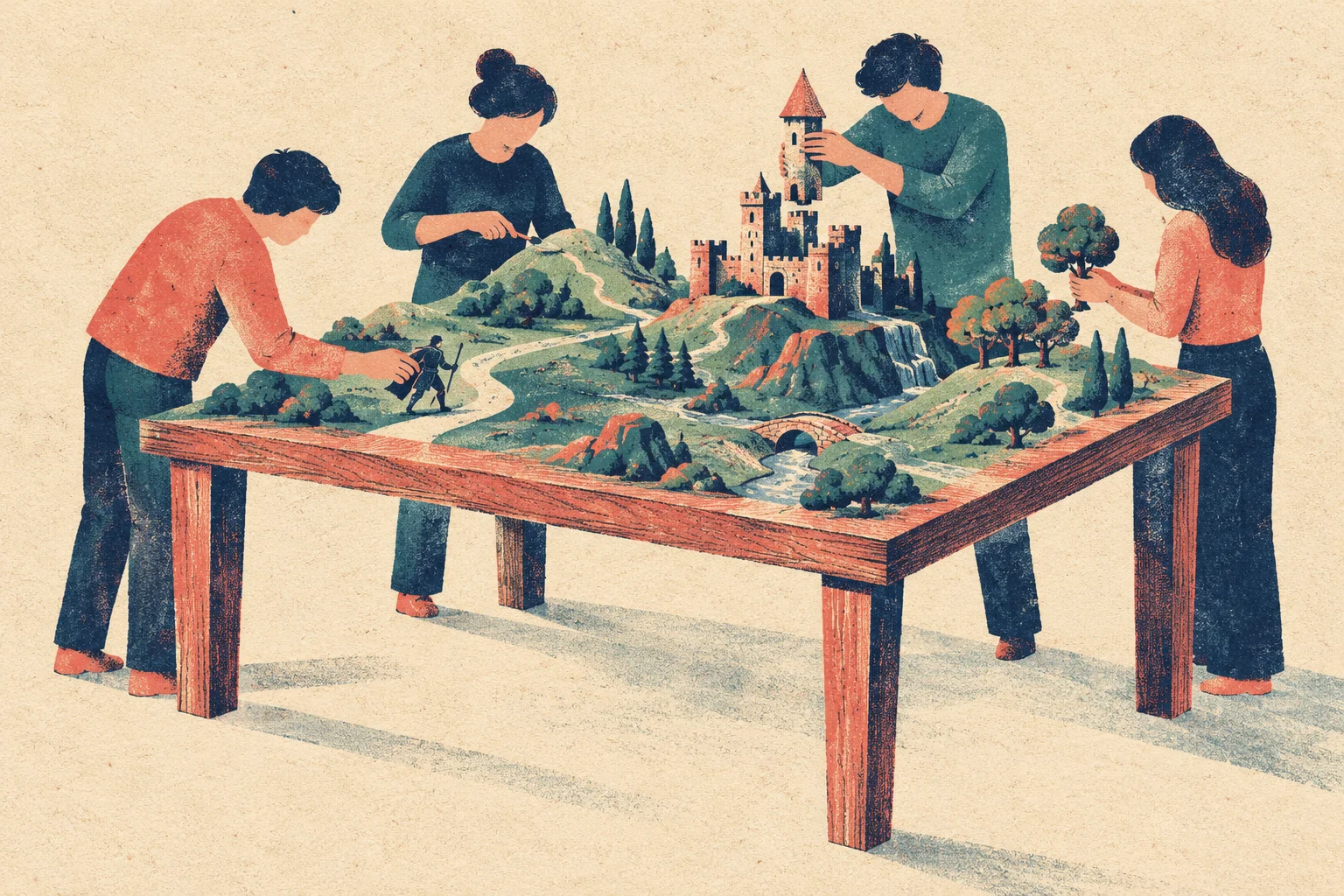
“We always envisioned it as a table with four legs—the single player, the multiplayer, the DMing tools and the toolset (the module making tools),” BioWare’s Ray Muzyka told IGN around the game’s release, in an interview quoted by Axon. “They all appeal to different groups, and we’ve tried to make them all equivalently high quality.” That is a reasonably ambitious specification. It also allows a product to remain useful when customers disagree about which leg is best.
Axon’s return to the main campaign, The Wailing Death, after 20 years supplies the disagreement. He found it enjoyable and nostalgic, but below the standard of BioWare’s strongest single-player work. You directly control one character rather than a party. His chosen monk spent much of the early game choosing between ordinary attacks and more frequent attacks that miss more, with equipment restrictions and knockdown or stun abilities that often failed. More options arrive later; other classes suffer less. Still, his estimate is that about 80 percent of the game involves fighting enemies, which gives a narrow set of tactical choices a great deal of work to do.
The design makes more sense when another human is involved. At a tabletop, a player and dungeon master can improvise uses for an ability. In a party-based computer game, a limited specialist can complement several other characters. Alone, the specialist mostly has to wait for the dice. The protagonist’s blank-slate identity creates a similar trade-off: useful when friends invent their own characters, less helpful when an authored campaign needs a character-driven story. Axon’s explanation for the game’s uneven reputation is that most people played solo, while a smaller group discovered the more durable machinery.
Consider Arelith, a long-running persistent multiplayer world run by Daniel Morris, known in the community as Irongron. Morris told Axon that its peak player count came “a little less than two years ago,” rather than near the original game’s launch. There is a concrete milestone behind that account: Massively Overpowered reported in January 2025 that Arelith had reached 380 simultaneous players, a record after 22 years. The announcement described them as occupying a single shared world without instancing. That is a concurrency figure for one community, not a count of everyone still playing Neverwinter Nights.
“Our community is the heart of Arelith, it’s not just our audience, but where we find our DMs and developers,” Morris told Axon. The mechanism is right there. Players supply an audience for one another, and some become the people who create and administer the experience. Their interest in having somewhere worth playing also gives them a reason to improve it. That does not make the work effortless. It gives the work a constituency.
The resemblance is less to a giant commercial MMO than to a small Minecraft server, or the text-based multi-user dungeons that preceded graphical online worlds. Axon recalls helping build one of those MUDs himself, writing room descriptions and choosing their inhabitants and items. In that arrangement, participation and authorship overlap. A world can matter because people have made things there, rather than because a publisher has scheduled another release.
Maintenance has extended beyond individual worlds. Beamdog’s May 24, 2023 announcement of patch 8193.35 for Neverwinter Nights: Enhanced Edition credited community contributors. Morris, meanwhile, is working on a visual overhaul of the original campaign, which he hopes to release in 2027. Even the less-loved part of the package can become somebody’s improvement project.
It would be tempting to retrofit all this into a modern engagement strategy. BioWare did explore the idea of an MMO; developers said they abandoned that ambition before release after discovering how difficult it would be. What shipped instead gave smaller communities considerable room to make their own entertainment. The enduring asset is not simply a stock of finished content. It is the ability to produce more, with people who want to be there. Twenty-four years is a long time to keep an audience. It helps if the audience has the tools.